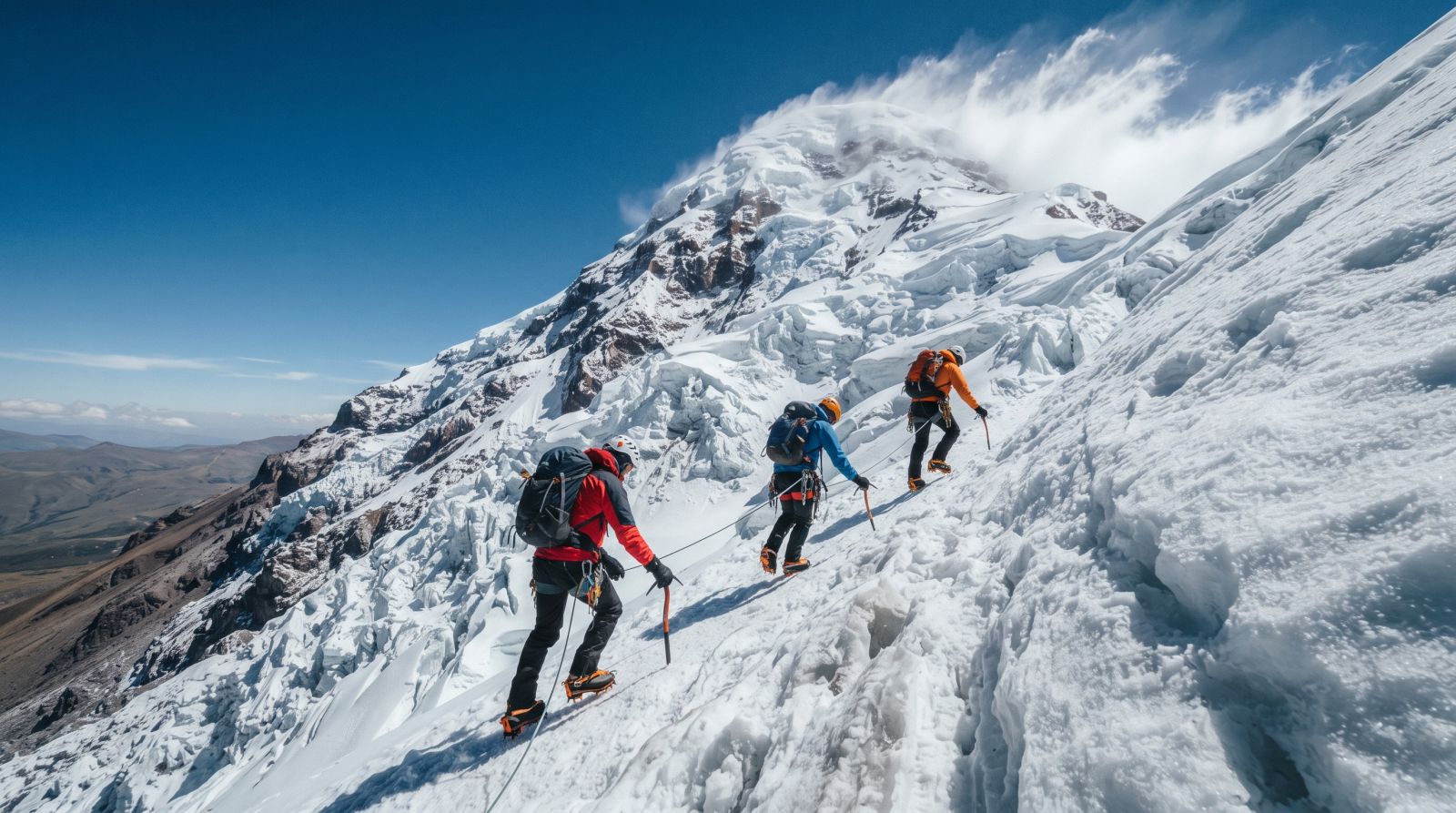
Climbing Chimborazo in Ecuador: A Complete Guide
Rising above the Ecuadorian Andes, Chimborazo is Ecuador’s highest mountain and one of the most iconic mountaineering destinations in South America. With its massive glaciated slopes, spectacular high-altitude scenery, and challenging summit routes, climbing Chimborazo is an unforgettable goal for mountaineers visiting Ecuador.
At 6,263 meters (20,548 feet) above sea level, Chimborazo offers much more than an impressive summit. Because of the Earth’s equatorial bulge, its summit is the farthest point on Earth’s surface from the center of the planet, making every successful ascent a truly unique achievement.
Whether Chimborazo is your first major high-altitude objective or part of a longer Ecuador climbing expedition, proper acclimatization, preparation, equipment, and professional guidance are essential.
Why Climb Chimborazo in Ecuador?
Ecuador is an exceptional destination for high-altitude mountaineering. The country’s compact geography allows climbers to access several Andean peaks within relatively short distances, creating excellent opportunities to gradually acclimatize before attempting higher mountains.
Chimborazo stands above them all.
Climbing this legendary Ecuadorian volcano combines physical challenge, glacier travel, dramatic landscapes, and the experience of reaching the highest summit in Ecuador. On clear days, the upper mountain offers extraordinary views across the Ecuadorian Andes and surrounding volcanic landscapes.
For international travelers, a Chimborazo expedition can also be combined with other climbing, trekking, and adventure experiences throughout Ecuador.
How High Is Chimborazo?
The summit of Chimborazo reaches approximately 6,263 meters (20,548 feet) above sea level. Its extreme altitude makes acclimatization one of the most important elements of a successful climb.
Although Chimborazo is not the highest mountain above sea level in the world, its location close to the equator gives it a remarkable distinction: its summit is farther from the center of the Earth than the summit of Mount Everest.
This geographical feature has made Chimborazo one of Ecuador’s most internationally recognized mountains and an extraordinary objective for climbers from around the world.
How Difficult Is Climbing Chimborazo?
Climbing Chimborazo is a serious high-altitude mountaineering objective. The challenge comes from a combination of altitude, cold temperatures, glacier conditions, elevation gain, physical endurance, and the technical skills required to travel safely over snow and ice.
Summit attempts typically involve traveling during the night or very early morning, allowing climbers to take advantage of favorable mountain and glacier conditions.
The exact difficulty can vary depending on the route, weather, snow and ice conditions, and the climber’s experience and fitness.
Previous mountaineering experience is valuable, but a well-designed program should also include appropriate preparation and acclimatization before the summit attempt.
Acclimatization Before Climbing Chimborazo
Proper acclimatization for Chimborazo is critical.
Traveling directly from low elevation to attempt a 6,000-meter mountain is not advisable. Climbers should progressively expose themselves to higher elevations, allowing their bodies time to adapt before attempting the summit.
One of Ecuador’s greatest advantages for mountaineers is the availability of numerous mountains that can be incorporated into an acclimatization program.
Depending on the climber’s experience and itinerary, preparation may include hiking and climbing lower-altitude peaks before progressing toward higher objectives.
A carefully planned Ecuador mountaineering itinerary can significantly improve preparation for Chimborazo while allowing visitors to experience several spectacular areas of the Andes along the way.
What Equipment Do You Need to Climb Chimborazo?
Chimborazo requires appropriate clothing and high-altitude mountaineering equipment.
Depending on current conditions and the selected route, equipment may include mountaineering boots, crampons, an ice axe, helmet, harness, rope systems, warm technical clothing, gloves, eye protection, and other glacier-travel equipment.
Conditions at high altitude can change rapidly, so clothing systems should provide adequate protection against cold, wind, snow, and changing weather.
Using appropriate equipment is only part of the equation. Climbers must also know how to use technical gear correctly and safely.
What Is the Best Time to Climb Chimborazo?
Chimborazo can be climbed during different periods of the year, but mountain conditions in Ecuador can vary significantly.
Weather, snowfall, wind, glacier conditions, and temperature can all influence a summit attempt. For this reason, choosing dates should not be based solely on a general calendar of “best months.”
Current mountain conditions and professional local knowledge are important when planning a Chimborazo climbing expedition.
Travelers with flexible itineraries may also benefit from combining Chimborazo with other Ecuadorian peaks and adjusting their climbing program according to conditions.
Do You Need a Mountain Guide for Chimborazo?
For a high-altitude glaciated mountain such as Chimborazo, climbing with an experienced professional mountain guide provides essential expertise in route selection, glacier travel, equipment use, weather assessment, pacing, and high-altitude risk management.
Local knowledge is particularly valuable because mountain and glacier conditions evolve over time.
A guide can also help evaluate whether a climber is sufficiently acclimatized and prepared to continue safely toward the summit.
Reaching the top is an important objective, but safety and responsible decision-making must always take priority over the summit.
Preparing Physically for Chimborazo
Good physical preparation can make a major difference during a Chimborazo expedition.
Training should develop cardiovascular endurance, leg strength, muscular endurance, and the ability to move steadily for extended periods. Hiking with elevation gain is particularly useful when preparing for mountaineering.
However, physical fitness does not replace acclimatization. A very fit traveler can still experience problems at high altitude if the body has not had sufficient time to adapt.
For this reason, training before arriving in Ecuador and following a progressive acclimatization program should be considered complementary parts of your preparation.
Experience Chimborazo with Ecuadorian Alpine Institute
A Chimborazo climbing adventure is more than reaching Ecuador’s highest summit. It is an opportunity to experience the extraordinary landscapes of the Ecuadorian Andes, challenge yourself at high altitude, and discover one of South America’s great mountaineering destinations.
Ecuadorian Alpine Institute offers professionally guided mountain adventures designed around the experience, objectives, and preparation of each climber. With experienced local mountain guides and extensive knowledge of Ecuador’s high-altitude environment, our goal is to help climbers experience the Andes responsibly and safely.
Whether Chimborazo is your primary objective or part of a larger Ecuador volcano climbing expedition, careful planning and proper acclimatization can transform your trip into an unforgettable Andean experience.
Ready to Climb Chimborazo?
Explore our guided climbing expeditions in Ecuador and start planning your Chimborazo adventure with Ecuadorian Alpine Institute.
At 6,263 meters (20,548 feet) above sea level, Chimborazo offers much more than an impressive summit. Because of the Earth’s equatorial bulge, its summit is the farthest point on Earth’s surface from the center of the planet, making every successful ascent a truly unique achievement.
Whether Chimborazo is your first major high-altitude objective or part of a longer Ecuador climbing expedition, proper acclimatization, preparation, equipment, and professional guidance are essential.
Why Climb Chimborazo in Ecuador?
Ecuador is an exceptional destination for high-altitude mountaineering. The country’s compact geography allows climbers to access several Andean peaks within relatively short distances, creating excellent opportunities to gradually acclimatize before attempting higher mountains.
Chimborazo stands above them all.
Climbing this legendary Ecuadorian volcano combines physical challenge, glacier travel, dramatic landscapes, and the experience of reaching the highest summit in Ecuador. On clear days, the upper mountain offers extraordinary views across the Ecuadorian Andes and surrounding volcanic landscapes.
For international travelers, a Chimborazo expedition can also be combined with other climbing, trekking, and adventure experiences throughout Ecuador.
How High Is Chimborazo?
The summit of Chimborazo reaches approximately 6,263 meters (20,548 feet) above sea level. Its extreme altitude makes acclimatization one of the most important elements of a successful climb.
Although Chimborazo is not the highest mountain above sea level in the world, its location close to the equator gives it a remarkable distinction: its summit is farther from the center of the Earth than the summit of Mount Everest.
This geographical feature has made Chimborazo one of Ecuador’s most internationally recognized mountains and an extraordinary objective for climbers from around the world.
How Difficult Is Climbing Chimborazo?
Climbing Chimborazo is a serious high-altitude mountaineering objective. The challenge comes from a combination of altitude, cold temperatures, glacier conditions, elevation gain, physical endurance, and the technical skills required to travel safely over snow and ice.
Summit attempts typically involve traveling during the night or very early morning, allowing climbers to take advantage of favorable mountain and glacier conditions.
The exact difficulty can vary depending on the route, weather, snow and ice conditions, and the climber’s experience and fitness.
Previous mountaineering experience is valuable, but a well-designed program should also include appropriate preparation and acclimatization before the summit attempt.
Acclimatization Before Climbing Chimborazo
Proper acclimatization for Chimborazo is critical.
Traveling directly from low elevation to attempt a 6,000-meter mountain is not advisable. Climbers should progressively expose themselves to higher elevations, allowing their bodies time to adapt before attempting the summit.
One of Ecuador’s greatest advantages for mountaineers is the availability of numerous mountains that can be incorporated into an acclimatization program.
Depending on the climber’s experience and itinerary, preparation may include hiking and climbing lower-altitude peaks before progressing toward higher objectives.
A carefully planned Ecuador mountaineering itinerary can significantly improve preparation for Chimborazo while allowing visitors to experience several spectacular areas of the Andes along the way.
What Equipment Do You Need to Climb Chimborazo?
Chimborazo requires appropriate clothing and high-altitude mountaineering equipment.
Depending on current conditions and the selected route, equipment may include mountaineering boots, crampons, an ice axe, helmet, harness, rope systems, warm technical clothing, gloves, eye protection, and other glacier-travel equipment.
Conditions at high altitude can change rapidly, so clothing systems should provide adequate protection against cold, wind, snow, and changing weather.
Using appropriate equipment is only part of the equation. Climbers must also know how to use technical gear correctly and safely.
What Is the Best Time to Climb Chimborazo?
Chimborazo can be climbed during different periods of the year, but mountain conditions in Ecuador can vary significantly.
Weather, snowfall, wind, glacier conditions, and temperature can all influence a summit attempt. For this reason, choosing dates should not be based solely on a general calendar of “best months.”
Current mountain conditions and professional local knowledge are important when planning a Chimborazo climbing expedition.
Travelers with flexible itineraries may also benefit from combining Chimborazo with other Ecuadorian peaks and adjusting their climbing program according to conditions.
Do You Need a Mountain Guide for Chimborazo?
For a high-altitude glaciated mountain such as Chimborazo, climbing with an experienced professional mountain guide provides essential expertise in route selection, glacier travel, equipment use, weather assessment, pacing, and high-altitude risk management.
Local knowledge is particularly valuable because mountain and glacier conditions evolve over time.
A guide can also help evaluate whether a climber is sufficiently acclimatized and prepared to continue safely toward the summit.
Reaching the top is an important objective, but safety and responsible decision-making must always take priority over the summit.
Preparing Physically for Chimborazo
Good physical preparation can make a major difference during a Chimborazo expedition.
Training should develop cardiovascular endurance, leg strength, muscular endurance, and the ability to move steadily for extended periods. Hiking with elevation gain is particularly useful when preparing for mountaineering.
However, physical fitness does not replace acclimatization. A very fit traveler can still experience problems at high altitude if the body has not had sufficient time to adapt.
For this reason, training before arriving in Ecuador and following a progressive acclimatization program should be considered complementary parts of your preparation.
Experience Chimborazo with Ecuadorian Alpine Institute
A Chimborazo climbing adventure is more than reaching Ecuador’s highest summit. It is an opportunity to experience the extraordinary landscapes of the Ecuadorian Andes, challenge yourself at high altitude, and discover one of South America’s great mountaineering destinations.
Ecuadorian Alpine Institute offers professionally guided mountain adventures designed around the experience, objectives, and preparation of each climber. With experienced local mountain guides and extensive knowledge of Ecuador’s high-altitude environment, our goal is to help climbers experience the Andes responsibly and safely.
Whether Chimborazo is your primary objective or part of a larger Ecuador volcano climbing expedition, careful planning and proper acclimatization can transform your trip into an unforgettable Andean experience.
Ready to Climb Chimborazo?
Explore our guided climbing expeditions in Ecuador and start planning your Chimborazo adventure with Ecuadorian Alpine Institute.