7 Days vs. 15 Days in Cordillera Blanca: Understanding Different Trekking Experiences
7 Days vs. 15 Days in Cordillera Blanca: Understanding Different Trekking Experiences
Planning a Cordillera Blanca trekking adventure in Peru? One of the most important decisions is how much time to spend exploring this spectacular mountain range. Should you choose a 7-day trekking trip or a more extensive 15-day Cordillera Blanca expedition?
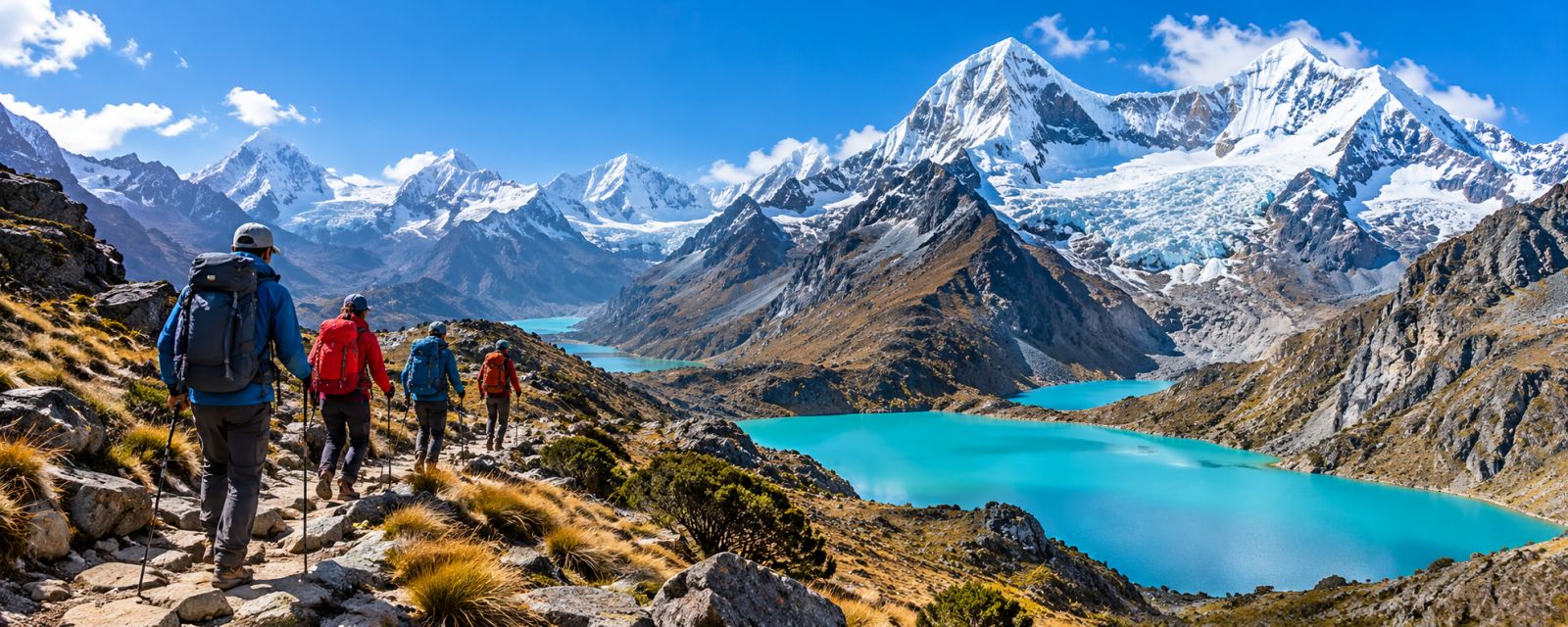
Located in the Peruvian Andes, the Cordillera Blanca is one of South America's most extraordinary destinations for high-altitude trekking. Its snow-covered peaks, turquoise glacial lakes, dramatic mountain passes, and remote valleys attract hikers and adventure travelers from around the world.
From the famous trails surrounding Huaraz to the breathtaking landscapes of Huascarán National Park, the region offers trekking experiences for different interests and levels of preparation.
However, not every Cordillera Blanca trekking itinerary provides the same experience.
A 7-day trek may be ideal for travelers with limited vacation time or those who are already acclimatized. A 15-day program can offer more opportunities for gradual altitude adaptation, deeper exploration, physical recovery, and cultural discovery.
At Ecuadorian Alpine Institute, we believe that choosing the right trekking itinerary is an essential part of planning a rewarding Andean adventure.
In this guide, we compare 7-day and 15-day Cordillera Blanca trekking experiences to help you understand their differences and decide which option best matches your travel goals.
Why Is the Cordillera Blanca One of Peru's Best Trekking Destinations?
The Cordillera Blanca is located in the Áncash region of northern Peru, near the city of Huaraz.
This spectacular mountain range is famous for its concentration of high tropical peaks, extensive glaciers, alpine valleys, and brilliant turquoise lakes.
The region includes Huascarán, Peru's highest mountain, which rises approximately 6,768 meters (22,205 feet) above sea level.
Many trekking routes pass through or near Huascarán National Park, a UNESCO World Heritage Site recognized for its outstanding natural beauty.
Some of the most celebrated attractions include:
- Laguna 69: A stunning turquoise glacial lake surrounded by towering snow-covered mountains.
- Santa Cruz Valley: One of the most famous trekking areas in the Cordillera Blanca, known for its dramatic mountain scenery.
- Llanganuco Lakes: Beautiful glacial lakes surrounded by steep Andean peaks.
- Alpamayo: An iconic pyramid-shaped mountain admired for its spectacular appearance.
- Huascarán: Peru's highest mountain and a defining landmark of the region.
- Alpine mountain passes: High-altitude viewpoints offering breathtaking panoramas of the Peruvian Andes.
Whether you have one week or more than two weeks available, the Cordillera Blanca offers remarkable opportunities to discover the beauty of high-altitude trekking in Peru.
The key is selecting an itinerary that provides an appropriate balance between exploration, acclimatization, and physical demands.
7-Day vs. 15-Day Cordillera Blanca Trekking: What's the Difference?
The main difference between a 7-day and a 15-day Cordillera Blanca trekking program is not simply the number of days spent traveling.
It is the type and depth of mountain experience each itinerary can provide.
A shorter trip typically focuses on a limited selection of trekking destinations.
A longer itinerary may combine additional acclimatization, multiple hiking stages, remote mountain landscapes, and opportunities for rest and cultural exploration.
Cordillera Blanca Trekking Comparison
Feature: Total duration
a) 7-Day Trekking Trip: 7 days
b) 15-Day Trekking Program: 15 days
Feature: Acclimatization
a) 7-Day Trekking Trip: Less time available
b) 15-Day Trekking Program: More flexibility for gradual adaptation
Feature: Trekking routes
a) 7-Day Trekking Trip: Usually fewer destinations
b) 15-Day Trekking Program: Potential for more extensive exploration
Feature: Physical demands
a) 7-Day Trekking Trip: May involve a concentrated schedule
b) 15-Day Trekking Program: Can distribute activities across more days
Feature: Rest and recovery
a) 7-Day Trekking Trip: Limited scheduling flexibility
b) 15-Day Trekking Program: More opportunities for recovery
Feature: Mountain landscapes
a) 7-Day Trekking Trip: Selected highlights
b) 15-Day Trekking Program: Greater variety of landscapes
Feature: Cultural experiences
a) 7-Day Trekking Trip: Usually limited
b) 15-Day Trekking Program: More opportunities for cultural activities
Feature: Weather flexibility
a) 7-Day Trekking Trip: Fewer adjustment opportunities
b) 15-Day Trekking Program: Potential for contingency days
Feature: Best suited for
a) 7-Day Trekking Trip: Time-limited or already acclimatized travelers
b) 15-Day Trekking Program: Travelers seeking a more comprehensive adventure
These comparisons describe general itinerary possibilities. Actual experiences depend on the route, hiking distances, sleeping elevations, services, and daily schedule.
A longer trekking program is not automatically easier or safer. Its advantages depend on how the additional time is used.
1. Acclimatization: Why Extra Days Can Make a Difference
One of the most important considerations when choosing a Cordillera Blanca trekking itinerary is altitude acclimatization.
Many popular trekking routes in the region reach elevations above 4,000 meters (13,123 feet), while some mountain passes exceed 4,500 meters (14,764 feet).
At these elevations, reduced atmospheric pressure makes less oxygen available to the body.
Travelers who ascend too quickly may develop acute mountain sickness, commonly known as AMS.
Common symptoms include:
- Headaches.
- Nausea or loss of appetite.
- Dizziness.
- Unusual fatigue.
- Difficulty sleeping.
More serious altitude-related illnesses can become life-threatening.
Acclimatization on a 7-Day Trek
A 7-day Cordillera Blanca trekking itinerary offers less time for altitude adjustment.
For travelers arriving directly from sea level, this can create additional planning challenges.
A shorter program may be more appropriate for hikers who have already spent sufficient time at altitude or whose itinerary includes suitable initial acclimatization.
Acclimatization on a 15-Day Trek
A 15-day Cordillera Blanca trekking program can provide more opportunities to introduce altitude exposure gradually.
Depending on the itinerary, this may include:
- Initial adjustment in Huaraz.
- Progressive acclimatization hikes.
- Carefully planned increases in sleeping elevation.
- Rest and recovery days.
- Monitoring individual responses to altitude.
However, the total duration alone does not guarantee adequate acclimatization.
The sleeping-altitude profile, individual susceptibility, and rate of ascent remain essential factors.
For travelers arriving from low elevations, a longer and appropriately structured itinerary can provide valuable acclimatization opportunities.
Climbers and trekkers should not continue ascending to higher sleeping elevations while experiencing altitude sickness symptoms. Severe symptoms require immediate descent and emergency medical attention.
2. Trekking Routes: Focused Highlights vs. Deeper Exploration
The Cordillera Blanca offers a remarkable variety of trekking routes, from scenic day hikes to demanding multi-day expeditions.
The duration of your trip influences how many destinations you may be able to explore.
What Can You Experience in 7 Days?
A shorter trekking trip may focus on a selection of the region's most famous attractions.
Depending on logistics and acclimatization, possible activities include:
- Exploring Huaraz and its surroundings.
- Visiting scenic high-altitude lakes.
- Completing selected day hikes.
- Experiencing a shorter multi-day trekking route.
- Discovering panoramic viewpoints in the Cordillera Blanca.
A 7-day itinerary can be an excellent introduction to the region, especially for travelers with limited time.
However, it may require choosing between several attractive destinations.
What Can You Experience in 15 Days?
A 15-day trekking expedition may offer more opportunities to explore different areas of the mountain range.
Depending on the selected route, travelers may experience:
- Multiple high-altitude valleys.
- Remote trekking trails.
- Spectacular mountain passes.
- Glacial lakes and alpine landscapes.
- Longer multi-day trekking sections.
- Cultural experiences in Andean communities.
- Additional scenic and photographic opportunities.
A longer program can create a more immersive experience of the Peruvian Andes.
However, the exact destinations should always be confirmed in the published itinerary.
3. Physical Difficulty: Is a 15-Day Trek Easier Than a 7-Day Trip?
Many travelers assume that a longer trekking program must be more physically demanding.
Others believe that having more days automatically makes the experience easier.
Neither assumption is necessarily correct.
The difficulty of a Cordillera Blanca trek depends on several factors:
- Total hiking distance.
- Daily elevation gain and loss.
- Maximum altitude.
- Sleeping elevations.
- Trail conditions.
- Number of consecutive hiking days.
- Backpack weight.
- Individual fitness and trekking experience.
Physical Demands of a 7-Day Trek
A shorter itinerary may involve concentrated hiking activities and fewer opportunities for rest.
However, a well-designed 7-day program can also focus on moderate routes with manageable daily distances.
Physical Demands of a 15-Day Trek
A longer itinerary may distribute demanding activities across additional days.
It may also include more rest periods and gradual acclimatization.
However, some 15-day expeditions involve extensive trekking distances, remote camping, and challenging mountain passes.
The best way to evaluate trekking difficulty is to examine the actual daily itinerary rather than the total number of days.
4. More Time for Rest and Recovery
High-altitude trekking involves repeated physical exertion.
Walking uphill, carrying equipment, adapting to colder temperatures, and spending several days at elevation can contribute to fatigue.
A longer Cordillera Blanca trekking itinerary may allow additional time for recovery.
Depending on the program, this can include:
- Rest days between demanding stages.
- Shorter hiking days.
- Equipment preparation.
- Adequate sleep.
- Balanced meals.
- Opportunities to adjust the schedule.
These elements can help travelers manage the physical demands of a multi-day expedition.
However, recovery time should be included intentionally rather than assumed simply because a trip is longer.
5. Weather Flexibility in the Peruvian Andes
Mountain weather is unpredictable.
Even during Peru's relatively drier trekking season, the Cordillera Blanca can experience rain, snowfall, strong winds, and sudden changes in visibility.
Weather conditions may affect mountain passes, trail accessibility, and daily trekking activities.
Weather Considerations for a 7-Day Trip
Shorter itineraries generally provide fewer opportunities to adjust plans when unfavorable weather occurs.
A missed trekking day may significantly affect the overall schedule.
Weather Considerations for a 15-Day Trip
Longer itineraries may include additional flexibility for route adjustments or contingency days.
This can be particularly valuable when visiting remote mountain areas.
However, a 15-day program does not automatically include spare days, and favorable weather is never guaranteed.
Travelers should verify whether their chosen itinerary includes contingency arrangements.
6. Cultural Experiences and Local Andean Communities
Trekking in the Cordillera Blanca is not only about spectacular mountain scenery.
The surrounding region is also home to Andean communities with rich cultural traditions and strong connections to the mountain environment.
A longer trip may provide opportunities to experience aspects of local culture.
Depending on the itinerary, activities may include:
- Visiting traditional Andean villages.
- Exploring local markets.
- Discovering regional Peruvian cuisine.
- Learning about agricultural traditions.
- Observing daily life in mountain communities.
- Understanding the cultural significance of the Andes.
These experiences can enrich a trekking journey by connecting travelers with the people and traditions of the region.
Cultural activities should be organized respectfully and with consideration for local communities.
7. Photography and Nature Exploration
The Cordillera Blanca is one of South America's most impressive mountain photography destinations.
Its landscapes include towering glaciated peaks, dramatic valleys, turquoise lakes, and spectacular alpine light.
A shorter itinerary can still provide exceptional photographic opportunities.
However, a longer trekking program may allow more time to explore different landscapes and appreciate changing mountain conditions.
Travelers interested in photography may especially enjoy:
- Sunrise over snow-covered peaks.
- Reflections in high-altitude lakes.
- Panoramic views from mountain passes.
- Remote valleys and alpine grasslands.
- Traditional Andean landscapes.
- Native mountain vegetation and wildlife.
For photographers and nature enthusiasts, the additional time can become a meaningful part of the experience.
8. Comparing the Cost of 7-Day and 15-Day Trekking Tours
Budget is another important consideration when choosing a Cordillera Blanca trekking adventure.
A 7-day program generally has a lower total price because it involves fewer travel days.
A 15-day expedition may require a larger overall investment due to additional accommodation, transportation, guiding, meals, and trekking logistics.
However, price should not be evaluated solely by the number of days.
When comparing trekking tours, consider:
- Professional guiding services.
- Accommodation standards.
- Meals included.
- Transportation arrangements.
- Camping equipment.
- Porter or pack-animal services, where applicable.
- Group size.
- Park entrance fees.
- Emergency arrangements.
- Route difficulty and remoteness.
For international travelers, a longer itinerary may provide additional value by combining several mountain experiences into one journey.
The best option depends on your budget, available time, and expectations.
9. Who Should Choose a 7-Day Cordillera Blanca Trek?
A 7-day trekking itinerary may be an excellent choice for travelers who:
- Have limited vacation time.
- Are already adequately acclimatized.
- Want to explore selected Cordillera Blanca highlights.
- Prefer a shorter mountain adventure.
- Have a specific trekking objective.
- Want to combine the Cordillera Blanca with other destinations in Peru.
For example, travelers who have already spent time at altitude elsewhere in Peru may be able to organize a shorter trekking program more comfortably.
However, recent acclimatization and individual readiness must still be considered.
A 7-day trip should not be selected solely because it is less expensive or requires fewer vacation days.
10. Who Should Choose a 15-Day Cordillera Blanca Trek?
A 15-day Cordillera Blanca trekking program may be particularly appealing to travelers who:
- Are arriving from lower elevations.
- Want more opportunities for progressive acclimatization.
- Prefer an extended mountain experience.
- Enjoy multi-day trekking adventures.
- Want to explore several Andean landscapes.
- Appreciate cultural and nature experiences.
- Have sufficient vacation time for a longer expedition.
An extended itinerary can be especially rewarding for travelers who want to experience the Cordillera Blanca as a complete journey rather than a short collection of highlights.
However, travelers should verify the route's difficulty and daily demands before booking.
11. Example: How 7-Day and 15-Day Cordillera Blanca Itineraries May Differ
To understand the differences, consider the following illustrative approaches.
Example of a 7-Day Cordillera Blanca Trekking Experience
Day 1: Arrival in Huaraz and initial altitude adjustment.
Day 2: Light activities and further acclimatization.
Day 3: Suitable acclimatization hike, depending on individual readiness.
Day 4: Additional trekking preparation and altitude assessment.
Day 5: Scenic trekking activity on an appropriate route.
Day 6: Additional mountain exploration or recovery.
Day 7: Return travel or departure.
This example represents a conservative introduction for travelers arriving from lower elevations. A shorter itinerary for already acclimatized hikers may allocate more time to demanding trekking objectives.
Example of a 15-Day Cordillera Blanca Trekking Experience
Days 1–3: Arrival and Initial Acclimatization
Arrive in Huaraz, begin adjusting to the altitude, and complete suitable introductory activities.
Days 4–5: Progressive High-Altitude Hiking
Explore appropriate trails while gradually increasing altitude exposure.
Days 6–7: Trekking Preparation and Mountain Exploration
Continue suitable acclimatization activities and prepare for more extensive trekking.
Days 8–12: Multi-Day Cordillera Blanca Trekking
Explore selected valleys, mountain passes, and high-altitude landscapes according to the planned route.
Day 13: Recovery or Additional Scenic Activities
Allow time for rest or lower-intensity exploration, depending on the itinerary.
Day 14: Return to Huaraz
Complete the trekking program and return to the city.
Day 15: Departure
Conclude the Cordillera Blanca adventure.
These examples are not fixed itineraries or medical acclimatization prescriptions.
Actual schedules must account for sleeping elevations, individual health, trekking experience, transportation, and mountain conditions.
12. What Is the Best Time for Cordillera Blanca Trekking?
The Cordillera Blanca generally experiences a relatively drier season from May to September.
This period is popular for high-altitude trekking because of the typically lower frequency of rainfall.
However, mountain conditions can change rapidly, and snow, rain, strong winds, or poor visibility remain possible.
The wetter season generally occurs during much of October through April.
Travelers should check current weather forecasts, trail access, and local recommendations before departure.
The best trekking dates depend on the route and actual mountain conditions rather than the calendar alone.
13. Why Choose Ecuadorian Alpine Institute for Your Cordillera Blanca Trekking Adventure?
At Ecuadorian Alpine Institute, we believe that an unforgettable mountain journey begins with thoughtful preparation and choosing an itinerary that matches your goals.
The Cordillera Blanca offers extraordinary opportunities to discover the beauty of the Peruvian Andes, from turquoise alpine lakes to dramatic snow-covered peaks.
Whether you are considering a shorter trekking experience or an extended 15-day mountain adventure, understanding the differences between itineraries is an important first step.
Our approach emphasizes the value of altitude acclimatization, appropriate preparation, and meaningful mountain experiences.
For travelers interested in exploring Peru's Cordillera Blanca, our team can help you learn more about available trekking programs and the preparation required.
Final Thoughts: Which Cordillera Blanca Trekking Experience Is Right for You?
Choosing between 7 days and 15 days in the Cordillera Blanca depends on the type of adventure you want to experience.
A 7-day itinerary can provide an excellent introduction to the region, especially for travelers with limited time or previous altitude acclimatization.
A 15-day trekking program may offer more opportunities for progressive preparation, extensive exploration, recovery, and cultural discovery.
Neither option is universally better.
The most rewarding itinerary is one that matches your experience, fitness, available time, and expectations.
For travelers seeking a more immersive adventure in the Peruvian Andes, a well-designed 15-day Cordillera Blanca trekking tour can be an outstanding choice.
Ready to Explore the Cordillera Blanca in Peru?
Discover the spectacular Peruvian Andes with Ecuadorian Alpine Institute.
Explore breathtaking mountain landscapes, turquoise glacial lakes, remote valleys, and unforgettable high-altitude trekking experiences.
Whether you are comparing trekking itineraries or preparing for an extended Andean adventure, our team can help you explore the options.
Contact Ecuadorian Alpine Institute today to learn more about our Cordillera Blanca trekking tours and start planning your Peru mountain adventure.
---
Frequently Asked Questions About Cordillera Blanca Trekking
Is 7 days enough for trekking in the Cordillera Blanca?
Seven days can be enough to experience selected Cordillera Blanca highlights, particularly for travelers who are already acclimatized. The suitability of a shorter itinerary depends on the planned routes and individual readiness.
Is a 15-day Cordillera Blanca trek better than a 7-day trip?
A 15-day itinerary may provide more time for acclimatization, exploration, recovery, and cultural experiences. However, the best option depends on the route, physical demands, and traveler preferences.
How difficult is trekking in the Cordillera Blanca?
Difficulty varies significantly. Some routes involve moderate hiking, while others require multiple days of strenuous trekking across high mountain passes.
Do I need to acclimatize before trekking in the Cordillera Blanca?
Yes. Many trekking routes reach elevations above 4,000 meters, making gradual altitude acclimatization important for reducing altitude-related health risks.
Where do Cordillera Blanca trekking tours start?
Many Cordillera Blanca trekking expeditions begin in Huaraz, a major mountain tourism center in Peru's Áncash region.
What is the best season for Cordillera Blanca trekking?
The relatively drier months from May to September are generally popular for trekking, although mountain weather remains unpredictable.
Can beginners join a 15-day Cordillera Blanca trek?
Some longer trekking programs may be suitable for fit beginners with appropriate preparation. However, challenging routes with high mountain passes require additional hiking experience and physical conditioning.
Are 15-day trekking tours more expensive than 7-day tours?
Longer tours generally have higher total costs because of additional services and travel days. The overall value depends on the itinerary and what is included.
What are the main attractions of the Cordillera Blanca?
The region is famous for its snow-covered peaks, turquoise glacial lakes, dramatic valleys, high-altitude trails, and beautiful Andean landscapes.
Planning a Cordillera Blanca trekking adventure in Peru? One of the most important decisions is how much time to spend exploring this spectacular mountain range. Should you choose a 7-day trekking trip or a more extensive 15-day Cordillera Blanca expedition?
Located in the Peruvian Andes, the Cordillera Blanca is one of South America's most extraordinary destinations for high-altitude trekking. Its snow-covered peaks, turquoise glacial lakes, dramatic mountain passes, and remote valleys attract hikers and adventure travelers from around the world.
From the famous trails surrounding Huaraz to the breathtaking landscapes of Huascarán National Park, the region offers trekking experiences for different interests and levels of preparation.
However, not every Cordillera Blanca trekking itinerary provides the same experience.
A 7-day trek may be ideal for travelers with limited vacation time or those who are already acclimatized. A 15-day program can offer more opportunities for gradual altitude adaptation, deeper exploration, physical recovery, and cultural discovery.
At Ecuadorian Alpine Institute, we believe that choosing the right trekking itinerary is an essential part of planning a rewarding Andean adventure.
In this guide, we compare 7-day and 15-day Cordillera Blanca trekking experiences to help you understand their differences and decide which option best matches your travel goals.
Why Is the Cordillera Blanca One of Peru's Best Trekking Destinations?
The Cordillera Blanca is located in the Áncash region of northern Peru, near the city of Huaraz.
This spectacular mountain range is famous for its concentration of high tropical peaks, extensive glaciers, alpine valleys, and brilliant turquoise lakes.
The region includes Huascarán, Peru's highest mountain, which rises approximately 6,768 meters (22,205 feet) above sea level.
Many trekking routes pass through or near Huascarán National Park, a UNESCO World Heritage Site recognized for its outstanding natural beauty.
Some of the most celebrated attractions include:
- Laguna 69: A stunning turquoise glacial lake surrounded by towering snow-covered mountains.
- Santa Cruz Valley: One of the most famous trekking areas in the Cordillera Blanca, known for its dramatic mountain scenery.
- Llanganuco Lakes: Beautiful glacial lakes surrounded by steep Andean peaks.
- Alpamayo: An iconic pyramid-shaped mountain admired for its spectacular appearance.
- Huascarán: Peru's highest mountain and a defining landmark of the region.
- Alpine mountain passes: High-altitude viewpoints offering breathtaking panoramas of the Peruvian Andes.
Whether you have one week or more than two weeks available, the Cordillera Blanca offers remarkable opportunities to discover the beauty of high-altitude trekking in Peru.
The key is selecting an itinerary that provides an appropriate balance between exploration, acclimatization, and physical demands.
7-Day vs. 15-Day Cordillera Blanca Trekking: What's the Difference?
The main difference between a 7-day and a 15-day Cordillera Blanca trekking program is not simply the number of days spent traveling.
It is the type and depth of mountain experience each itinerary can provide.
A shorter trip typically focuses on a limited selection of trekking destinations.
A longer itinerary may combine additional acclimatization, multiple hiking stages, remote mountain landscapes, and opportunities for rest and cultural exploration.
Cordillera Blanca Trekking Comparison
Feature: Total duration
a) 7-Day Trekking Trip: 7 days
b) 15-Day Trekking Program: 15 days
Feature: Acclimatization
a) 7-Day Trekking Trip: Less time available
b) 15-Day Trekking Program: More flexibility for gradual adaptation
Feature: Trekking routes
a) 7-Day Trekking Trip: Usually fewer destinations
b) 15-Day Trekking Program: Potential for more extensive exploration
Feature: Physical demands
a) 7-Day Trekking Trip: May involve a concentrated schedule
b) 15-Day Trekking Program: Can distribute activities across more days
Feature: Rest and recovery
a) 7-Day Trekking Trip: Limited scheduling flexibility
b) 15-Day Trekking Program: More opportunities for recovery
Feature: Mountain landscapes
a) 7-Day Trekking Trip: Selected highlights
b) 15-Day Trekking Program: Greater variety of landscapes
Feature: Cultural experiences
a) 7-Day Trekking Trip: Usually limited
b) 15-Day Trekking Program: More opportunities for cultural activities
Feature: Weather flexibility
a) 7-Day Trekking Trip: Fewer adjustment opportunities
b) 15-Day Trekking Program: Potential for contingency days
Feature: Best suited for
a) 7-Day Trekking Trip: Time-limited or already acclimatized travelers
b) 15-Day Trekking Program: Travelers seeking a more comprehensive adventure
These comparisons describe general itinerary possibilities. Actual experiences depend on the route, hiking distances, sleeping elevations, services, and daily schedule.
A longer trekking program is not automatically easier or safer. Its advantages depend on how the additional time is used.
1. Acclimatization: Why Extra Days Can Make a Difference
One of the most important considerations when choosing a Cordillera Blanca trekking itinerary is altitude acclimatization.
Many popular trekking routes in the region reach elevations above 4,000 meters (13,123 feet), while some mountain passes exceed 4,500 meters (14,764 feet).
At these elevations, reduced atmospheric pressure makes less oxygen available to the body.
Travelers who ascend too quickly may develop acute mountain sickness, commonly known as AMS.
Common symptoms include:
- Headaches.
- Nausea or loss of appetite.
- Dizziness.
- Unusual fatigue.
- Difficulty sleeping.
More serious altitude-related illnesses can become life-threatening.
Acclimatization on a 7-Day Trek
A 7-day Cordillera Blanca trekking itinerary offers less time for altitude adjustment.
For travelers arriving directly from sea level, this can create additional planning challenges.
A shorter program may be more appropriate for hikers who have already spent sufficient time at altitude or whose itinerary includes suitable initial acclimatization.
Acclimatization on a 15-Day Trek
A 15-day Cordillera Blanca trekking program can provide more opportunities to introduce altitude exposure gradually.
Depending on the itinerary, this may include:
- Initial adjustment in Huaraz.
- Progressive acclimatization hikes.
- Carefully planned increases in sleeping elevation.
- Rest and recovery days.
- Monitoring individual responses to altitude.
However, the total duration alone does not guarantee adequate acclimatization.
The sleeping-altitude profile, individual susceptibility, and rate of ascent remain essential factors.
For travelers arriving from low elevations, a longer and appropriately structured itinerary can provide valuable acclimatization opportunities.
Climbers and trekkers should not continue ascending to higher sleeping elevations while experiencing altitude sickness symptoms. Severe symptoms require immediate descent and emergency medical attention.
2. Trekking Routes: Focused Highlights vs. Deeper Exploration
The Cordillera Blanca offers a remarkable variety of trekking routes, from scenic day hikes to demanding multi-day expeditions.
The duration of your trip influences how many destinations you may be able to explore.
What Can You Experience in 7 Days?
A shorter trekking trip may focus on a selection of the region's most famous attractions.
Depending on logistics and acclimatization, possible activities include:
- Exploring Huaraz and its surroundings.
- Visiting scenic high-altitude lakes.
- Completing selected day hikes.
- Experiencing a shorter multi-day trekking route.
- Discovering panoramic viewpoints in the Cordillera Blanca.
A 7-day itinerary can be an excellent introduction to the region, especially for travelers with limited time.
However, it may require choosing between several attractive destinations.
What Can You Experience in 15 Days?
A 15-day trekking expedition may offer more opportunities to explore different areas of the mountain range.
Depending on the selected route, travelers may experience:
- Multiple high-altitude valleys.
- Remote trekking trails.
- Spectacular mountain passes.
- Glacial lakes and alpine landscapes.
- Longer multi-day trekking sections.
- Cultural experiences in Andean communities.
- Additional scenic and photographic opportunities.
A longer program can create a more immersive experience of the Peruvian Andes.
However, the exact destinations should always be confirmed in the published itinerary.
3. Physical Difficulty: Is a 15-Day Trek Easier Than a 7-Day Trip?
Many travelers assume that a longer trekking program must be more physically demanding.
Others believe that having more days automatically makes the experience easier.
Neither assumption is necessarily correct.
The difficulty of a Cordillera Blanca trek depends on several factors:
- Total hiking distance.
- Daily elevation gain and loss.
- Maximum altitude.
- Sleeping elevations.
- Trail conditions.
- Number of consecutive hiking days.
- Backpack weight.
- Individual fitness and trekking experience.
Physical Demands of a 7-Day Trek
A shorter itinerary may involve concentrated hiking activities and fewer opportunities for rest.
However, a well-designed 7-day program can also focus on moderate routes with manageable daily distances.
Physical Demands of a 15-Day Trek
A longer itinerary may distribute demanding activities across additional days.
It may also include more rest periods and gradual acclimatization.
However, some 15-day expeditions involve extensive trekking distances, remote camping, and challenging mountain passes.
The best way to evaluate trekking difficulty is to examine the actual daily itinerary rather than the total number of days.
4. More Time for Rest and Recovery
High-altitude trekking involves repeated physical exertion.
Walking uphill, carrying equipment, adapting to colder temperatures, and spending several days at elevation can contribute to fatigue.
A longer Cordillera Blanca trekking itinerary may allow additional time for recovery.
Depending on the program, this can include:
- Rest days between demanding stages.
- Shorter hiking days.
- Equipment preparation.
- Adequate sleep.
- Balanced meals.
- Opportunities to adjust the schedule.
These elements can help travelers manage the physical demands of a multi-day expedition.
However, recovery time should be included intentionally rather than assumed simply because a trip is longer.
5. Weather Flexibility in the Peruvian Andes
Mountain weather is unpredictable.
Even during Peru's relatively drier trekking season, the Cordillera Blanca can experience rain, snowfall, strong winds, and sudden changes in visibility.
Weather conditions may affect mountain passes, trail accessibility, and daily trekking activities.
Weather Considerations for a 7-Day Trip
Shorter itineraries generally provide fewer opportunities to adjust plans when unfavorable weather occurs.
A missed trekking day may significantly affect the overall schedule.
Weather Considerations for a 15-Day Trip
Longer itineraries may include additional flexibility for route adjustments or contingency days.
This can be particularly valuable when visiting remote mountain areas.
However, a 15-day program does not automatically include spare days, and favorable weather is never guaranteed.
Travelers should verify whether their chosen itinerary includes contingency arrangements.
6. Cultural Experiences and Local Andean Communities
Trekking in the Cordillera Blanca is not only about spectacular mountain scenery.
The surrounding region is also home to Andean communities with rich cultural traditions and strong connections to the mountain environment.
A longer trip may provide opportunities to experience aspects of local culture.
Depending on the itinerary, activities may include:
- Visiting traditional Andean villages.
- Exploring local markets.
- Discovering regional Peruvian cuisine.
- Learning about agricultural traditions.
- Observing daily life in mountain communities.
- Understanding the cultural significance of the Andes.
These experiences can enrich a trekking journey by connecting travelers with the people and traditions of the region.
Cultural activities should be organized respectfully and with consideration for local communities.
7. Photography and Nature Exploration
The Cordillera Blanca is one of South America's most impressive mountain photography destinations.
Its landscapes include towering glaciated peaks, dramatic valleys, turquoise lakes, and spectacular alpine light.
A shorter itinerary can still provide exceptional photographic opportunities.
However, a longer trekking program may allow more time to explore different landscapes and appreciate changing mountain conditions.
Travelers interested in photography may especially enjoy:
- Sunrise over snow-covered peaks.
- Reflections in high-altitude lakes.
- Panoramic views from mountain passes.
- Remote valleys and alpine grasslands.
- Traditional Andean landscapes.
- Native mountain vegetation and wildlife.
For photographers and nature enthusiasts, the additional time can become a meaningful part of the experience.
8. Comparing the Cost of 7-Day and 15-Day Trekking Tours
Budget is another important consideration when choosing a Cordillera Blanca trekking adventure.
A 7-day program generally has a lower total price because it involves fewer travel days.
A 15-day expedition may require a larger overall investment due to additional accommodation, transportation, guiding, meals, and trekking logistics.
However, price should not be evaluated solely by the number of days.
When comparing trekking tours, consider:
- Professional guiding services.
- Accommodation standards.
- Meals included.
- Transportation arrangements.
- Camping equipment.
- Porter or pack-animal services, where applicable.
- Group size.
- Park entrance fees.
- Emergency arrangements.
- Route difficulty and remoteness.
For international travelers, a longer itinerary may provide additional value by combining several mountain experiences into one journey.
The best option depends on your budget, available time, and expectations.
9. Who Should Choose a 7-Day Cordillera Blanca Trek?
A 7-day trekking itinerary may be an excellent choice for travelers who:
- Have limited vacation time.
- Are already adequately acclimatized.
- Want to explore selected Cordillera Blanca highlights.
- Prefer a shorter mountain adventure.
- Have a specific trekking objective.
- Want to combine the Cordillera Blanca with other destinations in Peru.
For example, travelers who have already spent time at altitude elsewhere in Peru may be able to organize a shorter trekking program more comfortably.
However, recent acclimatization and individual readiness must still be considered.
A 7-day trip should not be selected solely because it is less expensive or requires fewer vacation days.
10. Who Should Choose a 15-Day Cordillera Blanca Trek?
A 15-day Cordillera Blanca trekking program may be particularly appealing to travelers who:
- Are arriving from lower elevations.
- Want more opportunities for progressive acclimatization.
- Prefer an extended mountain experience.
- Enjoy multi-day trekking adventures.
- Want to explore several Andean landscapes.
- Appreciate cultural and nature experiences.
- Have sufficient vacation time for a longer expedition.
An extended itinerary can be especially rewarding for travelers who want to experience the Cordillera Blanca as a complete journey rather than a short collection of highlights.
However, travelers should verify the route's difficulty and daily demands before booking.
11. Example: How 7-Day and 15-Day Cordillera Blanca Itineraries May Differ
To understand the differences, consider the following illustrative approaches.
Example of a 7-Day Cordillera Blanca Trekking Experience
Day 1: Arrival in Huaraz and initial altitude adjustment.
Day 2: Light activities and further acclimatization.
Day 3: Suitable acclimatization hike, depending on individual readiness.
Day 4: Additional trekking preparation and altitude assessment.
Day 5: Scenic trekking activity on an appropriate route.
Day 6: Additional mountain exploration or recovery.
Day 7: Return travel or departure.
This example represents a conservative introduction for travelers arriving from lower elevations. A shorter itinerary for already acclimatized hikers may allocate more time to demanding trekking objectives.
Example of a 15-Day Cordillera Blanca Trekking Experience
Days 1–3: Arrival and Initial Acclimatization
Arrive in Huaraz, begin adjusting to the altitude, and complete suitable introductory activities.
Days 4–5: Progressive High-Altitude Hiking
Explore appropriate trails while gradually increasing altitude exposure.
Days 6–7: Trekking Preparation and Mountain Exploration
Continue suitable acclimatization activities and prepare for more extensive trekking.
Days 8–12: Multi-Day Cordillera Blanca Trekking
Explore selected valleys, mountain passes, and high-altitude landscapes according to the planned route.
Day 13: Recovery or Additional Scenic Activities
Allow time for rest or lower-intensity exploration, depending on the itinerary.
Day 14: Return to Huaraz
Complete the trekking program and return to the city.
Day 15: Departure
Conclude the Cordillera Blanca adventure.
These examples are not fixed itineraries or medical acclimatization prescriptions.
Actual schedules must account for sleeping elevations, individual health, trekking experience, transportation, and mountain conditions.
12. What Is the Best Time for Cordillera Blanca Trekking?
The Cordillera Blanca generally experiences a relatively drier season from May to September.
This period is popular for high-altitude trekking because of the typically lower frequency of rainfall.
However, mountain conditions can change rapidly, and snow, rain, strong winds, or poor visibility remain possible.
The wetter season generally occurs during much of October through April.
Travelers should check current weather forecasts, trail access, and local recommendations before departure.
The best trekking dates depend on the route and actual mountain conditions rather than the calendar alone.
13. Why Choose Ecuadorian Alpine Institute for Your Cordillera Blanca Trekking Adventure?
At Ecuadorian Alpine Institute, we believe that an unforgettable mountain journey begins with thoughtful preparation and choosing an itinerary that matches your goals.
The Cordillera Blanca offers extraordinary opportunities to discover the beauty of the Peruvian Andes, from turquoise alpine lakes to dramatic snow-covered peaks.
Whether you are considering a shorter trekking experience or an extended 15-day mountain adventure, understanding the differences between itineraries is an important first step.
Our approach emphasizes the value of altitude acclimatization, appropriate preparation, and meaningful mountain experiences.
For travelers interested in exploring Peru's Cordillera Blanca, our team can help you learn more about available trekking programs and the preparation required.
Final Thoughts: Which Cordillera Blanca Trekking Experience Is Right for You?
Choosing between 7 days and 15 days in the Cordillera Blanca depends on the type of adventure you want to experience.
A 7-day itinerary can provide an excellent introduction to the region, especially for travelers with limited time or previous altitude acclimatization.
A 15-day trekking program may offer more opportunities for progressive preparation, extensive exploration, recovery, and cultural discovery.
Neither option is universally better.
The most rewarding itinerary is one that matches your experience, fitness, available time, and expectations.
For travelers seeking a more immersive adventure in the Peruvian Andes, a well-designed 15-day Cordillera Blanca trekking tour can be an outstanding choice.
Ready to Explore the Cordillera Blanca in Peru?
Discover the spectacular Peruvian Andes with Ecuadorian Alpine Institute.
Explore breathtaking mountain landscapes, turquoise glacial lakes, remote valleys, and unforgettable high-altitude trekking experiences.
Whether you are comparing trekking itineraries or preparing for an extended Andean adventure, our team can help you explore the options.
Contact Ecuadorian Alpine Institute today to learn more about our Cordillera Blanca trekking tours and start planning your Peru mountain adventure.
---
Frequently Asked Questions About Cordillera Blanca Trekking
Is 7 days enough for trekking in the Cordillera Blanca?
Seven days can be enough to experience selected Cordillera Blanca highlights, particularly for travelers who are already acclimatized. The suitability of a shorter itinerary depends on the planned routes and individual readiness.
Is a 15-day Cordillera Blanca trek better than a 7-day trip?
A 15-day itinerary may provide more time for acclimatization, exploration, recovery, and cultural experiences. However, the best option depends on the route, physical demands, and traveler preferences.
How difficult is trekking in the Cordillera Blanca?
Difficulty varies significantly. Some routes involve moderate hiking, while others require multiple days of strenuous trekking across high mountain passes.
Do I need to acclimatize before trekking in the Cordillera Blanca?
Yes. Many trekking routes reach elevations above 4,000 meters, making gradual altitude acclimatization important for reducing altitude-related health risks.
Where do Cordillera Blanca trekking tours start?
Many Cordillera Blanca trekking expeditions begin in Huaraz, a major mountain tourism center in Peru's Áncash region.
What is the best season for Cordillera Blanca trekking?
The relatively drier months from May to September are generally popular for trekking, although mountain weather remains unpredictable.
Can beginners join a 15-day Cordillera Blanca trek?
Some longer trekking programs may be suitable for fit beginners with appropriate preparation. However, challenging routes with high mountain passes require additional hiking experience and physical conditioning.
Are 15-day trekking tours more expensive than 7-day tours?
Longer tours generally have higher total costs because of additional services and travel days. The overall value depends on the itinerary and what is included.
What are the main attractions of the Cordillera Blanca?
The region is famous for its snow-covered peaks, turquoise glacial lakes, dramatic valleys, high-altitude trails, and beautiful Andean landscapes.