How Altitude, Terrain and Climate Shape an Ecuador Cycling Tour
How Altitude, Terrain and Climate Shape an Ecuador Cycling Tour
Cycling in Ecuador is an extraordinary adventure shaped by three defining elements: altitude, terrain, and climate. From high-altitude Andean volcanoes to lush cloud forests and scenic rural valleys, Ecuador cycling tours offer an exceptional variety of landscapes and riding experiences within a relatively compact country.
Unlike many cycling destinations where routes follow similar landscapes for long distances, Ecuador offers dramatic environmental changes across relatively short geographical areas.
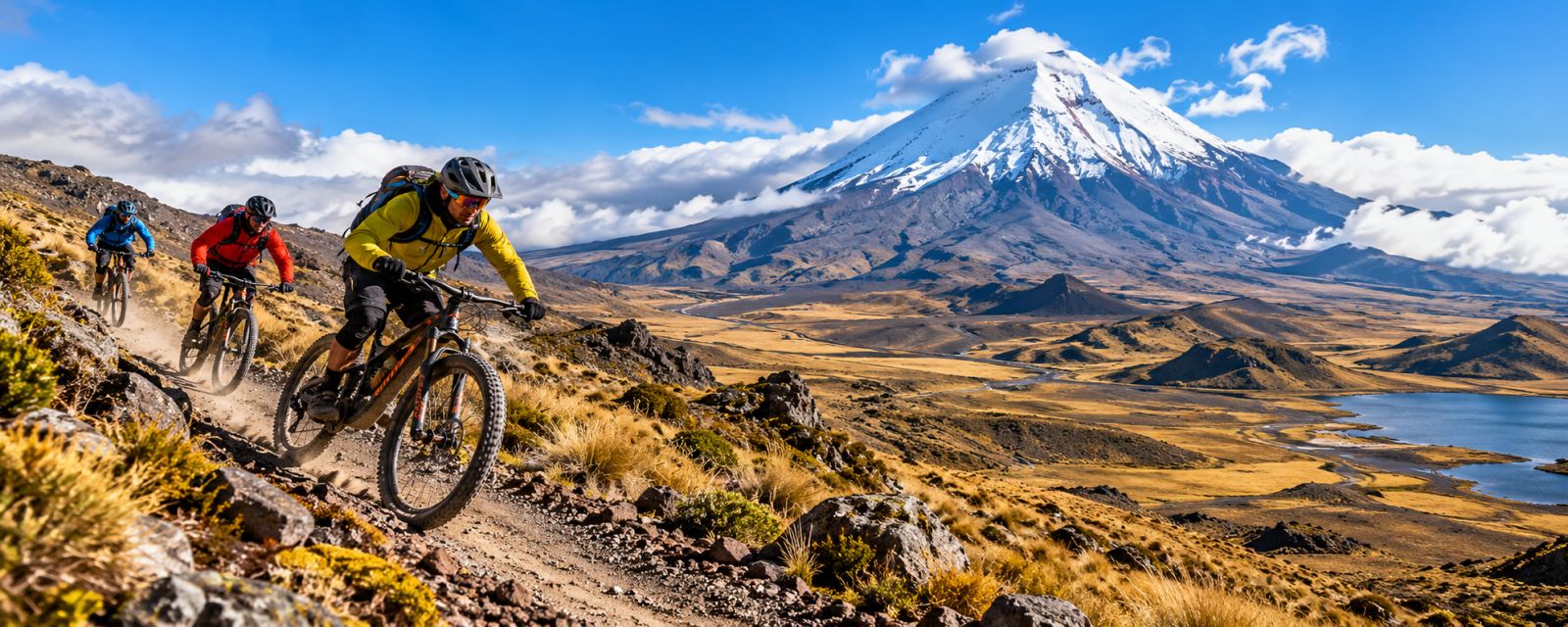
A mountain biking adventure in the Ecuadorian Andes may begin near a snow-covered volcano, descend through vast páramo grasslands, continue along rugged mountain roads, and eventually reach greener valleys with noticeably warmer temperatures.
These contrasts make Ecuador one of South America's most fascinating destinations for cycling and outdoor adventure.
However, altitude, terrain, and weather conditions also influence physical effort, equipment selection, route difficulty, and the overall cycling experience.
At Ecuadorian Alpine Institute, we believe that understanding these elements is an important part of preparing for an unforgettable Ecuador cycling adventure.
In this guide, we explain how Ecuador's geography shapes cycling tours, what riders can expect at different elevations, and how to prepare for mountain biking and cycling experiences in the Ecuadorian Andes.
Why Is Ecuador an Exceptional Destination for Cycling Tours?
Ecuador is located on the equator in northwestern South America.
Despite its relatively small geographical size, the country features an extraordinary variety of natural environments.
The Andes cross Ecuador from north to south, creating dramatic mountain landscapes, deep valleys, volcanic highlands, and diverse climatic zones.
This geography provides opportunities for different cycling experiences, including:
- High-altitude mountain biking.
- Scenic cycling through Andean valleys.
- Volcano cycling adventures.
- Cross-country mountain biking.
- Downhill cycling on suitable routes.
- Rural and cultural cycling experiences.
- Cycling through cloud forest environments.
- Multi-day cycling adventures.
One of Ecuador's greatest attractions is the possibility of experiencing several distinct landscapes during a single cycling itinerary.
Depending on the route, riders may encounter snow-covered volcanoes, open highland grasslands, agricultural communities, forests, and scenic mountain roads.
The combination of altitude, terrain, and climate is what makes cycling in Ecuador such a distinctive adventure.
1. How Altitude Affects Cycling in Ecuador
Altitude is one of the most important factors influencing cycling performance in the Ecuadorian Andes.
Many cycling routes around Quito, Cotopaxi, and other highland destinations are located at elevations significantly higher than those experienced by riders living near sea level.
Quito, Ecuador's capital, is situated at approximately 2,850 meters (9,350 feet) above sea level.
Some mountain biking routes in the Ecuadorian highlands begin at elevations above 3,000 or even 4,000 meters.
At these elevations, reduced atmospheric pressure means less oxygen is available to the body with each breath.
Why Does Cycling Feel Harder at High Altitude?
When cycling at altitude, riders may notice:
- Faster breathing during physical activity.
- Increased perceived effort.
- Reduced aerobic performance.
- Greater fatigue during climbs.
- Slower recovery between demanding sections.
Even experienced cyclists may find high-altitude routes more challenging than similar routes at lower elevations.
This is because cardiovascular fitness and altitude acclimatization are not the same.
A cyclist who regularly completes long rides at sea level may still experience altitude-related difficulties when arriving in the Ecuadorian Andes.
The Importance of Acclimatization
Altitude acclimatization is the process through which the body gradually adapts to reduced oxygen availability.
For international travelers arriving from lower elevations, allowing sufficient time for altitude adjustment can be an important part of planning an Ecuador cycling tour.
Depending on the itinerary, preparation may involve:
- Spending time at moderate elevations before higher-altitude activities.
- Beginning with less demanding rides.
- Increasing altitude exposure progressively.
- Monitoring individual responses.
- Including appropriate recovery periods.
Travelers should be aware that rapid ascent can cause acute mountain sickness.
Symptoms may include headaches, nausea, dizziness, fatigue, and loss of appetite.
Severe altitude-related symptoms require urgent medical attention and descent.
Being physically fit does not prevent altitude sickness, and a downhill cycling route does not eliminate altitude-related risks.
The appropriate acclimatization strategy depends on the starting elevation, maximum altitude, sleeping-altitude progression, and individual susceptibility.
2. Ecuador's Terrain Creates Diverse Cycling Experiences
One of the greatest attractions of Ecuador mountain biking is the diversity of terrain.
The country's volcanic geography, mountain valleys, agricultural landscapes, and forested slopes create a wide range of riding environments.
Different terrains require different cycling techniques, equipment, and levels of experience.
Volcanic Terrain
Ecuador is famous for its volcanoes, including Cotopaxi, Chimborazo, Cayambe, and Antisana.
Cycling routes near volcanic landscapes may feature:
- Loose volcanic gravel.
- Sandy sections.
- Rocky tracks.
- Open mountain roads.
- Steep gradients.
- Wide views of surrounding peaks.
Volcanic terrain can be visually spectacular but may also create technical riding challenges.
Loose surfaces reduce traction, while rocks and uneven tracks require careful bike handling.
Andean Mountain Roads
Rural mountain roads are common throughout the Ecuadorian highlands.
Depending on the route, riders may travel along gravel roads, compacted dirt tracks, or paved sections.
These routes can provide opportunities to explore traditional agricultural landscapes, mountain communities, and scenic valleys.
Forest and Cloud Forest Trails
At lower elevations, cycling routes may pass through forested landscapes with different environmental conditions.
Cloud forest environments can feature:
- Dense vegetation.
- Humid air.
- Muddy sections.
- Narrow trails.
- Exposed roots.
- Variable traction.
Riders should adjust their speed and technique according to trail conditions.
High-Altitude Páramo
The páramo is a distinctive high-elevation ecosystem found in the tropical Andes.
These open landscapes are characterized by grasslands, shrubs, wetlands, and unique vegetation adapted to cool mountain conditions.
Cycling through suitable páramo routes offers spectacular scenery and expansive mountain views.
However, the ecosystem is environmentally sensitive.
Riders should remain on authorized roads and trails, respect protected-area regulations, and avoid damaging fragile vegetation.
3. How Ecuador's Climate Influences Cycling Tours
Although Ecuador lies on the equator, its climate varies significantly with elevation, geography, and regional weather patterns.
The country's equatorial location does not mean that every cycling destination experiences consistently warm weather.
In the Andes, temperatures can change considerably between high-altitude mountain areas and lower valleys.
High-Altitude Climate
At higher elevations, cyclists may encounter:
- Cold temperatures.
- Strong winds.
- Intense sunshine.
- Rain or occasional snow.
- Rapidly changing cloud cover.
- Reduced visibility.
A cycling tour beginning near a high-altitude volcano may feel cold even when the sun is shining.
Lower-Elevation Valleys
As cycling routes descend into lower valleys, temperatures may become noticeably warmer.
Riders may need to remove insulating layers and adjust their clothing to remain comfortable.
Cloud Forest Climate
Cloud forest areas often experience higher humidity and frequent moisture.
Depending on the location and season, trails may become muddy or slippery.
Why Weather Preparation Matters
Cyclists should be prepared for changing conditions rather than relying only on the forecast for Quito or another nearby city.
A mountain route may experience different weather conditions from the city where the tour begins.
Layered clothing and suitable weather protection are essential for many Ecuador cycling adventures.
4. Cotopaxi Mountain Biking: A Perfect Example of Ecuador's Diversity
Cotopaxi is one of Ecuador's most iconic volcanoes and an outstanding setting for mountain biking adventures.
The volcano rises to approximately 5,897 meters (19,347 feet) above sea level and dominates the surrounding Andean landscape.
Cycling experiences in the Cotopaxi region may combine spectacular volcanic scenery with high-altitude terrain and changing environmental conditions.
Depending on the selected route, riders may experience:
- Views of Cotopaxi's snow-covered summit.
- Open páramo landscapes.
- Volcanic gravel roads.
- Scenic downhill sections.
- High-altitude grasslands.
- Mountain lakes and surrounding valleys.
Why Cotopaxi Downhill Cycling Is Special
A downhill-oriented cycling tour can allow travelers to experience significant landscape changes while descending through the Ecuadorian highlands.
As elevation decreases, riders may notice differences in temperature, vegetation, and terrain.
However, downhill cycling is not necessarily easy.
Loose gravel, uneven roads, braking demands, and variable traction require concentration and appropriate riding skills.
High-altitude exposure remains an important consideration, even when the route involves more descending than climbing.
Is Cotopaxi Mountain Biking Suitable for Beginners?
Suitability depends on the specific route, weather conditions, and individual cycling experience.
Some routes may be accessible to riders with basic mountain biking skills, while others require more advanced technical abilities.
Travelers should review the itinerary and confirm the difficulty level before booking.
5. How Altitude and Terrain Affect Cycling Difficulty
Cycling difficulty cannot be determined by distance alone.
A relatively short route at high altitude may be more demanding than a longer ride at lower elevations.
Similarly, a downhill route over loose volcanic gravel may require greater technical skill than a longer ride on a smooth paved road.
Factors That Influence Cycling Difficulty
Important considerations include:
- Starting altitude.
- Maximum elevation.
- Total distance.
- Elevation gain and loss.
- Surface conditions.
- Technical terrain.
- Weather exposure.
- Rider experience.
- Bicycle type and equipment.
Understanding Physical vs. Technical Difficulty
Physical difficulty relates to the effort required to complete the route.
Technical difficulty relates to the bike-handling skills needed to navigate the terrain.
A route can be physically moderate but technically demanding.
For example, a downhill trail with loose rocks and sharp turns may require advanced bike control despite involving relatively little climbing.
Choosing the right Ecuador cycling tour means understanding both the physical and technical demands of the route.
6. What to Wear for Cycling in the Ecuadorian Andes
Clothing selection is especially important when cycling across different elevations and climatic zones.
A rider may begin a tour in cold mountain conditions and finish in a warmer valley.
Recommended Clothing
Depending on the route and weather, useful items include:
- Breathable cycling jersey.
- Moisture-wicking base layer.
- Lightweight insulating jacket.
- Waterproof or windproof outer layer.
- Comfortable cycling shorts or trousers.
- Full-finger cycling gloves.
- Suitable cycling socks.
- Protective eyewear.
- Sun protection.
- Appropriate footwear.
Essential Safety Equipment
Riders should also consider:
- Properly fitted cycling helmet.
- Suitable mountain bike.
- Drinking water.
- Basic first-aid supplies.
- Repair equipment.
- Spare inner tube or suitable tire-repair kit.
- Navigation or communication equipment.
- Small backpack or hydration pack.
The exact equipment requirements depend on the route and services included in the cycling tour.
Travelers should confirm what the operator provides before departure.
7. Choosing the Right Bicycle for Ecuador Cycling Tours
Different cycling routes require different bicycle characteristics.
A suitable bicycle should match the terrain, route difficulty, and rider experience.
Hardtail Mountain Bikes
Hardtail mountain bikes feature front suspension and a rigid rear frame.
They can be suitable for many gravel roads and moderately uneven trails.
Full-Suspension Mountain Bikes
Full-suspension bikes include front and rear suspension.
They may provide additional control and comfort on rough or technically demanding terrain.
Gravel Bikes
Gravel bikes can be appropriate for certain mixed-surface routes involving paved roads and relatively smooth gravel tracks.
However, they may not be suitable for more technical mountain biking trails.
E-Mountain Bikes
Electric-assist mountain bikes may help reduce the physical effort required on certain climbs.
However, electric assistance does not eliminate altitude-related health risks or the need for technical riding skills.
Bicycle selection should always be based on the actual itinerary.
8. How to Prepare Physically for an Ecuador Cycling Adventure
Preparing for an Ecuador cycling tour can improve comfort, endurance, and confidence.
Travelers planning demanding routes may benefit from several weeks of progressive training.
Build Cardiovascular Endurance
Useful activities include:
- Regular cycling.
- Hill training.
- Brisk walking.
- Hiking.
- Other aerobic exercise.
Improve Leg Strength
Strength exercises may help prepare riders for sustained cycling and uneven terrain.
Examples include:
- Squats.
- Lunges.
- Step-ups.
- Calf raises.
- Core stability exercises.
Practice Technical Bike Handling
For mountain biking routes, riders should develop skills such as:
- Controlled braking.
- Cornering.
- Riding on loose gravel.
- Maintaining balance.
- Selecting safe lines.
- Managing downhill speed.
Prepare for Altitude Separately
Physical training is valuable, but it does not replace acclimatization.
Travelers arriving from sea level should consider their altitude exposure and allow suitable time for adjustment before demanding high-altitude activities.
9. When Is the Best Time for Cycling in Ecuador?
Ecuador offers cycling opportunities throughout much of the year, but conditions vary significantly by region and elevation.
In parts of the northern and central highlands, relatively drier conditions often occur around June to September.
However, local weather patterns vary, and rainfall can occur at any time.
Cloud forest and lower-elevation routes may experience different seasonal conditions.
What Should Travelers Consider?
Before choosing travel dates, evaluate:
- The region being visited.
- Route elevation.
- Expected rainfall.
- Trail conditions.
- Temperature ranges.
- Local weather forecasts.
- Protected-area access requirements.
Rather than assuming that one season is ideal for every cycling destination, travelers should select dates according to the specific route.
10. Responsible Cycling in Ecuador's Natural Environments
Ecuador's diverse ecosystems are among its greatest attractions.
Cycling tourism should respect the natural environments and communities through which routes pass.
Responsible practices include:
- Staying on authorized roads and trails.
- Avoiding damage to páramo vegetation.
- Respecting protected-area regulations.
- Carrying out all waste.
- Avoiding disturbance to wildlife.
- Respecting local communities.
- Following route-specific access rules.
- Using appropriate speeds near pedestrians and animals.
Some protected areas may restrict bicycle access to designated routes.
Travelers should verify current regulations before entering national parks or other protected landscapes.
Responsible cycling helps protect Ecuador's natural heritage.
11. Guided vs. Independent Cycling Tours in Ecuador
Travelers can explore Ecuador by bicycle through guided tours or independent itineraries.
Both approaches have advantages, depending on experience and travel preferences.
Guided Ecuador Cycling Tours
A guided cycling experience may provide:
- Local route knowledge.
- Assistance with logistics.
- Route planning.
- Equipment coordination.
- Information about terrain and weather.
- Cultural interpretation.
- Support arrangements.
Guided tours can be particularly attractive for international visitors unfamiliar with Ecuador's geography and mountain environments.
Independent Cycling
Independent cycling provides greater flexibility but requires travelers to manage navigation, equipment, route conditions, transportation, and emergency planning.
Remote mountain routes may present additional challenges.
Travelers should choose the option that matches their experience and preparation.
12. How Ecuadorian Alpine Institute Helps Travelers Explore Ecuador by Bicycle
At Ecuadorian Alpine Institute, we believe that cycling is one of the most rewarding ways to discover the landscapes of the Ecuadorian Andes.
From the volcanic highlands surrounding Cotopaxi to scenic mountain valleys and rural Andean environments, Ecuador offers extraordinary opportunities for outdoor exploration.
Our cycling adventures emphasize the importance of understanding route conditions, choosing appropriate experiences, and preparing for the challenges of high-altitude terrain.
Whether you are interested in a scenic mountain biking excursion or a more extensive cycling journey, selecting the right itinerary is essential.
Our team can help travelers explore available cycling experiences and understand the preparation required for their chosen adventure.
Final Thoughts: Why Altitude, Terrain, and Climate Make Ecuador Cycling Unique
Ecuador cycling tours offer far more than beautiful scenery. They provide an opportunity to experience the remarkable geographical diversity of the Andes from the perspective of a bicycle.
Altitude influences physical performance and acclimatization needs.
Terrain determines the technical demands and riding style.
Climate shapes clothing choices, equipment requirements, and route planning.
Together, these three elements create the distinctive character of cycling in Ecuador.
From volcanic gravel roads and high-altitude páramo to green valleys and cloud forest environments, each route offers a different experience.
Understanding these factors helps travelers choose suitable adventures and prepare for the conditions they may encounter.
Ready to Discover Ecuador on Two Wheels?
Explore Ecuador's spectacular cycling landscapes with Ecuadorian Alpine Institute.
Discover mountain biking adventures, volcanic scenery, high-altitude routes, and unforgettable experiences in the Ecuadorian Andes.
Whether you are planning your first cycling adventure in Ecuador or looking for a new mountain biking destination in South America, our team can help you explore suitable options.
Contact Ecuadorian Alpine Institute today to learn more about our Ecuador cycling tours and start planning your next Andean adventure.
---
Frequently Asked Questions About Ecuador Cycling Tours
Is Ecuador a good destination for mountain biking?
Yes. Ecuador offers diverse mountain biking opportunities, including volcanic landscapes, high-altitude roads, Andean valleys, and forested trails. Route difficulty varies according to terrain and elevation.
How does altitude affect cycling in Ecuador?
High altitude reduces oxygen availability, making physical activity more demanding. Riders may experience faster breathing, increased fatigue, and reduced aerobic performance.
Do I need to acclimatize before cycling in the Ecuadorian Andes?
Acclimatization is important for travelers participating in high-altitude cycling activities, especially those arriving from sea level. The appropriate preparation depends on route elevation and individual susceptibility.
Can beginners join Ecuador mountain biking tours?
Some routes may be suitable for beginners, while others require advanced technical skills. Travelers should verify the difficulty and terrain before booking.
What is the best time of year for cycling in Ecuador?
Cycling is possible during much of the year. In parts of the Ecuadorian highlands, June through September often brings relatively drier conditions, although weather varies by location.
What should I wear for mountain biking in Ecuador?
Recommended clothing generally includes breathable layers, weather protection, cycling gloves, a helmet, appropriate footwear, and sun protection. Requirements vary according to elevation and conditions.
Is Cotopaxi a popular mountain biking destination?
Yes. The Cotopaxi region offers spectacular volcanic scenery and opportunities for mountain biking on suitable routes, subject to current access regulations and local conditions.
Are downhill cycling tours in Ecuador physically demanding?
Downhill cycling may require less sustained pedaling than uphill routes, but it can still be technically challenging. Riders need appropriate bike-handling skills, especially on loose gravel and uneven terrain.
What makes Ecuador cycling tours different from other destinations?
Ecuador's combination of high-altitude volcanoes, diverse terrain, changing climatic zones, and dramatic Andean landscapes creates distinctive cycling experiences within relatively short distances.
Cycling in Ecuador is an extraordinary adventure shaped by three defining elements: altitude, terrain, and climate. From high-altitude Andean volcanoes to lush cloud forests and scenic rural valleys, Ecuador cycling tours offer an exceptional variety of landscapes and riding experiences within a relatively compact country.
Unlike many cycling destinations where routes follow similar landscapes for long distances, Ecuador offers dramatic environmental changes across relatively short geographical areas.
A mountain biking adventure in the Ecuadorian Andes may begin near a snow-covered volcano, descend through vast páramo grasslands, continue along rugged mountain roads, and eventually reach greener valleys with noticeably warmer temperatures.
These contrasts make Ecuador one of South America's most fascinating destinations for cycling and outdoor adventure.
However, altitude, terrain, and weather conditions also influence physical effort, equipment selection, route difficulty, and the overall cycling experience.
At Ecuadorian Alpine Institute, we believe that understanding these elements is an important part of preparing for an unforgettable Ecuador cycling adventure.
In this guide, we explain how Ecuador's geography shapes cycling tours, what riders can expect at different elevations, and how to prepare for mountain biking and cycling experiences in the Ecuadorian Andes.
Why Is Ecuador an Exceptional Destination for Cycling Tours?
Ecuador is located on the equator in northwestern South America.
Despite its relatively small geographical size, the country features an extraordinary variety of natural environments.
The Andes cross Ecuador from north to south, creating dramatic mountain landscapes, deep valleys, volcanic highlands, and diverse climatic zones.
This geography provides opportunities for different cycling experiences, including:
- High-altitude mountain biking.
- Scenic cycling through Andean valleys.
- Volcano cycling adventures.
- Cross-country mountain biking.
- Downhill cycling on suitable routes.
- Rural and cultural cycling experiences.
- Cycling through cloud forest environments.
- Multi-day cycling adventures.
One of Ecuador's greatest attractions is the possibility of experiencing several distinct landscapes during a single cycling itinerary.
Depending on the route, riders may encounter snow-covered volcanoes, open highland grasslands, agricultural communities, forests, and scenic mountain roads.
The combination of altitude, terrain, and climate is what makes cycling in Ecuador such a distinctive adventure.
1. How Altitude Affects Cycling in Ecuador
Altitude is one of the most important factors influencing cycling performance in the Ecuadorian Andes.
Many cycling routes around Quito, Cotopaxi, and other highland destinations are located at elevations significantly higher than those experienced by riders living near sea level.
Quito, Ecuador's capital, is situated at approximately 2,850 meters (9,350 feet) above sea level.
Some mountain biking routes in the Ecuadorian highlands begin at elevations above 3,000 or even 4,000 meters.
At these elevations, reduced atmospheric pressure means less oxygen is available to the body with each breath.
Why Does Cycling Feel Harder at High Altitude?
When cycling at altitude, riders may notice:
- Faster breathing during physical activity.
- Increased perceived effort.
- Reduced aerobic performance.
- Greater fatigue during climbs.
- Slower recovery between demanding sections.
Even experienced cyclists may find high-altitude routes more challenging than similar routes at lower elevations.
This is because cardiovascular fitness and altitude acclimatization are not the same.
A cyclist who regularly completes long rides at sea level may still experience altitude-related difficulties when arriving in the Ecuadorian Andes.
The Importance of Acclimatization
Altitude acclimatization is the process through which the body gradually adapts to reduced oxygen availability.
For international travelers arriving from lower elevations, allowing sufficient time for altitude adjustment can be an important part of planning an Ecuador cycling tour.
Depending on the itinerary, preparation may involve:
- Spending time at moderate elevations before higher-altitude activities.
- Beginning with less demanding rides.
- Increasing altitude exposure progressively.
- Monitoring individual responses.
- Including appropriate recovery periods.
Travelers should be aware that rapid ascent can cause acute mountain sickness.
Symptoms may include headaches, nausea, dizziness, fatigue, and loss of appetite.
Severe altitude-related symptoms require urgent medical attention and descent.
Being physically fit does not prevent altitude sickness, and a downhill cycling route does not eliminate altitude-related risks.
The appropriate acclimatization strategy depends on the starting elevation, maximum altitude, sleeping-altitude progression, and individual susceptibility.
2. Ecuador's Terrain Creates Diverse Cycling Experiences
One of the greatest attractions of Ecuador mountain biking is the diversity of terrain.
The country's volcanic geography, mountain valleys, agricultural landscapes, and forested slopes create a wide range of riding environments.
Different terrains require different cycling techniques, equipment, and levels of experience.
Volcanic Terrain
Ecuador is famous for its volcanoes, including Cotopaxi, Chimborazo, Cayambe, and Antisana.
Cycling routes near volcanic landscapes may feature:
- Loose volcanic gravel.
- Sandy sections.
- Rocky tracks.
- Open mountain roads.
- Steep gradients.
- Wide views of surrounding peaks.
Volcanic terrain can be visually spectacular but may also create technical riding challenges.
Loose surfaces reduce traction, while rocks and uneven tracks require careful bike handling.
Andean Mountain Roads
Rural mountain roads are common throughout the Ecuadorian highlands.
Depending on the route, riders may travel along gravel roads, compacted dirt tracks, or paved sections.
These routes can provide opportunities to explore traditional agricultural landscapes, mountain communities, and scenic valleys.
Forest and Cloud Forest Trails
At lower elevations, cycling routes may pass through forested landscapes with different environmental conditions.
Cloud forest environments can feature:
- Dense vegetation.
- Humid air.
- Muddy sections.
- Narrow trails.
- Exposed roots.
- Variable traction.
Riders should adjust their speed and technique according to trail conditions.
High-Altitude Páramo
The páramo is a distinctive high-elevation ecosystem found in the tropical Andes.
These open landscapes are characterized by grasslands, shrubs, wetlands, and unique vegetation adapted to cool mountain conditions.
Cycling through suitable páramo routes offers spectacular scenery and expansive mountain views.
However, the ecosystem is environmentally sensitive.
Riders should remain on authorized roads and trails, respect protected-area regulations, and avoid damaging fragile vegetation.
3. How Ecuador's Climate Influences Cycling Tours
Although Ecuador lies on the equator, its climate varies significantly with elevation, geography, and regional weather patterns.
The country's equatorial location does not mean that every cycling destination experiences consistently warm weather.
In the Andes, temperatures can change considerably between high-altitude mountain areas and lower valleys.
High-Altitude Climate
At higher elevations, cyclists may encounter:
- Cold temperatures.
- Strong winds.
- Intense sunshine.
- Rain or occasional snow.
- Rapidly changing cloud cover.
- Reduced visibility.
A cycling tour beginning near a high-altitude volcano may feel cold even when the sun is shining.
Lower-Elevation Valleys
As cycling routes descend into lower valleys, temperatures may become noticeably warmer.
Riders may need to remove insulating layers and adjust their clothing to remain comfortable.
Cloud Forest Climate
Cloud forest areas often experience higher humidity and frequent moisture.
Depending on the location and season, trails may become muddy or slippery.
Why Weather Preparation Matters
Cyclists should be prepared for changing conditions rather than relying only on the forecast for Quito or another nearby city.
A mountain route may experience different weather conditions from the city where the tour begins.
Layered clothing and suitable weather protection are essential for many Ecuador cycling adventures.
4. Cotopaxi Mountain Biking: A Perfect Example of Ecuador's Diversity
Cotopaxi is one of Ecuador's most iconic volcanoes and an outstanding setting for mountain biking adventures.
The volcano rises to approximately 5,897 meters (19,347 feet) above sea level and dominates the surrounding Andean landscape.
Cycling experiences in the Cotopaxi region may combine spectacular volcanic scenery with high-altitude terrain and changing environmental conditions.
Depending on the selected route, riders may experience:
- Views of Cotopaxi's snow-covered summit.
- Open páramo landscapes.
- Volcanic gravel roads.
- Scenic downhill sections.
- High-altitude grasslands.
- Mountain lakes and surrounding valleys.
Why Cotopaxi Downhill Cycling Is Special
A downhill-oriented cycling tour can allow travelers to experience significant landscape changes while descending through the Ecuadorian highlands.
As elevation decreases, riders may notice differences in temperature, vegetation, and terrain.
However, downhill cycling is not necessarily easy.
Loose gravel, uneven roads, braking demands, and variable traction require concentration and appropriate riding skills.
High-altitude exposure remains an important consideration, even when the route involves more descending than climbing.
Is Cotopaxi Mountain Biking Suitable for Beginners?
Suitability depends on the specific route, weather conditions, and individual cycling experience.
Some routes may be accessible to riders with basic mountain biking skills, while others require more advanced technical abilities.
Travelers should review the itinerary and confirm the difficulty level before booking.
5. How Altitude and Terrain Affect Cycling Difficulty
Cycling difficulty cannot be determined by distance alone.
A relatively short route at high altitude may be more demanding than a longer ride at lower elevations.
Similarly, a downhill route over loose volcanic gravel may require greater technical skill than a longer ride on a smooth paved road.
Factors That Influence Cycling Difficulty
Important considerations include:
- Starting altitude.
- Maximum elevation.
- Total distance.
- Elevation gain and loss.
- Surface conditions.
- Technical terrain.
- Weather exposure.
- Rider experience.
- Bicycle type and equipment.
Understanding Physical vs. Technical Difficulty
Physical difficulty relates to the effort required to complete the route.
Technical difficulty relates to the bike-handling skills needed to navigate the terrain.
A route can be physically moderate but technically demanding.
For example, a downhill trail with loose rocks and sharp turns may require advanced bike control despite involving relatively little climbing.
Choosing the right Ecuador cycling tour means understanding both the physical and technical demands of the route.
6. What to Wear for Cycling in the Ecuadorian Andes
Clothing selection is especially important when cycling across different elevations and climatic zones.
A rider may begin a tour in cold mountain conditions and finish in a warmer valley.
Recommended Clothing
Depending on the route and weather, useful items include:
- Breathable cycling jersey.
- Moisture-wicking base layer.
- Lightweight insulating jacket.
- Waterproof or windproof outer layer.
- Comfortable cycling shorts or trousers.
- Full-finger cycling gloves.
- Suitable cycling socks.
- Protective eyewear.
- Sun protection.
- Appropriate footwear.
Essential Safety Equipment
Riders should also consider:
- Properly fitted cycling helmet.
- Suitable mountain bike.
- Drinking water.
- Basic first-aid supplies.
- Repair equipment.
- Spare inner tube or suitable tire-repair kit.
- Navigation or communication equipment.
- Small backpack or hydration pack.
The exact equipment requirements depend on the route and services included in the cycling tour.
Travelers should confirm what the operator provides before departure.
7. Choosing the Right Bicycle for Ecuador Cycling Tours
Different cycling routes require different bicycle characteristics.
A suitable bicycle should match the terrain, route difficulty, and rider experience.
Hardtail Mountain Bikes
Hardtail mountain bikes feature front suspension and a rigid rear frame.
They can be suitable for many gravel roads and moderately uneven trails.
Full-Suspension Mountain Bikes
Full-suspension bikes include front and rear suspension.
They may provide additional control and comfort on rough or technically demanding terrain.
Gravel Bikes
Gravel bikes can be appropriate for certain mixed-surface routes involving paved roads and relatively smooth gravel tracks.
However, they may not be suitable for more technical mountain biking trails.
E-Mountain Bikes
Electric-assist mountain bikes may help reduce the physical effort required on certain climbs.
However, electric assistance does not eliminate altitude-related health risks or the need for technical riding skills.
Bicycle selection should always be based on the actual itinerary.
8. How to Prepare Physically for an Ecuador Cycling Adventure
Preparing for an Ecuador cycling tour can improve comfort, endurance, and confidence.
Travelers planning demanding routes may benefit from several weeks of progressive training.
Build Cardiovascular Endurance
Useful activities include:
- Regular cycling.
- Hill training.
- Brisk walking.
- Hiking.
- Other aerobic exercise.
Improve Leg Strength
Strength exercises may help prepare riders for sustained cycling and uneven terrain.
Examples include:
- Squats.
- Lunges.
- Step-ups.
- Calf raises.
- Core stability exercises.
Practice Technical Bike Handling
For mountain biking routes, riders should develop skills such as:
- Controlled braking.
- Cornering.
- Riding on loose gravel.
- Maintaining balance.
- Selecting safe lines.
- Managing downhill speed.
Prepare for Altitude Separately
Physical training is valuable, but it does not replace acclimatization.
Travelers arriving from sea level should consider their altitude exposure and allow suitable time for adjustment before demanding high-altitude activities.
9. When Is the Best Time for Cycling in Ecuador?
Ecuador offers cycling opportunities throughout much of the year, but conditions vary significantly by region and elevation.
In parts of the northern and central highlands, relatively drier conditions often occur around June to September.
However, local weather patterns vary, and rainfall can occur at any time.
Cloud forest and lower-elevation routes may experience different seasonal conditions.
What Should Travelers Consider?
Before choosing travel dates, evaluate:
- The region being visited.
- Route elevation.
- Expected rainfall.
- Trail conditions.
- Temperature ranges.
- Local weather forecasts.
- Protected-area access requirements.
Rather than assuming that one season is ideal for every cycling destination, travelers should select dates according to the specific route.
10. Responsible Cycling in Ecuador's Natural Environments
Ecuador's diverse ecosystems are among its greatest attractions.
Cycling tourism should respect the natural environments and communities through which routes pass.
Responsible practices include:
- Staying on authorized roads and trails.
- Avoiding damage to páramo vegetation.
- Respecting protected-area regulations.
- Carrying out all waste.
- Avoiding disturbance to wildlife.
- Respecting local communities.
- Following route-specific access rules.
- Using appropriate speeds near pedestrians and animals.
Some protected areas may restrict bicycle access to designated routes.
Travelers should verify current regulations before entering national parks or other protected landscapes.
Responsible cycling helps protect Ecuador's natural heritage.
11. Guided vs. Independent Cycling Tours in Ecuador
Travelers can explore Ecuador by bicycle through guided tours or independent itineraries.
Both approaches have advantages, depending on experience and travel preferences.
Guided Ecuador Cycling Tours
A guided cycling experience may provide:
- Local route knowledge.
- Assistance with logistics.
- Route planning.
- Equipment coordination.
- Information about terrain and weather.
- Cultural interpretation.
- Support arrangements.
Guided tours can be particularly attractive for international visitors unfamiliar with Ecuador's geography and mountain environments.
Independent Cycling
Independent cycling provides greater flexibility but requires travelers to manage navigation, equipment, route conditions, transportation, and emergency planning.
Remote mountain routes may present additional challenges.
Travelers should choose the option that matches their experience and preparation.
12. How Ecuadorian Alpine Institute Helps Travelers Explore Ecuador by Bicycle
At Ecuadorian Alpine Institute, we believe that cycling is one of the most rewarding ways to discover the landscapes of the Ecuadorian Andes.
From the volcanic highlands surrounding Cotopaxi to scenic mountain valleys and rural Andean environments, Ecuador offers extraordinary opportunities for outdoor exploration.
Our cycling adventures emphasize the importance of understanding route conditions, choosing appropriate experiences, and preparing for the challenges of high-altitude terrain.
Whether you are interested in a scenic mountain biking excursion or a more extensive cycling journey, selecting the right itinerary is essential.
Our team can help travelers explore available cycling experiences and understand the preparation required for their chosen adventure.
Final Thoughts: Why Altitude, Terrain, and Climate Make Ecuador Cycling Unique
Ecuador cycling tours offer far more than beautiful scenery. They provide an opportunity to experience the remarkable geographical diversity of the Andes from the perspective of a bicycle.
Altitude influences physical performance and acclimatization needs.
Terrain determines the technical demands and riding style.
Climate shapes clothing choices, equipment requirements, and route planning.
Together, these three elements create the distinctive character of cycling in Ecuador.
From volcanic gravel roads and high-altitude páramo to green valleys and cloud forest environments, each route offers a different experience.
Understanding these factors helps travelers choose suitable adventures and prepare for the conditions they may encounter.
Ready to Discover Ecuador on Two Wheels?
Explore Ecuador's spectacular cycling landscapes with Ecuadorian Alpine Institute.
Discover mountain biking adventures, volcanic scenery, high-altitude routes, and unforgettable experiences in the Ecuadorian Andes.
Whether you are planning your first cycling adventure in Ecuador or looking for a new mountain biking destination in South America, our team can help you explore suitable options.
Contact Ecuadorian Alpine Institute today to learn more about our Ecuador cycling tours and start planning your next Andean adventure.
---
Frequently Asked Questions About Ecuador Cycling Tours
Is Ecuador a good destination for mountain biking?
Yes. Ecuador offers diverse mountain biking opportunities, including volcanic landscapes, high-altitude roads, Andean valleys, and forested trails. Route difficulty varies according to terrain and elevation.
How does altitude affect cycling in Ecuador?
High altitude reduces oxygen availability, making physical activity more demanding. Riders may experience faster breathing, increased fatigue, and reduced aerobic performance.
Do I need to acclimatize before cycling in the Ecuadorian Andes?
Acclimatization is important for travelers participating in high-altitude cycling activities, especially those arriving from sea level. The appropriate preparation depends on route elevation and individual susceptibility.
Can beginners join Ecuador mountain biking tours?
Some routes may be suitable for beginners, while others require advanced technical skills. Travelers should verify the difficulty and terrain before booking.
What is the best time of year for cycling in Ecuador?
Cycling is possible during much of the year. In parts of the Ecuadorian highlands, June through September often brings relatively drier conditions, although weather varies by location.
What should I wear for mountain biking in Ecuador?
Recommended clothing generally includes breathable layers, weather protection, cycling gloves, a helmet, appropriate footwear, and sun protection. Requirements vary according to elevation and conditions.
Is Cotopaxi a popular mountain biking destination?
Yes. The Cotopaxi region offers spectacular volcanic scenery and opportunities for mountain biking on suitable routes, subject to current access regulations and local conditions.
Are downhill cycling tours in Ecuador physically demanding?
Downhill cycling may require less sustained pedaling than uphill routes, but it can still be technically challenging. Riders need appropriate bike-handling skills, especially on loose gravel and uneven terrain.
What makes Ecuador cycling tours different from other destinations?
Ecuador's combination of high-altitude volcanoes, diverse terrain, changing climatic zones, and dramatic Andean landscapes creates distinctive cycling experiences within relatively short distances.