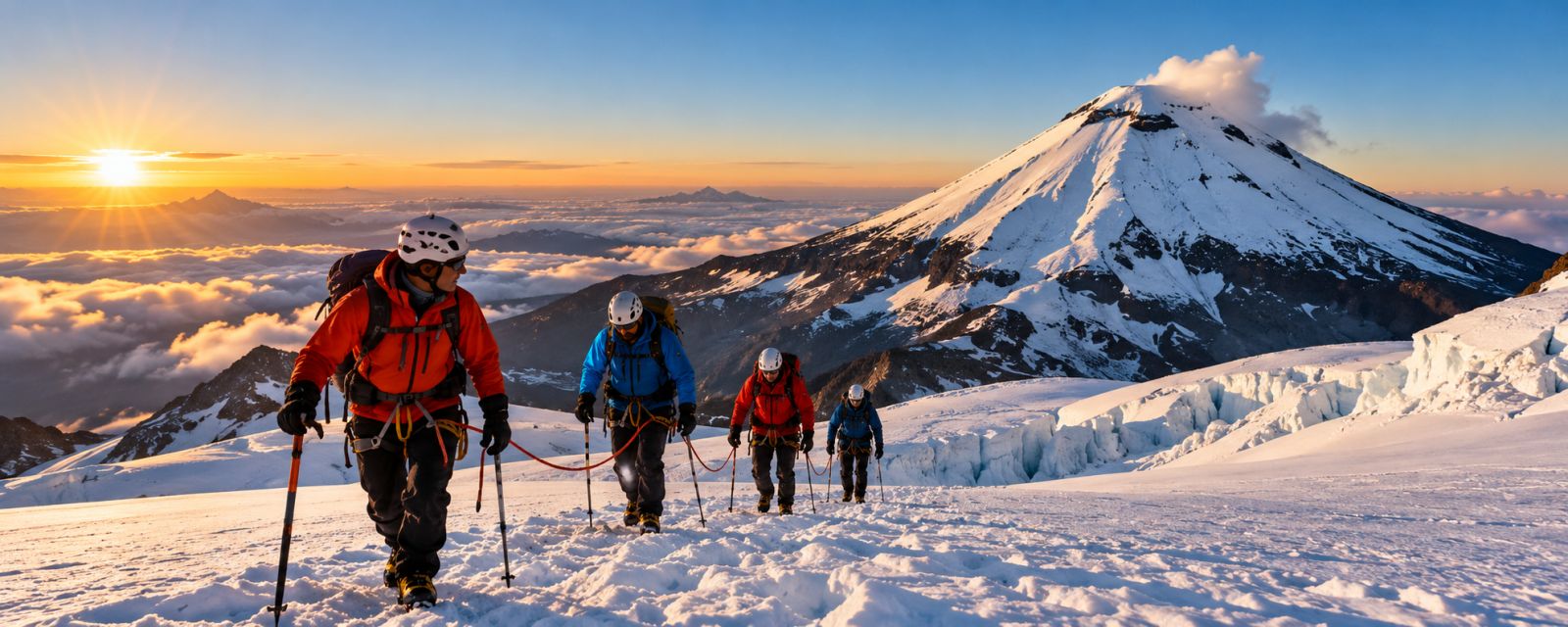
How Ecuadorian Alpine Institute Prepares Travelers for High-Altitude Climbing in Ecuador
How Ecuadorian Alpine Institute Prepares Travelers for High-Altitude Climbing in Ecuador
High-altitude climbing in Ecuador is one of the most rewarding mountaineering experiences in South America. From the snow-covered slopes of Cotopaxi to the towering summit of Chimborazo, the Ecuadorian Andes offer extraordinary adventures for climbers seeking unforgettable mountain challenges.
However, reaching elevations above 5,000 or 6,000 meters requires more than enthusiasm and physical fitness.
Successful mountain preparation involves gradual acclimatization, technical climbing skills, appropriate equipment, realistic expectations, and informed decision-making.
At Ecuadorian Alpine Institute, we understand that every traveler arrives with different climbing goals, physical abilities, and previous mountain experience.
Our approach to Ecuador mountaineering adventures emphasizes thoughtful preparation, progressive altitude exposure, and an understanding of the challenges involved in climbing the Andes.
Whether you are planning your first glacier-climbing experience or preparing for a demanding Chimborazo summit attempt, knowing what to expect before entering the mountains is essential.
In this guide, we explain the key elements of preparing for high-altitude climbing in Ecuador and how travelers can approach their Andean expeditions with greater knowledge and confidence.
Why High-Altitude Climbing in Ecuador Requires Special Preparation
Ecuador is home to some of the most spectacular volcanic mountains in the world.
Located along the equator, the country offers relatively accessible high-altitude climbing destinations, including:
- Cotopaxi Volcano (5,897 m / 19,347 ft): One of Ecuador's most recognizable mountains, famous for its glaciated slopes and dramatic volcanic landscape.
- Chimborazo Volcano (6,263 m / 20,548 ft): Ecuador's highest mountain and the point on Earth's surface farthest from Earth's center.
- Cayambe Volcano (5,790 m / 18,996 ft): A spectacular glacier-covered mountain near the equator.
- Iliniza Norte (5,126 m / 16,818 ft): A popular high-altitude climbing objective frequently considered in mountaineering preparation programs.
- Rucu Pichincha (4,696 m / 15,407 ft): A well-known mountain near Quito that offers opportunities for progressive altitude exposure.
These mountains provide outstanding opportunities for adventure, but their elevation, terrain, and changing weather conditions demand careful preparation.
At high altitude, reduced atmospheric pressure lowers the oxygen available to the body, making physical activity more demanding.
Climbers may also encounter cold temperatures, strong winds, snow, ice, and challenging glacier conditions.
For these reasons, high-altitude mountaineering preparation should begin well before the summit attempt.
1. Understanding Each Traveler's Mountaineering Experience
One of the first steps in preparing for an Ecuador climbing expedition is understanding the climber's previous experience and objectives.
Not every traveler approaches the mountains with the same background.
Some visitors are experienced mountaineers who have already climbed peaks above 5,000 meters.
Others are enthusiastic hikers interested in experiencing glacier climbing for the first time.
Important factors to consider include:
- Previous trekking and mountaineering experience.
- Familiarity with high-altitude environments.
- Physical conditioning and endurance.
- Experience using crampons and ice axes.
- Previous glacier-travel training.
- Personal climbing goals.
- Available time for acclimatization.
These factors help determine which mountain objectives and preparation activities may be appropriate.
A suitable Ecuador mountaineering itinerary should reflect the climber's actual experience rather than simply the altitude of the desired summit.
Travelers should communicate openly about their abilities, limitations, and previous experiences when discussing an expedition.
2. Planning a Progressive Acclimatization Program
Altitude acclimatization is one of the most important components of high-altitude climbing preparation.
As elevation increases, the body must adapt to reduced oxygen availability.
Without adequate acclimatization, climbers may develop acute mountain sickness, commonly known as AMS.
Symptoms can include:
- Headaches.
- Nausea.
- Dizziness.
- Unusual fatigue.
- Difficulty sleeping.
- Loss of appetite.
More serious altitude-related illnesses, including high-altitude pulmonary edema and high-altitude cerebral edema, can become life-threatening.
Why Gradual Acclimatization Matters
Acclimatization develops progressively and varies between individuals.
A suitable itinerary allows time for altitude adaptation while managing increases in sleeping elevation.
For travelers arriving from sea level, this process is particularly important.
A longer Ecuador climbing itinerary may include several days of progressively higher mountain activities before attempting major summits.
However, the number of days alone does not guarantee adequate acclimatization.
The actual sleeping-altitude profile, individual response, and rest periods are essential considerations.
Climbers experiencing symptoms of altitude sickness should not continue ascending to higher sleeping elevations. Severe or worsening symptoms require prompt descent and appropriate medical care.
3. Using Ecuador's Mountains for Acclimatization
One of Ecuador's greatest advantages for mountaineers is the concentration of high-altitude mountains within relatively accessible distances from Quito.
This allows travelers to explore different mountain environments while progressively gaining altitude experience.
Pasochoa Volcano – 4,200 m
Pasochoa is a popular high-altitude hiking destination near Quito.
Its mountain trails offer an opportunity to experience Ecuador's Andean landscapes and begin evaluating physical performance at elevation.
It can be considered after suitable initial altitude adjustment.
Rucu Pichincha – 4,696 m
Rucu Pichincha offers impressive views of Quito and the surrounding Andes.
Its altitude makes it a popular hiking objective for travelers preparing for higher mountain experiences.
Iliniza Norte – 5,126 m
Iliniza Norte provides a more demanding high-altitude climbing objective.
Depending on the route and conditions, it may involve exposed rocky terrain and requires appropriate equipment, experience, and guidance.
Cotopaxi Volcano – 5,897 m
Cotopaxi offers opportunities for glacier climbing and technical mountaineering.
For appropriately prepared travelers, it may form part of a broader Ecuador climbing expedition.
However, a Cotopaxi ascent is not a mandatory prerequisite for Chimborazo, and it should only be attempted when the climber is adequately acclimatized and technically ready.
The ideal acclimatization sequence depends on the individual, the itinerary, and current mountain conditions.
4. Developing Essential Glacier-Climbing Skills
Climbing Ecuador's glaciated volcanoes requires specialized technical skills.
Even physically strong travelers may find glacier terrain unfamiliar if they have limited mountaineering experience.
Appropriate training can help climbers understand the equipment and techniques required for high-altitude climbing.
Important skills include:
Crampon Techniques
Learning to walk efficiently with crampons is essential when moving across snow and ice.
Climbers should understand how to maintain balance and traction on different types of terrain.
Ice Axe Use
An ice axe is an important piece of mountaineering equipment.
Training may include correct handling, walking techniques, and self-arrest practice in suitable conditions.
Roped Glacier Travel
Glacier travel can involve crevasses and other hidden hazards.
Climbers need to understand basic rope-team procedures, spacing, communication, and movement under professional supervision.
Mountain Safety and Communication
Clear communication between climbers and guides is essential.
Participants should understand instructions, recognize hazards, and communicate promptly when experiencing fatigue, discomfort, or altitude-related symptoms.
Technical training improves preparedness but cannot eliminate the inherent risks of mountaineering.
5. Preparing Physically Before Traveling to Ecuador
Physical conditioning is an important part of preparing for a high-altitude climbing expedition.
Although fitness does not prevent altitude sickness, good physical preparation can help travelers manage the demands of long hiking days and challenging mountain terrain.
A balanced training program may include:
- Cardiovascular endurance activities.
- Uphill hiking and stair climbing.
- Lower-body strength training.
- Core stability exercises.
- Walking with a loaded backpack.
- Mobility and balance training.
- Appropriate recovery between training sessions.
Whenever possible, climbers should gradually increase training intensity before traveling.
How Early Should You Begin Training?
Many travelers benefit from beginning structured preparation approximately 8–12 weeks before their expedition.
However, the ideal preparation period depends on current fitness, climbing experience, and the difficulty of the planned objective.
Climbers with limited experience or demanding goals may require a longer preparation period.
Individuals with relevant medical conditions should seek professional medical advice before beginning strenuous training.
6. Choosing the Right Equipment for Ecuador Mountaineering
Proper equipment plays an important role in mountain comfort and safety.
Conditions on Ecuador's high-altitude volcanoes can involve freezing temperatures, strong winds, snow, and ice.
Depending on the mountain and itinerary, essential equipment may include:
- Insulated mountaineering boots.
- Appropriate crampons.
- Ice axe.
- Climbing helmet.
- Mountaineering harness.
- Warm base layers.
- Insulating mid-layers.
- Waterproof and windproof outer clothing.
- Insulated gloves.
- Warm headwear.
- UV-protective sunglasses.
- Headlamp.
- Suitable backpack.
- Water and high-energy snacks.
Equipment requirements should be confirmed before departure.
Travelers should also verify which items are included in the expedition and which must be brought or rented separately.
7. Understanding Mountain Weather and Climbing Conditions
Weather conditions in the Ecuadorian Andes can change rapidly.
Strong winds, snowfall, low visibility, and changing temperatures may affect climbing plans.
Glacier conditions can also vary over time.
Professional mountain preparation includes understanding these uncertainties and maintaining realistic expectations.
Important considerations include:
- Weather forecasts.
- Current route conditions.
- Glacier hazards.
- Climbing schedules.
- Alternative plans.
- Emergency procedures.
A summit attempt should proceed only when conditions and individual readiness are considered appropriate.
Reaching the summit is an objective, but returning safely is always the priority.
No responsible mountaineering operator can guarantee favorable weather or summit success.
8. The Importance of Rest, Hydration, and Nutrition
High-altitude climbing places considerable demands on the body.
Adequate recovery, hydration, and nutrition are important throughout the expedition.
Rest and Recovery
Climbers should allow sufficient recovery between demanding mountain activities.
Sleep and rest support general physical well-being, although sleep quality may temporarily change at altitude.
Hydration
Maintaining normal hydration is important during physical activity.
However, drinking excessive amounts of water does not prevent altitude sickness and may create additional health risks.
Nutrition
Regular meals and sufficient calorie intake help support prolonged physical activity.
Climbers should bring appropriate food and snacks for long mountain days.
These measures complement acclimatization but do not replace it.
9. Preparing Mentally for High-Altitude Mountaineering
Mountain climbing requires patience, adaptability, and realistic expectations.
Long summit attempts, cold conditions, fatigue, and changing plans can be mentally demanding.
Climbers should prepare to:
- Follow instructions carefully.
- Maintain a sustainable pace.
- Communicate concerns openly.
- Adapt when conditions change.
- Accept the possibility of turning back.
- Focus on the overall mountain experience rather than the summit alone.
Mental preparation is especially important for travelers attempting their first major high-altitude climb.
A successful expedition is not defined exclusively by reaching the summit.
Learning new skills, exploring extraordinary landscapes, and returning safely are also meaningful achievements.
10. Why Professional Mountain Guidance Matters
High-altitude mountaineering involves objective hazards that cannot be completely eliminated.
Qualified mountain guides provide valuable knowledge about routes, terrain, glacier hazards, weather, and expedition logistics.
Professional guidance may help climbers:
- Understand the demands of a particular mountain.
- Select appropriate equipment.
- Practice technical climbing skills.
- Evaluate route conditions.
- Follow established safety procedures.
- Make informed decisions during the ascent.
When selecting an Ecuador mountaineering operator, travelers should ask about guide qualifications, experience, guide-to-client ratios, emergency procedures, and the services included.
Professional guidance is an important part of expedition planning, but it does not guarantee safety or summit success.
11. Choosing the Right Ecuador Climbing Expedition
Ecuador offers mountaineering opportunities for travelers with different levels of experience.
The best itinerary depends on several factors, including:
- Desired mountain objectives.
- Previous climbing experience.
- Current acclimatization.
- Physical preparation.
- Technical ability.
- Available travel dates.
- Expedition duration.
- Weather and mountain conditions.
Some travelers may prefer a shorter expedition focused on a single mountain.
Others may benefit from an extended Ecuador mountaineering program that includes progressive acclimatization, training, and several mountain objectives.
For climbers arriving from sea level, additional time can be particularly valuable.
However, the quality of the itinerary is more important than its duration alone.
12. Why Choose Ecuadorian Alpine Institute for High-Altitude Climbing in Ecuador?
At Ecuadorian Alpine Institute, our goal is to help travelers discover the extraordinary beauty and challenges of the Ecuadorian Andes.
We believe that meaningful mountain experiences begin with preparation, respect for the environment, and realistic climbing objectives.
Our Ecuador mountaineering adventures emphasize the importance of:
- Progressive altitude acclimatization.
- Appropriate technical preparation.
- Understanding individual climbing experience.
- Careful equipment selection.
- Awareness of mountain conditions.
- Responsible expedition decision-making.
Whether your dream is to climb Cotopaxi, attempt Chimborazo, or explore Ecuador's spectacular high-altitude landscapes, choosing an appropriate program is an important first step.
Our team can help you explore climbing itineraries suited to your goals, previous experience, and available time.
Final Thoughts: Preparation Is the Foundation of a Rewarding Mountain Adventure
High-altitude climbing in Ecuador offers unforgettable opportunities to explore some of South America's most remarkable mountains.
However, these adventures require thoughtful preparation.
Acclimatization, physical conditioning, technical training, appropriate equipment, and informed mountain decisions all contribute to a better-prepared expedition.
At Ecuadorian Alpine Institute, we encourage travelers to approach the Andes with curiosity, determination, and respect for the mountain environment.
Whether you are preparing for your first glacier climb or planning a challenging 6,000-meter summit, your journey begins long before reaching the mountain.
Ready to Start Your Ecuador Mountaineering Adventure?
Explore the Ecuadorian Andes with Ecuadorian Alpine Institute.
Discover guided climbing experiences on Cotopaxi, Chimborazo, Cayambe, and other spectacular Andean mountains.
Contact our team to discuss your climbing goals, previous experience, and preferred travel dates.
Explore our Ecuador mountaineering tours and start planning your next high-altitude adventure today.
---
Frequently Asked Questions About High-Altitude Climbing in Ecuador
How do I prepare for high-altitude climbing in Ecuador?
Preparation typically includes cardiovascular conditioning, strength training, gradual altitude acclimatization, appropriate equipment, technical climbing skills, and selecting an itinerary that matches your experience.
Do I need mountaineering experience to climb Cotopaxi?
Cotopaxi is a high-altitude glacier climb that requires appropriate acclimatization and technical preparation. Travelers without previous glacier experience should undertake suitable training and obtain professional guidance before attempting the mountain.
How many days should I acclimatize before climbing Chimborazo?
The required duration varies by individual. Many mountaineering itineraries include several days or more of progressive altitude exposure, but the sleeping-altitude profile and individual response are more important than a fixed number of days.
What is the highest mountain in Ecuador?
Chimborazo is Ecuador's highest mountain, reaching approximately 6,263 meters (20,548 feet) above sea level.
Is physical fitness enough for high-altitude climbing?
No. Good physical fitness supports endurance and climbing performance, but it does not prevent altitude sickness. Proper acclimatization remains essential.
What equipment is needed for glacier climbing in Ecuador?
Equipment commonly includes mountaineering boots, crampons, an ice axe, helmet, harness, warm clothing, waterproof layers, and other items specified for the route.
Can beginners join guided Ecuador mountaineering expeditions?
Some introductory mountain programs may be appropriate for beginners with suitable fitness and preparation. More demanding objectives require additional technical skills and altitude experience.
What makes Ecuador a good destination for mountaineering?
Ecuador offers a remarkable concentration of high-altitude volcanoes, glacier-covered mountains, diverse Andean landscapes, and opportunities for progressive mountaineering experiences.
High-altitude climbing in Ecuador is one of the most rewarding mountaineering experiences in South America. From the snow-covered slopes of Cotopaxi to the towering summit of Chimborazo, the Ecuadorian Andes offer extraordinary adventures for climbers seeking unforgettable mountain challenges.
However, reaching elevations above 5,000 or 6,000 meters requires more than enthusiasm and physical fitness.
Successful mountain preparation involves gradual acclimatization, technical climbing skills, appropriate equipment, realistic expectations, and informed decision-making.
At Ecuadorian Alpine Institute, we understand that every traveler arrives with different climbing goals, physical abilities, and previous mountain experience.
Our approach to Ecuador mountaineering adventures emphasizes thoughtful preparation, progressive altitude exposure, and an understanding of the challenges involved in climbing the Andes.
Whether you are planning your first glacier-climbing experience or preparing for a demanding Chimborazo summit attempt, knowing what to expect before entering the mountains is essential.
In this guide, we explain the key elements of preparing for high-altitude climbing in Ecuador and how travelers can approach their Andean expeditions with greater knowledge and confidence.
Why High-Altitude Climbing in Ecuador Requires Special Preparation
Ecuador is home to some of the most spectacular volcanic mountains in the world.
Located along the equator, the country offers relatively accessible high-altitude climbing destinations, including:
- Cotopaxi Volcano (5,897 m / 19,347 ft): One of Ecuador's most recognizable mountains, famous for its glaciated slopes and dramatic volcanic landscape.
- Chimborazo Volcano (6,263 m / 20,548 ft): Ecuador's highest mountain and the point on Earth's surface farthest from Earth's center.
- Cayambe Volcano (5,790 m / 18,996 ft): A spectacular glacier-covered mountain near the equator.
- Iliniza Norte (5,126 m / 16,818 ft): A popular high-altitude climbing objective frequently considered in mountaineering preparation programs.
- Rucu Pichincha (4,696 m / 15,407 ft): A well-known mountain near Quito that offers opportunities for progressive altitude exposure.
These mountains provide outstanding opportunities for adventure, but their elevation, terrain, and changing weather conditions demand careful preparation.
At high altitude, reduced atmospheric pressure lowers the oxygen available to the body, making physical activity more demanding.
Climbers may also encounter cold temperatures, strong winds, snow, ice, and challenging glacier conditions.
For these reasons, high-altitude mountaineering preparation should begin well before the summit attempt.
1. Understanding Each Traveler's Mountaineering Experience
One of the first steps in preparing for an Ecuador climbing expedition is understanding the climber's previous experience and objectives.
Not every traveler approaches the mountains with the same background.
Some visitors are experienced mountaineers who have already climbed peaks above 5,000 meters.
Others are enthusiastic hikers interested in experiencing glacier climbing for the first time.
Important factors to consider include:
- Previous trekking and mountaineering experience.
- Familiarity with high-altitude environments.
- Physical conditioning and endurance.
- Experience using crampons and ice axes.
- Previous glacier-travel training.
- Personal climbing goals.
- Available time for acclimatization.
These factors help determine which mountain objectives and preparation activities may be appropriate.
A suitable Ecuador mountaineering itinerary should reflect the climber's actual experience rather than simply the altitude of the desired summit.
Travelers should communicate openly about their abilities, limitations, and previous experiences when discussing an expedition.
2. Planning a Progressive Acclimatization Program
Altitude acclimatization is one of the most important components of high-altitude climbing preparation.
As elevation increases, the body must adapt to reduced oxygen availability.
Without adequate acclimatization, climbers may develop acute mountain sickness, commonly known as AMS.
Symptoms can include:
- Headaches.
- Nausea.
- Dizziness.
- Unusual fatigue.
- Difficulty sleeping.
- Loss of appetite.
More serious altitude-related illnesses, including high-altitude pulmonary edema and high-altitude cerebral edema, can become life-threatening.
Why Gradual Acclimatization Matters
Acclimatization develops progressively and varies between individuals.
A suitable itinerary allows time for altitude adaptation while managing increases in sleeping elevation.
For travelers arriving from sea level, this process is particularly important.
A longer Ecuador climbing itinerary may include several days of progressively higher mountain activities before attempting major summits.
However, the number of days alone does not guarantee adequate acclimatization.
The actual sleeping-altitude profile, individual response, and rest periods are essential considerations.
Climbers experiencing symptoms of altitude sickness should not continue ascending to higher sleeping elevations. Severe or worsening symptoms require prompt descent and appropriate medical care.
3. Using Ecuador's Mountains for Acclimatization
One of Ecuador's greatest advantages for mountaineers is the concentration of high-altitude mountains within relatively accessible distances from Quito.
This allows travelers to explore different mountain environments while progressively gaining altitude experience.
Pasochoa Volcano – 4,200 m
Pasochoa is a popular high-altitude hiking destination near Quito.
Its mountain trails offer an opportunity to experience Ecuador's Andean landscapes and begin evaluating physical performance at elevation.
It can be considered after suitable initial altitude adjustment.
Rucu Pichincha – 4,696 m
Rucu Pichincha offers impressive views of Quito and the surrounding Andes.
Its altitude makes it a popular hiking objective for travelers preparing for higher mountain experiences.
Iliniza Norte – 5,126 m
Iliniza Norte provides a more demanding high-altitude climbing objective.
Depending on the route and conditions, it may involve exposed rocky terrain and requires appropriate equipment, experience, and guidance.
Cotopaxi Volcano – 5,897 m
Cotopaxi offers opportunities for glacier climbing and technical mountaineering.
For appropriately prepared travelers, it may form part of a broader Ecuador climbing expedition.
However, a Cotopaxi ascent is not a mandatory prerequisite for Chimborazo, and it should only be attempted when the climber is adequately acclimatized and technically ready.
The ideal acclimatization sequence depends on the individual, the itinerary, and current mountain conditions.
4. Developing Essential Glacier-Climbing Skills
Climbing Ecuador's glaciated volcanoes requires specialized technical skills.
Even physically strong travelers may find glacier terrain unfamiliar if they have limited mountaineering experience.
Appropriate training can help climbers understand the equipment and techniques required for high-altitude climbing.
Important skills include:
Crampon Techniques
Learning to walk efficiently with crampons is essential when moving across snow and ice.
Climbers should understand how to maintain balance and traction on different types of terrain.
Ice Axe Use
An ice axe is an important piece of mountaineering equipment.
Training may include correct handling, walking techniques, and self-arrest practice in suitable conditions.
Roped Glacier Travel
Glacier travel can involve crevasses and other hidden hazards.
Climbers need to understand basic rope-team procedures, spacing, communication, and movement under professional supervision.
Mountain Safety and Communication
Clear communication between climbers and guides is essential.
Participants should understand instructions, recognize hazards, and communicate promptly when experiencing fatigue, discomfort, or altitude-related symptoms.
Technical training improves preparedness but cannot eliminate the inherent risks of mountaineering.
5. Preparing Physically Before Traveling to Ecuador
Physical conditioning is an important part of preparing for a high-altitude climbing expedition.
Although fitness does not prevent altitude sickness, good physical preparation can help travelers manage the demands of long hiking days and challenging mountain terrain.
A balanced training program may include:
- Cardiovascular endurance activities.
- Uphill hiking and stair climbing.
- Lower-body strength training.
- Core stability exercises.
- Walking with a loaded backpack.
- Mobility and balance training.
- Appropriate recovery between training sessions.
Whenever possible, climbers should gradually increase training intensity before traveling.
How Early Should You Begin Training?
Many travelers benefit from beginning structured preparation approximately 8–12 weeks before their expedition.
However, the ideal preparation period depends on current fitness, climbing experience, and the difficulty of the planned objective.
Climbers with limited experience or demanding goals may require a longer preparation period.
Individuals with relevant medical conditions should seek professional medical advice before beginning strenuous training.
6. Choosing the Right Equipment for Ecuador Mountaineering
Proper equipment plays an important role in mountain comfort and safety.
Conditions on Ecuador's high-altitude volcanoes can involve freezing temperatures, strong winds, snow, and ice.
Depending on the mountain and itinerary, essential equipment may include:
- Insulated mountaineering boots.
- Appropriate crampons.
- Ice axe.
- Climbing helmet.
- Mountaineering harness.
- Warm base layers.
- Insulating mid-layers.
- Waterproof and windproof outer clothing.
- Insulated gloves.
- Warm headwear.
- UV-protective sunglasses.
- Headlamp.
- Suitable backpack.
- Water and high-energy snacks.
Equipment requirements should be confirmed before departure.
Travelers should also verify which items are included in the expedition and which must be brought or rented separately.
7. Understanding Mountain Weather and Climbing Conditions
Weather conditions in the Ecuadorian Andes can change rapidly.
Strong winds, snowfall, low visibility, and changing temperatures may affect climbing plans.
Glacier conditions can also vary over time.
Professional mountain preparation includes understanding these uncertainties and maintaining realistic expectations.
Important considerations include:
- Weather forecasts.
- Current route conditions.
- Glacier hazards.
- Climbing schedules.
- Alternative plans.
- Emergency procedures.
A summit attempt should proceed only when conditions and individual readiness are considered appropriate.
Reaching the summit is an objective, but returning safely is always the priority.
No responsible mountaineering operator can guarantee favorable weather or summit success.
8. The Importance of Rest, Hydration, and Nutrition
High-altitude climbing places considerable demands on the body.
Adequate recovery, hydration, and nutrition are important throughout the expedition.
Rest and Recovery
Climbers should allow sufficient recovery between demanding mountain activities.
Sleep and rest support general physical well-being, although sleep quality may temporarily change at altitude.
Hydration
Maintaining normal hydration is important during physical activity.
However, drinking excessive amounts of water does not prevent altitude sickness and may create additional health risks.
Nutrition
Regular meals and sufficient calorie intake help support prolonged physical activity.
Climbers should bring appropriate food and snacks for long mountain days.
These measures complement acclimatization but do not replace it.
9. Preparing Mentally for High-Altitude Mountaineering
Mountain climbing requires patience, adaptability, and realistic expectations.
Long summit attempts, cold conditions, fatigue, and changing plans can be mentally demanding.
Climbers should prepare to:
- Follow instructions carefully.
- Maintain a sustainable pace.
- Communicate concerns openly.
- Adapt when conditions change.
- Accept the possibility of turning back.
- Focus on the overall mountain experience rather than the summit alone.
Mental preparation is especially important for travelers attempting their first major high-altitude climb.
A successful expedition is not defined exclusively by reaching the summit.
Learning new skills, exploring extraordinary landscapes, and returning safely are also meaningful achievements.
10. Why Professional Mountain Guidance Matters
High-altitude mountaineering involves objective hazards that cannot be completely eliminated.
Qualified mountain guides provide valuable knowledge about routes, terrain, glacier hazards, weather, and expedition logistics.
Professional guidance may help climbers:
- Understand the demands of a particular mountain.
- Select appropriate equipment.
- Practice technical climbing skills.
- Evaluate route conditions.
- Follow established safety procedures.
- Make informed decisions during the ascent.
When selecting an Ecuador mountaineering operator, travelers should ask about guide qualifications, experience, guide-to-client ratios, emergency procedures, and the services included.
Professional guidance is an important part of expedition planning, but it does not guarantee safety or summit success.
11. Choosing the Right Ecuador Climbing Expedition
Ecuador offers mountaineering opportunities for travelers with different levels of experience.
The best itinerary depends on several factors, including:
- Desired mountain objectives.
- Previous climbing experience.
- Current acclimatization.
- Physical preparation.
- Technical ability.
- Available travel dates.
- Expedition duration.
- Weather and mountain conditions.
Some travelers may prefer a shorter expedition focused on a single mountain.
Others may benefit from an extended Ecuador mountaineering program that includes progressive acclimatization, training, and several mountain objectives.
For climbers arriving from sea level, additional time can be particularly valuable.
However, the quality of the itinerary is more important than its duration alone.
12. Why Choose Ecuadorian Alpine Institute for High-Altitude Climbing in Ecuador?
At Ecuadorian Alpine Institute, our goal is to help travelers discover the extraordinary beauty and challenges of the Ecuadorian Andes.
We believe that meaningful mountain experiences begin with preparation, respect for the environment, and realistic climbing objectives.
Our Ecuador mountaineering adventures emphasize the importance of:
- Progressive altitude acclimatization.
- Appropriate technical preparation.
- Understanding individual climbing experience.
- Careful equipment selection.
- Awareness of mountain conditions.
- Responsible expedition decision-making.
Whether your dream is to climb Cotopaxi, attempt Chimborazo, or explore Ecuador's spectacular high-altitude landscapes, choosing an appropriate program is an important first step.
Our team can help you explore climbing itineraries suited to your goals, previous experience, and available time.
Final Thoughts: Preparation Is the Foundation of a Rewarding Mountain Adventure
High-altitude climbing in Ecuador offers unforgettable opportunities to explore some of South America's most remarkable mountains.
However, these adventures require thoughtful preparation.
Acclimatization, physical conditioning, technical training, appropriate equipment, and informed mountain decisions all contribute to a better-prepared expedition.
At Ecuadorian Alpine Institute, we encourage travelers to approach the Andes with curiosity, determination, and respect for the mountain environment.
Whether you are preparing for your first glacier climb or planning a challenging 6,000-meter summit, your journey begins long before reaching the mountain.
Ready to Start Your Ecuador Mountaineering Adventure?
Explore the Ecuadorian Andes with Ecuadorian Alpine Institute.
Discover guided climbing experiences on Cotopaxi, Chimborazo, Cayambe, and other spectacular Andean mountains.
Contact our team to discuss your climbing goals, previous experience, and preferred travel dates.
Explore our Ecuador mountaineering tours and start planning your next high-altitude adventure today.
---
Frequently Asked Questions About High-Altitude Climbing in Ecuador
How do I prepare for high-altitude climbing in Ecuador?
Preparation typically includes cardiovascular conditioning, strength training, gradual altitude acclimatization, appropriate equipment, technical climbing skills, and selecting an itinerary that matches your experience.
Do I need mountaineering experience to climb Cotopaxi?
Cotopaxi is a high-altitude glacier climb that requires appropriate acclimatization and technical preparation. Travelers without previous glacier experience should undertake suitable training and obtain professional guidance before attempting the mountain.
How many days should I acclimatize before climbing Chimborazo?
The required duration varies by individual. Many mountaineering itineraries include several days or more of progressive altitude exposure, but the sleeping-altitude profile and individual response are more important than a fixed number of days.
What is the highest mountain in Ecuador?
Chimborazo is Ecuador's highest mountain, reaching approximately 6,263 meters (20,548 feet) above sea level.
Is physical fitness enough for high-altitude climbing?
No. Good physical fitness supports endurance and climbing performance, but it does not prevent altitude sickness. Proper acclimatization remains essential.
What equipment is needed for glacier climbing in Ecuador?
Equipment commonly includes mountaineering boots, crampons, an ice axe, helmet, harness, warm clothing, waterproof layers, and other items specified for the route.
Can beginners join guided Ecuador mountaineering expeditions?
Some introductory mountain programs may be appropriate for beginners with suitable fitness and preparation. More demanding objectives require additional technical skills and altitude experience.
What makes Ecuador a good destination for mountaineering?
Ecuador offers a remarkable concentration of high-altitude volcanoes, glacier-covered mountains, diverse Andean landscapes, and opportunities for progressive mountaineering experiences.