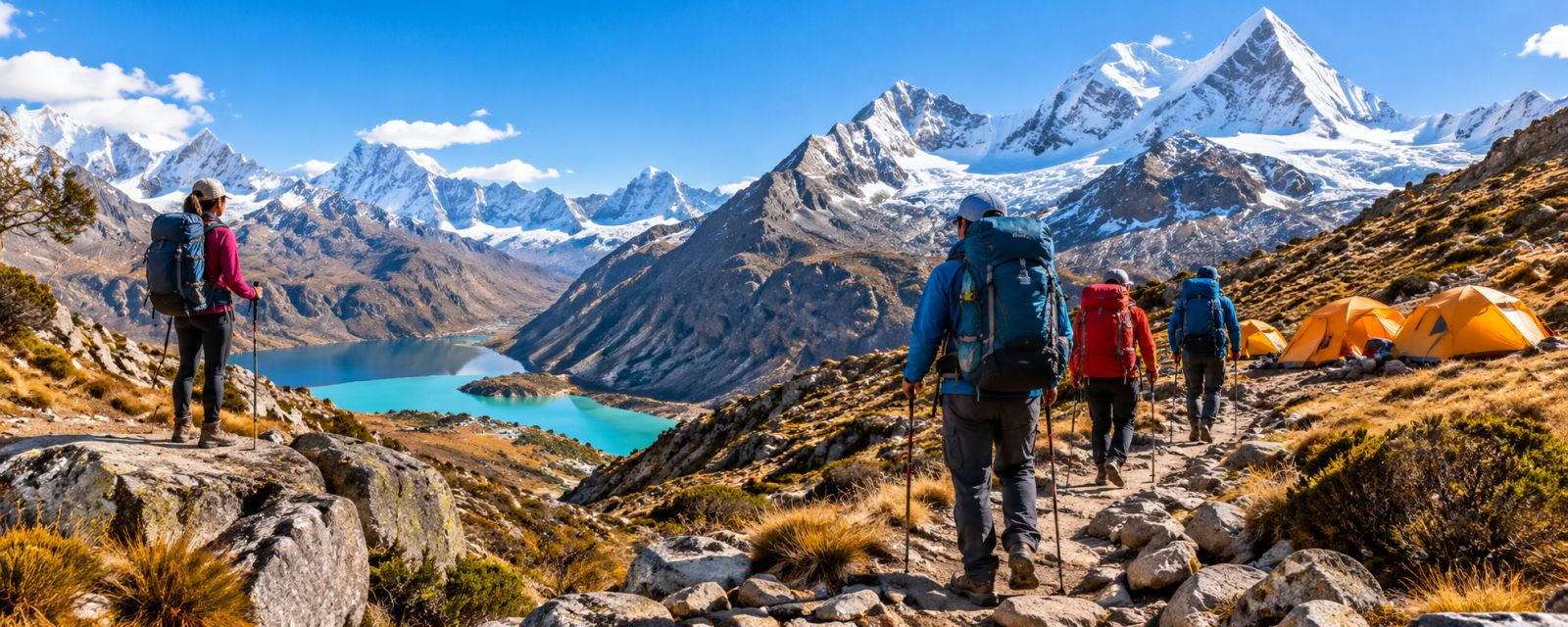
Why Multi-Day Trekking Is Different From a One-Day Hike
Why Multi-Day Trekking Is Different From a One-Day Hike
What is the difference between multi-day trekking and a one-day hike? While both activities offer incredible opportunities to explore nature, multi-day trekking is a more immersive outdoor adventure that involves additional preparation, endurance, equipment, and time in the mountains.
A one-day hike can take you to spectacular viewpoints, waterfalls, volcanic landscapes, and beautiful mountain trails before returning to your accommodation the same day.
A multi-day trek, however, allows you to travel deeper into remote landscapes, experience changing environments, spend nights in the mountains, and discover destinations that may be difficult to reach on a single-day excursion.
For adventure travelers exploring the Andes of Ecuador, Peru, and South America, understanding these differences is essential when choosing the right mountain experience.
At Ecuadorian Alpine Institute, we believe that both day hiking and multi-day trekking offer rewarding opportunities to discover the natural beauty of the Andes.
However, each activity presents different physical demands, logistical requirements, and travel experiences.
In this guide, we explain the main differences between multi-day trekking and day hiking, including preparation, difficulty, equipment, altitude acclimatization, camping, and the unique experiences offered by longer mountain adventures.
What Is a One-Day Hike?
A one-day hike is an outdoor walking activity completed within a single day, without requiring an overnight stay along the route.
Day hikes vary significantly in distance, altitude, terrain, and difficulty.
Some involve short walks along well-maintained trails, while others require several hours of demanding uphill hiking.
Popular day hiking experiences in the Andes may include:
- Exploring volcanic landscapes near Quito, Ecuador.
- Hiking to scenic viewpoints in the Ecuadorian highlands.
- Visiting high-altitude lakes in the Peruvian Andes.
- Discovering mountain trails near Huaraz.
- Walking through protected natural areas.
- Exploring alpine valleys and Andean ecosystems.
One of the main advantages of day hiking is flexibility.
Travelers can enjoy the mountains without committing to several days of trekking or overnight camping.
However, a one-day hike is not necessarily easy.
Some high-altitude day hikes involve significant elevation gain, challenging terrain, and environmental hazards.
The difficulty of a hike depends on the route, not simply its duration.
What Is Multi-Day Trekking?
Multi-day trekking involves traveling on foot across mountain trails, valleys, or remote natural landscapes over two or more consecutive days.
Unlike a day hike, a multi-day trekking adventure usually includes overnight accommodation along the route.
Depending on the destination, travelers may stay in:
- Mountain campsites.
- Trekking lodges.
- Mountain refuges.
- Rural guesthouses.
- Other accommodations along the route.
Multi-day trekking experiences can range from short two-day adventures to extended expeditions lasting several weeks.
In the Andes, longer trekking itineraries may include high mountain passes, remote valleys, glacial lakes, and traditional Andean communities.
Some of the most memorable multi-day trekking destinations in South America include Peru's Cordillera Blanca and Ecuador's high-altitude mountain regions.
Multi-day trekking is not simply a longer hike. It is a journey that requires sustained physical effort, careful planning, and adaptation to changing mountain conditions.
Multi-Day Trekking vs. Day Hiking: Key Differences
Although both activities involve exploring natural landscapes on foot, they differ in several important ways.
Feature: Duration
a) One-Day Hike: Completed in one day
b) Multi-Day Trekking: Two or more days
Feature: Overnight stays
a) One-Day Hike: Usually not required
b) Multi-Day Trekking: Camping, refuges, or lodges
Feature: Physical demands
a) One-Day Hike: Vary by route
b) Multi-Day Trekking: Sustained effort across several days
Feature: Equipment
a) One-Day Hike: Basic hiking essentials
b) Multi-Day Trekking: Additional clothing, sleeping gear, and supplies
Feature: Food and water
a) One-Day Hike: Usually carried for one day
b) Multi-Day Trekking: Require multi-day planning and resupply arrangements
Feature: Route planning
a) One-Day Hike: Often simpler
b) Multi-Day Trekking: More extensive logistical preparation
Feature: Recovery
a) One-Day Hike: Usually after returning
b) Multi-Day Trekking: Must be managed during the expedition
Feature: Weather exposure
a) One-Day Hike: Limited to one day
b) Multi-Day Trekking: Exposure to changing conditions over multiple days
Feature: Exploration
a) One-Day Hike: Usually a specific trail or destination
b) Multi-Day Trekking: Potential for deeper exploration
Feature: Experience
a) One-Day Hike: Focused outdoor excursion
b) Multi-Day Trekking: Extended and immersive mountain journey
Neither activity is automatically better.
The ideal choice depends on your experience, physical condition, available time, and adventure goals.
1. Multi-Day Trekking Requires Greater Endurance
One of the most significant differences between day hiking and multi-day trekking is the need to maintain physical effort over several consecutive days.
During a one-day hike, travelers usually complete their route and return to their accommodation for rest.
A multi-day trek requires participants to continue hiking on subsequent days, sometimes while experiencing accumulated fatigue.
Physical Challenges of Multi-Day Trekking
Depending on the route, trekkers may encounter:
- Several consecutive days of walking.
- Long uphill and downhill sections.
- Rocky and uneven mountain trails.
- Heavy or moderately loaded backpacks.
- Cold temperatures and changing weather.
- High-altitude terrain.
- Limited recovery opportunities.
These conditions require good cardiovascular endurance, muscular strength, and appropriate pacing.
How to Prepare Physically
Useful training activities include:
- Regular hiking.
- Uphill walking.
- Stair climbing.
- Cardiovascular exercise.
- Lower-body strength training.
- Core stability exercises.
- Practice hikes with a backpack.
Travelers preparing for a demanding multi-day trek may benefit from several weeks of progressive training.
The exact preparation period depends on the route and individual fitness.
A successful multi-day trekking experience begins with choosing a route that matches your actual abilities.
2. Multi-Day Trekking Requires More Equipment
A day hike usually requires a relatively small amount of equipment.
Travelers may carry water, snacks, weather protection, sun protection, and basic safety supplies.
Multi-day trekking involves additional requirements because participants must prepare for several days away from their usual accommodation.
Essential Equipment for Day Hiking
Typical day hiking equipment includes:
- Comfortable hiking footwear.
- Small backpack.
- Drinking water.
- Snacks.
- Sun protection.
- Weather-appropriate clothing.
- Navigation tools.
- Basic first-aid supplies.
Essential Equipment for Multi-Day Trekking
Depending on the itinerary, additional equipment may include:
- Larger trekking backpack.
- Extra clothing and warm layers.
- Sleeping bag.
- Sleeping mat.
- Camping equipment.
- Headlamp.
- Personal hygiene supplies.
- Additional food.
- Water treatment equipment.
- Waterproof storage bags.
- Trekking poles.
- Emergency supplies.
Not every trekker needs to carry all camping equipment personally.
Some organized trekking tours provide tents, meals, equipment transportation, and other logistical services.
Before booking, travelers should confirm which items are included and which must be supplied individually.
3. Overnight Camping Changes the Mountain Experience
One of the most memorable differences between a one-day hike and a multi-day trek is spending the night in the mountains.
A day hike allows travelers to enjoy mountain landscapes before returning to familiar accommodation.
Multi-day trekking may involve camping beneath snow-covered peaks, sleeping near remote valleys, or staying in mountain lodges.
What Makes Mountain Camping Special?
Depending on the location and weather conditions, travelers may experience:
- Spectacular sunsets over the Andes.
- Clear night skies.
- Quiet mountain environments.
- Sunrise views of snow-covered peaks.
- Remote landscapes away from busy tourist areas.
- A closer connection with the natural environment.
However, mountain camping also requires preparation.
Nighttime temperatures may fall significantly, particularly at high elevations.
Trekkers should understand the expected weather, sleeping arrangements, and equipment requirements.
The overnight experience is one of the defining characteristics of multi-day trekking, but comfort and safety depend on suitable preparation.
4. Multi-Day Trekking Allows Deeper Exploration
Many spectacular mountain destinations are difficult to reach and return from within a single day.
Multi-day trekking makes it possible to explore remote landscapes that require several days of travel on foot.
In the Andes, these experiences may include:
- Remote alpine valleys.
- High-altitude mountain passes.
- Turquoise glacial lakes.
- Isolated mountain campsites.
- Traditional Andean settlements.
- Spectacular views of glaciated peaks.
Trekking in Peru's Cordillera Blanca
The Cordillera Blanca is one of South America's most celebrated high-altitude trekking destinations.
Located near Huaraz in northern Peru, this mountain range features dramatic peaks, glacial lakes, and extraordinary alpine landscapes.
Multi-day trekking itineraries may explore mountain valleys and passes within or near Huascarán National Park.
Longer journeys can provide opportunities to appreciate different environments and discover remote areas of the Peruvian Andes.
Trekking in the Ecuadorian Andes
Ecuador also offers remarkable trekking opportunities through volcanic landscapes, high-altitude grasslands, and Andean valleys.
Depending on the route, travelers may experience the páramo ecosystem, mountain lakes, and spectacular views of Ecuador's volcanoes.
Both countries offer exceptional destinations for travelers seeking immersive trekking adventures in South America.
5. High-Altitude Trekking Requires Special Preparation
Not every multi-day trek takes place at high altitude.
However, many trekking routes in the Andes reach elevations above 3,000 or 4,000 meters.
At these elevations, reduced atmospheric pressure makes less oxygen available to the body.
Travelers who ascend too quickly may develop acute mountain sickness.
Common Symptoms of Altitude Sickness
Symptoms may include:
- Headaches.
- Nausea.
- Dizziness.
- Loss of appetite.
- Unusual fatigue.
- Difficulty sleeping.
More serious altitude-related illnesses can become life-threatening.
Why Acclimatization Matters
Altitude acclimatization is the process through which the body gradually adapts to reduced oxygen availability.
Appropriate acclimatization may involve:
- Gradual increases in sleeping altitude.
- Suitable initial adjustment periods.
- Rest and recovery days.
- Monitoring altitude-related symptoms.
- Adjusting the itinerary according to individual responses.
A longer itinerary can provide more opportunities for acclimatization when designed appropriately.
However, multi-day trekking is not automatically safer at altitude than day hiking.
Risk depends on the ascent profile, sleeping elevations, individual susceptibility, and previous acclimatization.
Travelers experiencing altitude sickness should not continue ascending to higher sleeping elevations. Severe or worsening symptoms require descent and appropriate medical attention.
6. Food, Water, and Nutrition Require More Planning
Food and hydration are important during any outdoor activity.
However, multi-day trekking requires more extensive planning because travelers must maintain their energy levels across several consecutive days.
Nutrition During a Day Hike
For a shorter hike, travelers may carry:
- Water.
- Fruit.
- Energy bars.
- Sandwiches.
- Other lightweight snacks.
Nutrition During Multi-Day Trekking
Longer expeditions require adequate meals and reliable access to safe drinking water.
Depending on the itinerary, food arrangements may include:
- Meals prepared at campsites.
- Packed lunches.
- Food supplied by trekking lodges.
- Meals organized by the tour operator.
Trekkers should consume sufficient calories to support their activity levels.
Hydration should be maintained according to individual needs, weather conditions, and physical exertion.
Drinking excessive amounts of water does not prevent altitude sickness.
Travelers should also verify how drinking water will be treated or supplied throughout the route.
7. Weather Exposure Is Greater During Multi-Day Trekking
Mountain weather can change quickly.
During a day hike, travelers may be able to return to their accommodation if conditions deteriorate, depending on their location and route.
Multi-day trekking often involves spending several days in remote environments where weather changes can affect travel plans.
Possible conditions include:
- Rain.
- Snowfall.
- Strong winds.
- Low temperatures.
- Reduced visibility.
- Intense sunshine.
- Rapid temperature changes.
Appropriate clothing and equipment are essential.
Trekkers should use layered clothing systems that allow them to adapt to changing conditions.
Longer expeditions also require contingency planning, including alternative routes or schedule adjustments when possible.
No trekking itinerary can guarantee favorable weather.
8. Multi-Day Trekking Requires More Detailed Logistics
A one-day hike may involve relatively straightforward planning, particularly on a well-marked and accessible trail.
Multi-day trekking generally requires more extensive organization.
Important logistical considerations include:
- Route selection.
- Daily hiking distances.
- Elevation gain and loss.
- Overnight accommodation.
- Food and water supplies.
- Equipment transportation.
- Local permits and park regulations.
- Emergency communication.
- Evacuation arrangements.
- Transportation to and from the trail.
Some trekking routes may also require coordination with local communities or protected-area authorities.
Organized trekking tours can simplify these arrangements by coordinating services and logistics.
However, travelers should always verify what is included before booking.
9. Multi-Day Trekking Offers a Different Mental Experience
Multi-day trekking is not only a physical challenge.
Spending several consecutive days in the mountains requires patience, adaptability, and mental resilience.
Travelers may need to adjust to:
- Unfamiliar sleeping environments.
- Limited access to communication.
- Changing weather.
- Physical fatigue.
- Remote surroundings.
- Altered daily routines.
These experiences can also make multi-day trekking particularly rewarding.
Without the constant distractions of everyday life, travelers may find more opportunities to appreciate the landscape and focus on the journey.
However, every participant responds differently to remote outdoor environments.
Maintaining realistic expectations and communicating concerns are important throughout the expedition.
10. Multi-Day Trekking Can Create More Opportunities for Cultural Experience
Some trekking routes pass through regions where traditional communities maintain strong connections to the mountain environment.
Depending on the itinerary, travelers may have opportunities to:
- Visit Andean villages.
- Learn about local traditions.
- Discover regional cuisine.
- Observe traditional agricultural practices.
- Explore local markets.
- Learn about the cultural significance of the mountains.
These experiences can add an important cultural dimension to a trekking adventure.
Travelers should approach local communities respectfully and follow the guidance of local hosts and guides.
Not every multi-day trek includes cultural visits, so these activities should be confirmed before booking.
11. Is Multi-Day Trekking More Difficult Than Day Hiking?
Multi-day trekking often requires greater sustained endurance and more logistical preparation than a typical day hike.
However, it is not necessarily more technically difficult.
A challenging one-day hike involving steep terrain, significant elevation gain, or exposed mountain sections may be more demanding than a moderate multi-day trekking route.
Difficulty depends on factors such as:
- Trail conditions.
- Maximum altitude.
- Daily hiking distances.
- Elevation gain.
- Technical terrain.
- Weather.
- Backpack weight.
- Individual fitness.
- Previous hiking experience.
Travelers should compare the actual requirements of each route rather than relying only on trip duration.
12. Is Multi-Day Trekking Suitable for Beginners?
Some multi-day trekking programs may be suitable for beginners with appropriate physical preparation.
However, beginners should carefully evaluate the itinerary before booking.
Important considerations include:
- Daily walking distances.
- Expected hiking hours.
- Maximum altitude.
- Sleeping elevations.
- Camping arrangements.
- Equipment requirements.
- Availability of professional guidance.
- Access to emergency assistance.
For travelers with limited hiking experience, beginning with shorter day hikes can be a useful way to develop endurance and become familiar with mountain environments.
Progressing to an appropriate overnight trek may then provide valuable experience before attempting a longer expedition.
However, high-altitude routes require separate consideration of acclimatization and altitude-related health risks.
13. How to Prepare for Your First Multi-Day Trek
If you are planning your first multi-day trekking adventure, preparation should begin before your departure.
Step 1: Choose an Appropriate Route
Select an itinerary that matches your physical condition, hiking experience, and available time.
Step 2: Build Physical Endurance
Practice regular hiking, cardiovascular exercise, and strength training.
Gradually increase your walking distances and backpack load.
Step 3: Review Altitude Requirements
If your trek takes place at high altitude, plan appropriate acclimatization and understand the symptoms of altitude sickness.
Step 4: Prepare Your Equipment
Choose comfortable hiking footwear, suitable clothing, and appropriate camping equipment.
Step 5: Understand the Daily Itinerary
Review daily distances, elevation changes, accommodation arrangements, and expected hiking times.
Step 6: Verify Safety Arrangements
Ask about guides, communication, emergency procedures, and medical assistance.
Step 7: Prepare for Changing Conditions
Understand that weather, terrain, and individual readiness may require adjustments to the original plan.
The goal is not simply to complete the trek, but to enjoy a rewarding mountain experience while making informed decisions.
14. Why Choose Ecuadorian Alpine Institute for Your Next Trekking Adventure?
At Ecuadorian Alpine Institute, we believe that exploring the Andes is about more than reaching a particular destination.
It is about discovering remarkable landscapes, appreciating mountain environments, and experiencing the natural beauty of South America.
From Ecuador's volcanic highlands to Peru's spectacular Cordillera Blanca, the Andes offer extraordinary opportunities for travelers seeking outdoor adventures.
Our approach emphasizes the importance of preparation, suitable itineraries, altitude awareness, and meaningful mountain experiences.
Whether you are interested in a scenic day hike or an extended multi-day trekking expedition, choosing the right adventure is an important first step.
Our team can help you explore available trekking programs and understand the preparation required for your journey.
Final Thoughts: Why Multi-Day Trekking Offers a Unique Adventure
The difference between multi-day trekking and a one-day hike goes far beyond the number of hours spent walking.
A day hike offers a rewarding opportunity to discover beautiful landscapes within a shorter period.
Multi-day trekking creates the possibility of a more immersive journey through remote mountain environments.
It requires additional planning, sustained physical effort, suitable equipment, and preparation for overnight stays.
For travelers seeking deeper exploration, spectacular landscapes, and extended time in nature, multi-day trekking can be an unforgettable experience.
The best choice depends on your goals, available time, physical readiness, and previous outdoor experience.
Ready for Your Next Andean Trekking Adventure?
Discover unforgettable trekking experiences with Ecuadorian Alpine Institute.
Explore spectacular mountain landscapes, high-altitude trails, glacial lakes, and extraordinary destinations in Ecuador, Peru, and the Andes of South America.
Whether you are preparing for your first multi-day trek or planning a more extensive mountain adventure, our team can help you explore suitable itineraries.
Contact Ecuadorian Alpine Institute today to learn more about our trekking tours and start planning your next adventure in the Andes.
---
Frequently Asked Questions About Multi-Day Trekking vs. Day Hiking
What is the main difference between trekking and hiking?
The terms are often used interchangeably. In general, trekking frequently refers to longer journeys involving multiple days, while hiking can describe both short and extended walks. Definitions vary by region and operator.
Is multi-day trekking harder than a one-day hike?
Multi-day trekking usually requires greater sustained endurance and logistical preparation. However, an especially demanding day hike can be more difficult than a moderate multi-day trek.
Do I need camping experience for multi-day trekking?
Not always. Some trekking routes use lodges or refuges, while organized camping tours may provide equipment and support. Previous camping experience can still be helpful.
What should I pack for a multi-day trek?
Essential equipment may include hiking boots, layered clothing, a suitable backpack, waterproof protection, sun protection, a headlamp, personal supplies, and sleeping equipment when required.
Can beginners join multi-day trekking tours?
Yes, some routes are suitable for fit beginners with appropriate preparation. The itinerary should match the participant's fitness, hiking experience, and altitude readiness.
Is altitude acclimatization necessary for multi-day trekking?
Acclimatization is important for treks reaching significant elevations, particularly in the Andes. It is not required for every multi-day trek, especially those at low altitude.
How many days should my first trekking trip last?
A two- or three-day trek may be a useful introduction for some beginners, depending on route difficulty, altitude, and physical readiness.
Where can I experience multi-day trekking in South America?
Popular destinations include Peru's Cordillera Blanca, Ecuador's Andean highlands, Patagonia, and other mountain regions throughout South America.
Why choose a guided multi-day trekking tour?
A guided tour may provide route knowledge, logistical support, local information, and assistance with expedition planning. Travelers should verify guide qualifications, services, and emergency arrangements before booking.
What is the difference between multi-day trekking and a one-day hike? While both activities offer incredible opportunities to explore nature, multi-day trekking is a more immersive outdoor adventure that involves additional preparation, endurance, equipment, and time in the mountains.
A one-day hike can take you to spectacular viewpoints, waterfalls, volcanic landscapes, and beautiful mountain trails before returning to your accommodation the same day.
A multi-day trek, however, allows you to travel deeper into remote landscapes, experience changing environments, spend nights in the mountains, and discover destinations that may be difficult to reach on a single-day excursion.
For adventure travelers exploring the Andes of Ecuador, Peru, and South America, understanding these differences is essential when choosing the right mountain experience.
At Ecuadorian Alpine Institute, we believe that both day hiking and multi-day trekking offer rewarding opportunities to discover the natural beauty of the Andes.
However, each activity presents different physical demands, logistical requirements, and travel experiences.
In this guide, we explain the main differences between multi-day trekking and day hiking, including preparation, difficulty, equipment, altitude acclimatization, camping, and the unique experiences offered by longer mountain adventures.
What Is a One-Day Hike?
A one-day hike is an outdoor walking activity completed within a single day, without requiring an overnight stay along the route.
Day hikes vary significantly in distance, altitude, terrain, and difficulty.
Some involve short walks along well-maintained trails, while others require several hours of demanding uphill hiking.
Popular day hiking experiences in the Andes may include:
- Exploring volcanic landscapes near Quito, Ecuador.
- Hiking to scenic viewpoints in the Ecuadorian highlands.
- Visiting high-altitude lakes in the Peruvian Andes.
- Discovering mountain trails near Huaraz.
- Walking through protected natural areas.
- Exploring alpine valleys and Andean ecosystems.
One of the main advantages of day hiking is flexibility.
Travelers can enjoy the mountains without committing to several days of trekking or overnight camping.
However, a one-day hike is not necessarily easy.
Some high-altitude day hikes involve significant elevation gain, challenging terrain, and environmental hazards.
The difficulty of a hike depends on the route, not simply its duration.
What Is Multi-Day Trekking?
Multi-day trekking involves traveling on foot across mountain trails, valleys, or remote natural landscapes over two or more consecutive days.
Unlike a day hike, a multi-day trekking adventure usually includes overnight accommodation along the route.
Depending on the destination, travelers may stay in:
- Mountain campsites.
- Trekking lodges.
- Mountain refuges.
- Rural guesthouses.
- Other accommodations along the route.
Multi-day trekking experiences can range from short two-day adventures to extended expeditions lasting several weeks.
In the Andes, longer trekking itineraries may include high mountain passes, remote valleys, glacial lakes, and traditional Andean communities.
Some of the most memorable multi-day trekking destinations in South America include Peru's Cordillera Blanca and Ecuador's high-altitude mountain regions.
Multi-day trekking is not simply a longer hike. It is a journey that requires sustained physical effort, careful planning, and adaptation to changing mountain conditions.
Multi-Day Trekking vs. Day Hiking: Key Differences
Although both activities involve exploring natural landscapes on foot, they differ in several important ways.
Feature: Duration
a) One-Day Hike: Completed in one day
b) Multi-Day Trekking: Two or more days
Feature: Overnight stays
a) One-Day Hike: Usually not required
b) Multi-Day Trekking: Camping, refuges, or lodges
Feature: Physical demands
a) One-Day Hike: Vary by route
b) Multi-Day Trekking: Sustained effort across several days
Feature: Equipment
a) One-Day Hike: Basic hiking essentials
b) Multi-Day Trekking: Additional clothing, sleeping gear, and supplies
Feature: Food and water
a) One-Day Hike: Usually carried for one day
b) Multi-Day Trekking: Require multi-day planning and resupply arrangements
Feature: Route planning
a) One-Day Hike: Often simpler
b) Multi-Day Trekking: More extensive logistical preparation
Feature: Recovery
a) One-Day Hike: Usually after returning
b) Multi-Day Trekking: Must be managed during the expedition
Feature: Weather exposure
a) One-Day Hike: Limited to one day
b) Multi-Day Trekking: Exposure to changing conditions over multiple days
Feature: Exploration
a) One-Day Hike: Usually a specific trail or destination
b) Multi-Day Trekking: Potential for deeper exploration
Feature: Experience
a) One-Day Hike: Focused outdoor excursion
b) Multi-Day Trekking: Extended and immersive mountain journey
Neither activity is automatically better.
The ideal choice depends on your experience, physical condition, available time, and adventure goals.
1. Multi-Day Trekking Requires Greater Endurance
One of the most significant differences between day hiking and multi-day trekking is the need to maintain physical effort over several consecutive days.
During a one-day hike, travelers usually complete their route and return to their accommodation for rest.
A multi-day trek requires participants to continue hiking on subsequent days, sometimes while experiencing accumulated fatigue.
Physical Challenges of Multi-Day Trekking
Depending on the route, trekkers may encounter:
- Several consecutive days of walking.
- Long uphill and downhill sections.
- Rocky and uneven mountain trails.
- Heavy or moderately loaded backpacks.
- Cold temperatures and changing weather.
- High-altitude terrain.
- Limited recovery opportunities.
These conditions require good cardiovascular endurance, muscular strength, and appropriate pacing.
How to Prepare Physically
Useful training activities include:
- Regular hiking.
- Uphill walking.
- Stair climbing.
- Cardiovascular exercise.
- Lower-body strength training.
- Core stability exercises.
- Practice hikes with a backpack.
Travelers preparing for a demanding multi-day trek may benefit from several weeks of progressive training.
The exact preparation period depends on the route and individual fitness.
A successful multi-day trekking experience begins with choosing a route that matches your actual abilities.
2. Multi-Day Trekking Requires More Equipment
A day hike usually requires a relatively small amount of equipment.
Travelers may carry water, snacks, weather protection, sun protection, and basic safety supplies.
Multi-day trekking involves additional requirements because participants must prepare for several days away from their usual accommodation.
Essential Equipment for Day Hiking
Typical day hiking equipment includes:
- Comfortable hiking footwear.
- Small backpack.
- Drinking water.
- Snacks.
- Sun protection.
- Weather-appropriate clothing.
- Navigation tools.
- Basic first-aid supplies.
Essential Equipment for Multi-Day Trekking
Depending on the itinerary, additional equipment may include:
- Larger trekking backpack.
- Extra clothing and warm layers.
- Sleeping bag.
- Sleeping mat.
- Camping equipment.
- Headlamp.
- Personal hygiene supplies.
- Additional food.
- Water treatment equipment.
- Waterproof storage bags.
- Trekking poles.
- Emergency supplies.
Not every trekker needs to carry all camping equipment personally.
Some organized trekking tours provide tents, meals, equipment transportation, and other logistical services.
Before booking, travelers should confirm which items are included and which must be supplied individually.
3. Overnight Camping Changes the Mountain Experience
One of the most memorable differences between a one-day hike and a multi-day trek is spending the night in the mountains.
A day hike allows travelers to enjoy mountain landscapes before returning to familiar accommodation.
Multi-day trekking may involve camping beneath snow-covered peaks, sleeping near remote valleys, or staying in mountain lodges.
What Makes Mountain Camping Special?
Depending on the location and weather conditions, travelers may experience:
- Spectacular sunsets over the Andes.
- Clear night skies.
- Quiet mountain environments.
- Sunrise views of snow-covered peaks.
- Remote landscapes away from busy tourist areas.
- A closer connection with the natural environment.
However, mountain camping also requires preparation.
Nighttime temperatures may fall significantly, particularly at high elevations.
Trekkers should understand the expected weather, sleeping arrangements, and equipment requirements.
The overnight experience is one of the defining characteristics of multi-day trekking, but comfort and safety depend on suitable preparation.
4. Multi-Day Trekking Allows Deeper Exploration
Many spectacular mountain destinations are difficult to reach and return from within a single day.
Multi-day trekking makes it possible to explore remote landscapes that require several days of travel on foot.
In the Andes, these experiences may include:
- Remote alpine valleys.
- High-altitude mountain passes.
- Turquoise glacial lakes.
- Isolated mountain campsites.
- Traditional Andean settlements.
- Spectacular views of glaciated peaks.
Trekking in Peru's Cordillera Blanca
The Cordillera Blanca is one of South America's most celebrated high-altitude trekking destinations.
Located near Huaraz in northern Peru, this mountain range features dramatic peaks, glacial lakes, and extraordinary alpine landscapes.
Multi-day trekking itineraries may explore mountain valleys and passes within or near Huascarán National Park.
Longer journeys can provide opportunities to appreciate different environments and discover remote areas of the Peruvian Andes.
Trekking in the Ecuadorian Andes
Ecuador also offers remarkable trekking opportunities through volcanic landscapes, high-altitude grasslands, and Andean valleys.
Depending on the route, travelers may experience the páramo ecosystem, mountain lakes, and spectacular views of Ecuador's volcanoes.
Both countries offer exceptional destinations for travelers seeking immersive trekking adventures in South America.
5. High-Altitude Trekking Requires Special Preparation
Not every multi-day trek takes place at high altitude.
However, many trekking routes in the Andes reach elevations above 3,000 or 4,000 meters.
At these elevations, reduced atmospheric pressure makes less oxygen available to the body.
Travelers who ascend too quickly may develop acute mountain sickness.
Common Symptoms of Altitude Sickness
Symptoms may include:
- Headaches.
- Nausea.
- Dizziness.
- Loss of appetite.
- Unusual fatigue.
- Difficulty sleeping.
More serious altitude-related illnesses can become life-threatening.
Why Acclimatization Matters
Altitude acclimatization is the process through which the body gradually adapts to reduced oxygen availability.
Appropriate acclimatization may involve:
- Gradual increases in sleeping altitude.
- Suitable initial adjustment periods.
- Rest and recovery days.
- Monitoring altitude-related symptoms.
- Adjusting the itinerary according to individual responses.
A longer itinerary can provide more opportunities for acclimatization when designed appropriately.
However, multi-day trekking is not automatically safer at altitude than day hiking.
Risk depends on the ascent profile, sleeping elevations, individual susceptibility, and previous acclimatization.
Travelers experiencing altitude sickness should not continue ascending to higher sleeping elevations. Severe or worsening symptoms require descent and appropriate medical attention.
6. Food, Water, and Nutrition Require More Planning
Food and hydration are important during any outdoor activity.
However, multi-day trekking requires more extensive planning because travelers must maintain their energy levels across several consecutive days.
Nutrition During a Day Hike
For a shorter hike, travelers may carry:
- Water.
- Fruit.
- Energy bars.
- Sandwiches.
- Other lightweight snacks.
Nutrition During Multi-Day Trekking
Longer expeditions require adequate meals and reliable access to safe drinking water.
Depending on the itinerary, food arrangements may include:
- Meals prepared at campsites.
- Packed lunches.
- Food supplied by trekking lodges.
- Meals organized by the tour operator.
Trekkers should consume sufficient calories to support their activity levels.
Hydration should be maintained according to individual needs, weather conditions, and physical exertion.
Drinking excessive amounts of water does not prevent altitude sickness.
Travelers should also verify how drinking water will be treated or supplied throughout the route.
7. Weather Exposure Is Greater During Multi-Day Trekking
Mountain weather can change quickly.
During a day hike, travelers may be able to return to their accommodation if conditions deteriorate, depending on their location and route.
Multi-day trekking often involves spending several days in remote environments where weather changes can affect travel plans.
Possible conditions include:
- Rain.
- Snowfall.
- Strong winds.
- Low temperatures.
- Reduced visibility.
- Intense sunshine.
- Rapid temperature changes.
Appropriate clothing and equipment are essential.
Trekkers should use layered clothing systems that allow them to adapt to changing conditions.
Longer expeditions also require contingency planning, including alternative routes or schedule adjustments when possible.
No trekking itinerary can guarantee favorable weather.
8. Multi-Day Trekking Requires More Detailed Logistics
A one-day hike may involve relatively straightforward planning, particularly on a well-marked and accessible trail.
Multi-day trekking generally requires more extensive organization.
Important logistical considerations include:
- Route selection.
- Daily hiking distances.
- Elevation gain and loss.
- Overnight accommodation.
- Food and water supplies.
- Equipment transportation.
- Local permits and park regulations.
- Emergency communication.
- Evacuation arrangements.
- Transportation to and from the trail.
Some trekking routes may also require coordination with local communities or protected-area authorities.
Organized trekking tours can simplify these arrangements by coordinating services and logistics.
However, travelers should always verify what is included before booking.
9. Multi-Day Trekking Offers a Different Mental Experience
Multi-day trekking is not only a physical challenge.
Spending several consecutive days in the mountains requires patience, adaptability, and mental resilience.
Travelers may need to adjust to:
- Unfamiliar sleeping environments.
- Limited access to communication.
- Changing weather.
- Physical fatigue.
- Remote surroundings.
- Altered daily routines.
These experiences can also make multi-day trekking particularly rewarding.
Without the constant distractions of everyday life, travelers may find more opportunities to appreciate the landscape and focus on the journey.
However, every participant responds differently to remote outdoor environments.
Maintaining realistic expectations and communicating concerns are important throughout the expedition.
10. Multi-Day Trekking Can Create More Opportunities for Cultural Experience
Some trekking routes pass through regions where traditional communities maintain strong connections to the mountain environment.
Depending on the itinerary, travelers may have opportunities to:
- Visit Andean villages.
- Learn about local traditions.
- Discover regional cuisine.
- Observe traditional agricultural practices.
- Explore local markets.
- Learn about the cultural significance of the mountains.
These experiences can add an important cultural dimension to a trekking adventure.
Travelers should approach local communities respectfully and follow the guidance of local hosts and guides.
Not every multi-day trek includes cultural visits, so these activities should be confirmed before booking.
11. Is Multi-Day Trekking More Difficult Than Day Hiking?
Multi-day trekking often requires greater sustained endurance and more logistical preparation than a typical day hike.
However, it is not necessarily more technically difficult.
A challenging one-day hike involving steep terrain, significant elevation gain, or exposed mountain sections may be more demanding than a moderate multi-day trekking route.
Difficulty depends on factors such as:
- Trail conditions.
- Maximum altitude.
- Daily hiking distances.
- Elevation gain.
- Technical terrain.
- Weather.
- Backpack weight.
- Individual fitness.
- Previous hiking experience.
Travelers should compare the actual requirements of each route rather than relying only on trip duration.
12. Is Multi-Day Trekking Suitable for Beginners?
Some multi-day trekking programs may be suitable for beginners with appropriate physical preparation.
However, beginners should carefully evaluate the itinerary before booking.
Important considerations include:
- Daily walking distances.
- Expected hiking hours.
- Maximum altitude.
- Sleeping elevations.
- Camping arrangements.
- Equipment requirements.
- Availability of professional guidance.
- Access to emergency assistance.
For travelers with limited hiking experience, beginning with shorter day hikes can be a useful way to develop endurance and become familiar with mountain environments.
Progressing to an appropriate overnight trek may then provide valuable experience before attempting a longer expedition.
However, high-altitude routes require separate consideration of acclimatization and altitude-related health risks.
13. How to Prepare for Your First Multi-Day Trek
If you are planning your first multi-day trekking adventure, preparation should begin before your departure.
Step 1: Choose an Appropriate Route
Select an itinerary that matches your physical condition, hiking experience, and available time.
Step 2: Build Physical Endurance
Practice regular hiking, cardiovascular exercise, and strength training.
Gradually increase your walking distances and backpack load.
Step 3: Review Altitude Requirements
If your trek takes place at high altitude, plan appropriate acclimatization and understand the symptoms of altitude sickness.
Step 4: Prepare Your Equipment
Choose comfortable hiking footwear, suitable clothing, and appropriate camping equipment.
Step 5: Understand the Daily Itinerary
Review daily distances, elevation changes, accommodation arrangements, and expected hiking times.
Step 6: Verify Safety Arrangements
Ask about guides, communication, emergency procedures, and medical assistance.
Step 7: Prepare for Changing Conditions
Understand that weather, terrain, and individual readiness may require adjustments to the original plan.
The goal is not simply to complete the trek, but to enjoy a rewarding mountain experience while making informed decisions.
14. Why Choose Ecuadorian Alpine Institute for Your Next Trekking Adventure?
At Ecuadorian Alpine Institute, we believe that exploring the Andes is about more than reaching a particular destination.
It is about discovering remarkable landscapes, appreciating mountain environments, and experiencing the natural beauty of South America.
From Ecuador's volcanic highlands to Peru's spectacular Cordillera Blanca, the Andes offer extraordinary opportunities for travelers seeking outdoor adventures.
Our approach emphasizes the importance of preparation, suitable itineraries, altitude awareness, and meaningful mountain experiences.
Whether you are interested in a scenic day hike or an extended multi-day trekking expedition, choosing the right adventure is an important first step.
Our team can help you explore available trekking programs and understand the preparation required for your journey.
Final Thoughts: Why Multi-Day Trekking Offers a Unique Adventure
The difference between multi-day trekking and a one-day hike goes far beyond the number of hours spent walking.
A day hike offers a rewarding opportunity to discover beautiful landscapes within a shorter period.
Multi-day trekking creates the possibility of a more immersive journey through remote mountain environments.
It requires additional planning, sustained physical effort, suitable equipment, and preparation for overnight stays.
For travelers seeking deeper exploration, spectacular landscapes, and extended time in nature, multi-day trekking can be an unforgettable experience.
The best choice depends on your goals, available time, physical readiness, and previous outdoor experience.
Ready for Your Next Andean Trekking Adventure?
Discover unforgettable trekking experiences with Ecuadorian Alpine Institute.
Explore spectacular mountain landscapes, high-altitude trails, glacial lakes, and extraordinary destinations in Ecuador, Peru, and the Andes of South America.
Whether you are preparing for your first multi-day trek or planning a more extensive mountain adventure, our team can help you explore suitable itineraries.
Contact Ecuadorian Alpine Institute today to learn more about our trekking tours and start planning your next adventure in the Andes.
---
Frequently Asked Questions About Multi-Day Trekking vs. Day Hiking
What is the main difference between trekking and hiking?
The terms are often used interchangeably. In general, trekking frequently refers to longer journeys involving multiple days, while hiking can describe both short and extended walks. Definitions vary by region and operator.
Is multi-day trekking harder than a one-day hike?
Multi-day trekking usually requires greater sustained endurance and logistical preparation. However, an especially demanding day hike can be more difficult than a moderate multi-day trek.
Do I need camping experience for multi-day trekking?
Not always. Some trekking routes use lodges or refuges, while organized camping tours may provide equipment and support. Previous camping experience can still be helpful.
What should I pack for a multi-day trek?
Essential equipment may include hiking boots, layered clothing, a suitable backpack, waterproof protection, sun protection, a headlamp, personal supplies, and sleeping equipment when required.
Can beginners join multi-day trekking tours?
Yes, some routes are suitable for fit beginners with appropriate preparation. The itinerary should match the participant's fitness, hiking experience, and altitude readiness.
Is altitude acclimatization necessary for multi-day trekking?
Acclimatization is important for treks reaching significant elevations, particularly in the Andes. It is not required for every multi-day trek, especially those at low altitude.
How many days should my first trekking trip last?
A two- or three-day trek may be a useful introduction for some beginners, depending on route difficulty, altitude, and physical readiness.
Where can I experience multi-day trekking in South America?
Popular destinations include Peru's Cordillera Blanca, Ecuador's Andean highlands, Patagonia, and other mountain regions throughout South America.
Why choose a guided multi-day trekking tour?
A guided tour may provide route knowledge, logistical support, local information, and assistance with expedition planning. Travelers should verify guide qualifications, services, and emergency arrangements before booking.