Why Our 15-Day Cordillera Blanca Trekking Tour Takes 15 Days
Why Our 15-Day Cordillera Blanca Trekking Tour Takes 15 Days
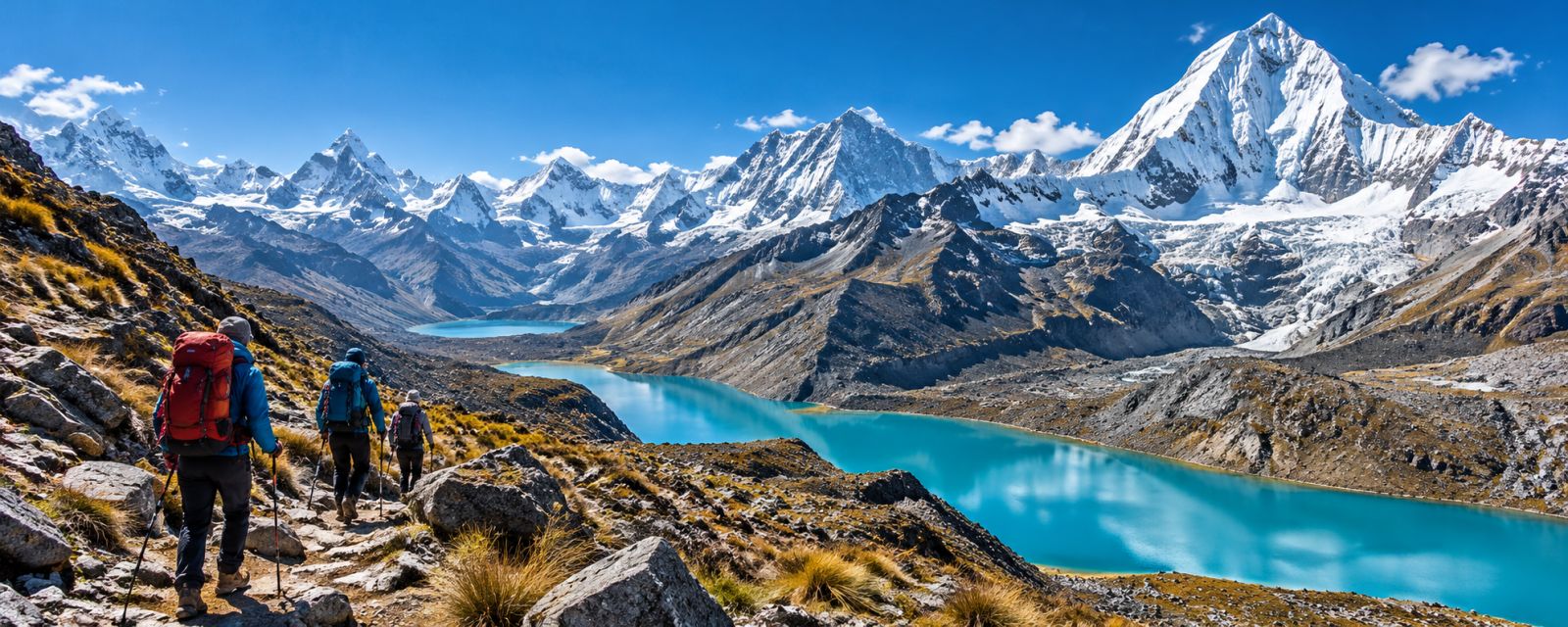
The Cordillera Blanca in Peru is one of the most spectacular high-altitude trekking destinations in South America. But experiencing its snow-capped peaks, turquoise glacial lakes, remote valleys, and breathtaking Andean landscapes takes more than a few rushed days.
That is why our 15-day Cordillera Blanca trekking tour is designed around a more complete mountain experience, combining gradual altitude acclimatization, rewarding hiking days, opportunities for recovery, and time to appreciate the extraordinary beauty of the Peruvian Andes.
Located in northern Peru, the Cordillera Blanca is home to some of the highest tropical mountain peaks in the world, including Huascarán, which rises to approximately 6,768 meters (22,205 feet) above sea level.
For international travelers seeking an authentic Peru trekking adventure, this mountain range offers an unforgettable combination of dramatic scenery, challenging trails, traditional Andean culture, and remarkable natural diversity.
But why choose a 15-day Cordillera Blanca trekking itinerary instead of a shorter trip?
In this guide, Ecuadorian Alpine Institute explains why spending more time in the mountains can make your trekking experience more rewarding, better paced, and more immersive.
What Makes the Cordillera Blanca One of Peru's Best Trekking Destinations?
The Cordillera Blanca is part of the Peruvian Andes, located near the mountain city of Huaraz in the Áncash region.
This spectacular mountain range features towering granite peaks, extensive glaciers, deep valleys, high-altitude lakes, and traditional communities surrounded by some of South America's most impressive mountain scenery.
Much of the region lies within or near Huascarán National Park, a UNESCO World Heritage Site recognized for its exceptional natural landscapes.
Popular attractions and trekking destinations in the region include:
- Huascarán (6,768 m): Peru's highest mountain and one of the most iconic peaks in the Andes.
- Alpamayo (5,947 m): A spectacular pyramid-shaped mountain celebrated for its striking appearance.
- Artesonraju (6,025 m): A dramatic glaciated summit surrounded by remarkable Andean scenery.
- Laguna 69: A famous turquoise glacial lake beneath towering snow-covered mountains.
- Santa Cruz Valley: One of the region's most celebrated trekking landscapes.
- Llanganuco Lakes: Beautiful high-altitude lakes surrounded by steep mountain walls.
These destinations illustrate the extraordinary diversity of the Cordillera Blanca.
However, the best way to appreciate this environment is to allow enough time for both exploration and altitude adaptation.
Why Does Our Cordillera Blanca Trekking Tour Take 15 Days?
A 15-day trekking itinerary is not simply about spending more days on the trail.
It is about creating a journey that allows travelers to experience the mountains at a suitable pace.
Our approach emphasizes several important aspects of high-altitude trekking:
1. Progressive acclimatization.
2. A balanced hiking schedule.
3. Time to appreciate the mountain scenery.
4. Opportunities for physical recovery.
5. Greater flexibility for changing conditions.
6. Cultural and environmental experiences.
7. A more complete journey through the Peruvian Andes.
Each of these elements contributes to the overall trekking experience.
1. Proper Acclimatization Requires Time
One of the most important reasons for planning an extended Cordillera Blanca trekking adventure is altitude acclimatization.
Many trekking routes in the region reach elevations above 4,000 meters (13,123 feet), while some mountain passes exceed 4,500 meters (14,764 feet).
At these elevations, the reduced atmospheric pressure makes less oxygen available to the body.
Travelers arriving from sea level may experience symptoms of acute mountain sickness, including headaches, nausea, dizziness, unusual fatigue, and difficulty sleeping.
More serious altitude illnesses can become life-threatening.
Why Gradual Acclimatization Matters
The body requires time to adapt to higher elevations.
A well-planned trekking itinerary can include gradual altitude exposure, suitable sleeping elevations, and rest days.
This approach can help reduce the risk of altitude sickness while allowing travelers to assess how they respond to the mountain environment.
A 15-day itinerary provides more flexibility for this process than a tightly scheduled short trip.
However, trip duration alone does not guarantee adequate acclimatization.
The most important consideration is how altitude exposure and sleeping elevations are managed throughout the journey.
Travelers should never continue ascending to higher sleeping elevations while experiencing symptoms of altitude sickness.
Severe symptoms require immediate descent and emergency medical attention.
2. More Time to Experience the Beauty of the Peruvian Andes
The Cordillera Blanca is a destination where the journey is just as important as reaching a particular viewpoint or mountain pass.
A shorter trekking itinerary may require travelers to move quickly between destinations.
An extended program provides more opportunities to appreciate the extraordinary landscapes.
Imagine walking through peaceful Andean valleys while towering snow-covered mountains rise above you.
Along the way, you may encounter:
- Crystal-clear mountain streams.
- Turquoise glacial lakes.
- High-altitude grasslands.
- Dramatic rock formations.
- Remote mountain valleys.
- Spectacular views of snow-covered peaks.
- Native Andean vegetation and wildlife.
These landscapes create memorable experiences for hikers, photographers, and nature enthusiasts.
A longer trekking adventure allows you to experience the mountains as a destination rather than simply a series of checkpoints.
3. A More Balanced Trekking Pace
High-altitude trekking can be physically demanding, even for travelers who regularly hike at lower elevations.
Walking above 4,000 meters requires additional effort because of reduced oxygen availability.
Steep ascents, uneven trails, changing temperatures, and prolonged physical activity can increase fatigue.
A carefully planned 15-day Cordillera Blanca trekking itinerary may offer a more balanced pace.
Depending on the route, this can include:
- Moderate hiking days during initial acclimatization.
- Gradual progression toward higher elevations.
- Appropriate breaks during demanding ascents.
- Time to enjoy scenic viewpoints.
- Opportunities for recovery between challenging stages.
The objective is not necessarily to walk fewer kilometers every day.
Instead, it is to distribute the physical demands of the expedition in a way that matches the group's preparation and the terrain.
This is especially valuable for international travelers who want a challenging but enjoyable high-altitude trekking experience.
4. Opportunities for Rest and Recovery
Trekking in the Cordillera Blanca involves repeated physical effort over several days.
Long hikes, altitude exposure, variable weather, and overnight stays in mountain environments can contribute to fatigue.
Recovery is an important part of a successful trekking experience.
A longer itinerary may provide opportunities to incorporate:
- Rest periods between demanding hikes.
- Adequate meals and hydration.
- Equipment checks.
- Lower-intensity activities.
- Adjustments according to individual readiness.
These measures help travelers manage the demands of a multi-day trekking adventure.
Rest days are particularly useful when the itinerary includes challenging mountain passes or consecutive hiking stages.
However, recovery needs vary from person to person, and the daily schedule should remain flexible.
5. Greater Flexibility for Mountain Weather
Weather conditions in the Peruvian Andes can change quickly.
Mountain environments may experience strong winds, rain, snowfall, low temperatures, and reduced visibility.
These conditions can affect trekking routes, mountain passes, and daily travel plans.
An extended itinerary can provide additional flexibility when adjustments are necessary.
Depending on logistics and available contingency days, guides may be able to modify the order of activities, select alternative routes, or delay certain sections.
However, a longer itinerary does not guarantee favorable weather or safe trail conditions.
Mountain safety must always take priority over completing a planned route.
6. Discover the Culture of the Andean Highlands
A Cordillera Blanca trekking adventure is not only about spectacular mountains.
The region surrounding Huaraz is also rich in Andean traditions, local communities, and cultural heritage.
Travelers may have opportunities to discover aspects of daily life in the Peruvian highlands.
Depending on the itinerary, cultural experiences can include:
- Visiting traditional Andean villages.
- Learning about local agricultural practices.
- Discovering regional cuisine.
- Observing traditional mountain lifestyles.
- Exploring local markets.
- Learning about the relationship between Andean communities and their natural environment.
These experiences can provide a deeper understanding of the region.
They also help transform a trekking holiday into a broader travel experience.
Cultural activities should be organized respectfully and in collaboration with local communities whenever possible.
7. More Opportunities for Mountain Photography and Nature Appreciation
The Cordillera Blanca is a remarkable destination for landscape photography.
Snow-covered summits, glacial lakes, changing cloud formations, and dramatic mountain light create extraordinary photographic opportunities.
An extended trekking itinerary can provide more time to observe and photograph these landscapes.
Early mornings and late afternoons often produce particularly beautiful lighting conditions.
Photographers may capture:
- Reflections of snowy peaks in mountain lakes.
- Sunrise over glaciated summits.
- Panoramic views from high-altitude passes.
- Traditional Andean landscapes.
- Wildlife and native vegetation.
- Remote valleys surrounded by dramatic peaks.
For travelers passionate about photography and nature, these opportunities can become some of the most memorable parts of the expedition.
8. A More Complete Peru Trekking Experience
International travelers often invest considerable time and money in reaching Peru.
Flights, transportation, equipment, accommodation, and travel arrangements are important parts of planning an Andean adventure.
A 15-day Cordillera Blanca trekking program can make the journey more comprehensive by combining multiple experiences within one itinerary.
Depending on the actual route, travelers may enjoy:
- Arrival and departure logistics.
- Time in Huaraz.
- Progressive acclimatization hikes.
- Multi-day trekking experiences.
- Spectacular mountain viewpoints.
- Cultural encounters.
- Opportunities for rest and recovery.
For travelers seeking an immersive mountain holiday, this combination may offer greater overall value than a shorter itinerary.
However, the best choice always depends on individual goals, available time, fitness, and budget.
9. Why Huaraz Is the Gateway to the Cordillera Blanca
Huaraz is widely recognized as one of Peru's principal mountaineering and trekking centers.
Located at approximately 3,050 meters (10,007 feet) above sea level, the city provides access to numerous hiking trails, mountain valleys, and high-altitude destinations.
For many international travelers, Huaraz serves as the starting point for Cordillera Blanca trekking expeditions.
The city offers accommodation, restaurants, transportation services, equipment suppliers, and connections to nearby mountain areas.
Its location makes it a convenient base for organizing progressive trekking activities.
However, arriving in Huaraz from sea level already involves significant altitude exposure.
Travelers should allow appropriate time to adjust before undertaking strenuous high-altitude hikes.
10. Is a 15-Day Cordillera Blanca Trekking Tour Suitable for Beginners?
The suitability of a 15-day trekking program depends on the specific route, daily distances, elevation gain, sleeping altitudes, and technical demands.
Some Cordillera Blanca hiking routes are accessible to reasonably fit travelers with appropriate preparation.
Others involve challenging mountain passes, remote camping environments, and demanding multi-day ascents.
A longer itinerary does not automatically make a difficult trek suitable for beginners.
Before booking, travelers should consider:
- Their previous hiking experience.
- Their current physical fitness.
- Their ability to walk for several consecutive days.
- Their previous experience at high altitude.
- The daily distances and elevation changes.
- The type of accommodation and camping arrangements.
- The difficulty rating of the selected route.
Travelers with limited high-altitude experience should discuss their preparation with the expedition organizer and seek medical advice when appropriate.
11. What Should You Pack for a Cordillera Blanca Trekking Expedition?
Proper equipment is essential for a comfortable and well-prepared high-altitude trekking experience.
Recommended equipment generally includes:
- Comfortable, broken-in hiking boots.
- Moisture-wicking base layers.
- Warm insulating clothing.
- Waterproof and windproof outer layers.
- A suitable trekking backpack.
- Trekking poles.
- Sun protection, including sunglasses and sunscreen.
- Warm gloves and a hat.
- A refillable water bottle or hydration system.
- Personal medications and a basic first-aid kit.
- A headlamp.
- Appropriate sleeping equipment if camping.
Equipment requirements vary according to the route, season, and services included.
Travelers should always follow the specific packing recommendations provided by their trekking operator.
12. When Is the Best Time for Cordillera Blanca Trekking?
The Cordillera Blanca generally experiences a drier season from approximately May to September.
This period is often considered favorable for trekking because of the relatively lower frequency of precipitation.
However, mountain weather remains unpredictable throughout the year.
Rain, snow, strong winds, and sudden temperature changes are possible even during the drier months.
The wetter season typically extends through much of the period from October to April, although conditions vary.
The best travel dates depend on the selected trekking route, current trail conditions, and local access requirements.
Before departure, travelers should verify current conditions and recommendations with experienced local operators.
13. Why Choose Ecuadorian Alpine Institute for Your Cordillera Blanca Trekking Adventure?
At Ecuadorian Alpine Institute, we believe that an exceptional mountain journey involves more than reaching a destination.
It is about discovering extraordinary landscapes, understanding the mountain environment, and enjoying a well-organized outdoor experience.
Our Cordillera Blanca trekking adventure is designed for travelers who want to explore the Peruvian Andes while appreciating the importance of gradual altitude adaptation, thoughtful preparation, and rewarding mountain experiences.
A 15-day itinerary provides an opportunity to combine trekking, exploration, and recovery within a more comprehensive journey.
Whether you are passionate about mountain landscapes, high-altitude hiking, or discovering new destinations in South America, the Cordillera Blanca offers an unforgettable adventure.
Final Thoughts: Why 15 Days Can Make a Difference
A 15-day Cordillera Blanca trekking tour is about making the most of your time in one of South America's most beautiful mountain regions.
The additional days can provide valuable opportunities for progressive acclimatization, scenic exploration, recovery, cultural experiences, and flexibility.
Rather than rushing through the Peruvian Andes, an extended itinerary allows travelers to appreciate the journey at a more thoughtful pace.
Of course, the ideal trip duration depends on the route, individual fitness, acclimatization needs, and personal travel goals.
For those seeking a more immersive mountain experience, a 15-day program can be an excellent choice.
Ready to Explore the Cordillera Blanca in Peru?
Discover the beauty of the Peruvian Andes with Ecuadorian Alpine Institute.
Experience spectacular mountain landscapes, turquoise glacial lakes, high-altitude trekking routes, and unforgettable Andean adventures.
Contact our team to learn more about our 15-day Cordillera Blanca trekking tour, itinerary details, physical requirements, and available travel dates.
Explore our Peru trekking adventures and start planning your next journey into the Andes.
---
Frequently Asked Questions About Cordillera Blanca Trekking
Why does a Cordillera Blanca trekking tour take 15 days?
A 15-day itinerary can allow time for gradual acclimatization, multiple trekking stages, rest periods, scenic exploration, and travel logistics. The exact duration should reflect the selected route and its physical demands.
Is 15 days enough to explore the Cordillera Blanca?
Fifteen days can provide an excellent introduction to the Cordillera Blanca, including several mountain landscapes and trekking experiences. However, the range is extensive, and exploring every destination would require considerably more time.
How difficult is trekking in the Cordillera Blanca?
Difficulty varies by route. Some hikes are moderately demanding, while multi-day treks with high mountain passes require strong physical conditioning and previous hiking experience.
What is the best month for Cordillera Blanca trekking?
The relatively drier months between May and September are often popular for trekking. Actual conditions vary, so travelers should verify weather and trail access before departure.
Do I need acclimatization before trekking in the Cordillera Blanca?
Yes. Many trekking routes reach elevations above 4,000 meters, making gradual acclimatization important for reducing altitude-related health risks.
Where do Cordillera Blanca trekking tours usually start?
Many trekking expeditions begin in Huaraz, the main regional center for mountain tourism in northern Peru.
Can beginners join a 15-day Cordillera Blanca trekking tour?
It depends on the itinerary. Beginners with suitable fitness and preparation may be able to participate in some programs, while more demanding routes require previous trekking experience.
What makes the Cordillera Blanca special?
The Cordillera Blanca is famous for its dramatic glaciated peaks, turquoise alpine lakes, high-altitude valleys, traditional Andean communities, and exceptional trekking landscapes.
The Cordillera Blanca in Peru is one of the most spectacular high-altitude trekking destinations in South America. But experiencing its snow-capped peaks, turquoise glacial lakes, remote valleys, and breathtaking Andean landscapes takes more than a few rushed days.
That is why our 15-day Cordillera Blanca trekking tour is designed around a more complete mountain experience, combining gradual altitude acclimatization, rewarding hiking days, opportunities for recovery, and time to appreciate the extraordinary beauty of the Peruvian Andes.
Located in northern Peru, the Cordillera Blanca is home to some of the highest tropical mountain peaks in the world, including Huascarán, which rises to approximately 6,768 meters (22,205 feet) above sea level.
For international travelers seeking an authentic Peru trekking adventure, this mountain range offers an unforgettable combination of dramatic scenery, challenging trails, traditional Andean culture, and remarkable natural diversity.
But why choose a 15-day Cordillera Blanca trekking itinerary instead of a shorter trip?
In this guide, Ecuadorian Alpine Institute explains why spending more time in the mountains can make your trekking experience more rewarding, better paced, and more immersive.
What Makes the Cordillera Blanca One of Peru's Best Trekking Destinations?
The Cordillera Blanca is part of the Peruvian Andes, located near the mountain city of Huaraz in the Áncash region.
This spectacular mountain range features towering granite peaks, extensive glaciers, deep valleys, high-altitude lakes, and traditional communities surrounded by some of South America's most impressive mountain scenery.
Much of the region lies within or near Huascarán National Park, a UNESCO World Heritage Site recognized for its exceptional natural landscapes.
Popular attractions and trekking destinations in the region include:
- Huascarán (6,768 m): Peru's highest mountain and one of the most iconic peaks in the Andes.
- Alpamayo (5,947 m): A spectacular pyramid-shaped mountain celebrated for its striking appearance.
- Artesonraju (6,025 m): A dramatic glaciated summit surrounded by remarkable Andean scenery.
- Laguna 69: A famous turquoise glacial lake beneath towering snow-covered mountains.
- Santa Cruz Valley: One of the region's most celebrated trekking landscapes.
- Llanganuco Lakes: Beautiful high-altitude lakes surrounded by steep mountain walls.
These destinations illustrate the extraordinary diversity of the Cordillera Blanca.
However, the best way to appreciate this environment is to allow enough time for both exploration and altitude adaptation.
Why Does Our Cordillera Blanca Trekking Tour Take 15 Days?
A 15-day trekking itinerary is not simply about spending more days on the trail.
It is about creating a journey that allows travelers to experience the mountains at a suitable pace.
Our approach emphasizes several important aspects of high-altitude trekking:
1. Progressive acclimatization.
2. A balanced hiking schedule.
3. Time to appreciate the mountain scenery.
4. Opportunities for physical recovery.
5. Greater flexibility for changing conditions.
6. Cultural and environmental experiences.
7. A more complete journey through the Peruvian Andes.
Each of these elements contributes to the overall trekking experience.
1. Proper Acclimatization Requires Time
One of the most important reasons for planning an extended Cordillera Blanca trekking adventure is altitude acclimatization.
Many trekking routes in the region reach elevations above 4,000 meters (13,123 feet), while some mountain passes exceed 4,500 meters (14,764 feet).
At these elevations, the reduced atmospheric pressure makes less oxygen available to the body.
Travelers arriving from sea level may experience symptoms of acute mountain sickness, including headaches, nausea, dizziness, unusual fatigue, and difficulty sleeping.
More serious altitude illnesses can become life-threatening.
Why Gradual Acclimatization Matters
The body requires time to adapt to higher elevations.
A well-planned trekking itinerary can include gradual altitude exposure, suitable sleeping elevations, and rest days.
This approach can help reduce the risk of altitude sickness while allowing travelers to assess how they respond to the mountain environment.
A 15-day itinerary provides more flexibility for this process than a tightly scheduled short trip.
However, trip duration alone does not guarantee adequate acclimatization.
The most important consideration is how altitude exposure and sleeping elevations are managed throughout the journey.
Travelers should never continue ascending to higher sleeping elevations while experiencing symptoms of altitude sickness.
Severe symptoms require immediate descent and emergency medical attention.
2. More Time to Experience the Beauty of the Peruvian Andes
The Cordillera Blanca is a destination where the journey is just as important as reaching a particular viewpoint or mountain pass.
A shorter trekking itinerary may require travelers to move quickly between destinations.
An extended program provides more opportunities to appreciate the extraordinary landscapes.
Imagine walking through peaceful Andean valleys while towering snow-covered mountains rise above you.
Along the way, you may encounter:
- Crystal-clear mountain streams.
- Turquoise glacial lakes.
- High-altitude grasslands.
- Dramatic rock formations.
- Remote mountain valleys.
- Spectacular views of snow-covered peaks.
- Native Andean vegetation and wildlife.
These landscapes create memorable experiences for hikers, photographers, and nature enthusiasts.
A longer trekking adventure allows you to experience the mountains as a destination rather than simply a series of checkpoints.
3. A More Balanced Trekking Pace
High-altitude trekking can be physically demanding, even for travelers who regularly hike at lower elevations.
Walking above 4,000 meters requires additional effort because of reduced oxygen availability.
Steep ascents, uneven trails, changing temperatures, and prolonged physical activity can increase fatigue.
A carefully planned 15-day Cordillera Blanca trekking itinerary may offer a more balanced pace.
Depending on the route, this can include:
- Moderate hiking days during initial acclimatization.
- Gradual progression toward higher elevations.
- Appropriate breaks during demanding ascents.
- Time to enjoy scenic viewpoints.
- Opportunities for recovery between challenging stages.
The objective is not necessarily to walk fewer kilometers every day.
Instead, it is to distribute the physical demands of the expedition in a way that matches the group's preparation and the terrain.
This is especially valuable for international travelers who want a challenging but enjoyable high-altitude trekking experience.
4. Opportunities for Rest and Recovery
Trekking in the Cordillera Blanca involves repeated physical effort over several days.
Long hikes, altitude exposure, variable weather, and overnight stays in mountain environments can contribute to fatigue.
Recovery is an important part of a successful trekking experience.
A longer itinerary may provide opportunities to incorporate:
- Rest periods between demanding hikes.
- Adequate meals and hydration.
- Equipment checks.
- Lower-intensity activities.
- Adjustments according to individual readiness.
These measures help travelers manage the demands of a multi-day trekking adventure.
Rest days are particularly useful when the itinerary includes challenging mountain passes or consecutive hiking stages.
However, recovery needs vary from person to person, and the daily schedule should remain flexible.
5. Greater Flexibility for Mountain Weather
Weather conditions in the Peruvian Andes can change quickly.
Mountain environments may experience strong winds, rain, snowfall, low temperatures, and reduced visibility.
These conditions can affect trekking routes, mountain passes, and daily travel plans.
An extended itinerary can provide additional flexibility when adjustments are necessary.
Depending on logistics and available contingency days, guides may be able to modify the order of activities, select alternative routes, or delay certain sections.
However, a longer itinerary does not guarantee favorable weather or safe trail conditions.
Mountain safety must always take priority over completing a planned route.
6. Discover the Culture of the Andean Highlands
A Cordillera Blanca trekking adventure is not only about spectacular mountains.
The region surrounding Huaraz is also rich in Andean traditions, local communities, and cultural heritage.
Travelers may have opportunities to discover aspects of daily life in the Peruvian highlands.
Depending on the itinerary, cultural experiences can include:
- Visiting traditional Andean villages.
- Learning about local agricultural practices.
- Discovering regional cuisine.
- Observing traditional mountain lifestyles.
- Exploring local markets.
- Learning about the relationship between Andean communities and their natural environment.
These experiences can provide a deeper understanding of the region.
They also help transform a trekking holiday into a broader travel experience.
Cultural activities should be organized respectfully and in collaboration with local communities whenever possible.
7. More Opportunities for Mountain Photography and Nature Appreciation
The Cordillera Blanca is a remarkable destination for landscape photography.
Snow-covered summits, glacial lakes, changing cloud formations, and dramatic mountain light create extraordinary photographic opportunities.
An extended trekking itinerary can provide more time to observe and photograph these landscapes.
Early mornings and late afternoons often produce particularly beautiful lighting conditions.
Photographers may capture:
- Reflections of snowy peaks in mountain lakes.
- Sunrise over glaciated summits.
- Panoramic views from high-altitude passes.
- Traditional Andean landscapes.
- Wildlife and native vegetation.
- Remote valleys surrounded by dramatic peaks.
For travelers passionate about photography and nature, these opportunities can become some of the most memorable parts of the expedition.
8. A More Complete Peru Trekking Experience
International travelers often invest considerable time and money in reaching Peru.
Flights, transportation, equipment, accommodation, and travel arrangements are important parts of planning an Andean adventure.
A 15-day Cordillera Blanca trekking program can make the journey more comprehensive by combining multiple experiences within one itinerary.
Depending on the actual route, travelers may enjoy:
- Arrival and departure logistics.
- Time in Huaraz.
- Progressive acclimatization hikes.
- Multi-day trekking experiences.
- Spectacular mountain viewpoints.
- Cultural encounters.
- Opportunities for rest and recovery.
For travelers seeking an immersive mountain holiday, this combination may offer greater overall value than a shorter itinerary.
However, the best choice always depends on individual goals, available time, fitness, and budget.
9. Why Huaraz Is the Gateway to the Cordillera Blanca
Huaraz is widely recognized as one of Peru's principal mountaineering and trekking centers.
Located at approximately 3,050 meters (10,007 feet) above sea level, the city provides access to numerous hiking trails, mountain valleys, and high-altitude destinations.
For many international travelers, Huaraz serves as the starting point for Cordillera Blanca trekking expeditions.
The city offers accommodation, restaurants, transportation services, equipment suppliers, and connections to nearby mountain areas.
Its location makes it a convenient base for organizing progressive trekking activities.
However, arriving in Huaraz from sea level already involves significant altitude exposure.
Travelers should allow appropriate time to adjust before undertaking strenuous high-altitude hikes.
10. Is a 15-Day Cordillera Blanca Trekking Tour Suitable for Beginners?
The suitability of a 15-day trekking program depends on the specific route, daily distances, elevation gain, sleeping altitudes, and technical demands.
Some Cordillera Blanca hiking routes are accessible to reasonably fit travelers with appropriate preparation.
Others involve challenging mountain passes, remote camping environments, and demanding multi-day ascents.
A longer itinerary does not automatically make a difficult trek suitable for beginners.
Before booking, travelers should consider:
- Their previous hiking experience.
- Their current physical fitness.
- Their ability to walk for several consecutive days.
- Their previous experience at high altitude.
- The daily distances and elevation changes.
- The type of accommodation and camping arrangements.
- The difficulty rating of the selected route.
Travelers with limited high-altitude experience should discuss their preparation with the expedition organizer and seek medical advice when appropriate.
11. What Should You Pack for a Cordillera Blanca Trekking Expedition?
Proper equipment is essential for a comfortable and well-prepared high-altitude trekking experience.
Recommended equipment generally includes:
- Comfortable, broken-in hiking boots.
- Moisture-wicking base layers.
- Warm insulating clothing.
- Waterproof and windproof outer layers.
- A suitable trekking backpack.
- Trekking poles.
- Sun protection, including sunglasses and sunscreen.
- Warm gloves and a hat.
- A refillable water bottle or hydration system.
- Personal medications and a basic first-aid kit.
- A headlamp.
- Appropriate sleeping equipment if camping.
Equipment requirements vary according to the route, season, and services included.
Travelers should always follow the specific packing recommendations provided by their trekking operator.
12. When Is the Best Time for Cordillera Blanca Trekking?
The Cordillera Blanca generally experiences a drier season from approximately May to September.
This period is often considered favorable for trekking because of the relatively lower frequency of precipitation.
However, mountain weather remains unpredictable throughout the year.
Rain, snow, strong winds, and sudden temperature changes are possible even during the drier months.
The wetter season typically extends through much of the period from October to April, although conditions vary.
The best travel dates depend on the selected trekking route, current trail conditions, and local access requirements.
Before departure, travelers should verify current conditions and recommendations with experienced local operators.
13. Why Choose Ecuadorian Alpine Institute for Your Cordillera Blanca Trekking Adventure?
At Ecuadorian Alpine Institute, we believe that an exceptional mountain journey involves more than reaching a destination.
It is about discovering extraordinary landscapes, understanding the mountain environment, and enjoying a well-organized outdoor experience.
Our Cordillera Blanca trekking adventure is designed for travelers who want to explore the Peruvian Andes while appreciating the importance of gradual altitude adaptation, thoughtful preparation, and rewarding mountain experiences.
A 15-day itinerary provides an opportunity to combine trekking, exploration, and recovery within a more comprehensive journey.
Whether you are passionate about mountain landscapes, high-altitude hiking, or discovering new destinations in South America, the Cordillera Blanca offers an unforgettable adventure.
Final Thoughts: Why 15 Days Can Make a Difference
A 15-day Cordillera Blanca trekking tour is about making the most of your time in one of South America's most beautiful mountain regions.
The additional days can provide valuable opportunities for progressive acclimatization, scenic exploration, recovery, cultural experiences, and flexibility.
Rather than rushing through the Peruvian Andes, an extended itinerary allows travelers to appreciate the journey at a more thoughtful pace.
Of course, the ideal trip duration depends on the route, individual fitness, acclimatization needs, and personal travel goals.
For those seeking a more immersive mountain experience, a 15-day program can be an excellent choice.
Ready to Explore the Cordillera Blanca in Peru?
Discover the beauty of the Peruvian Andes with Ecuadorian Alpine Institute.
Experience spectacular mountain landscapes, turquoise glacial lakes, high-altitude trekking routes, and unforgettable Andean adventures.
Contact our team to learn more about our 15-day Cordillera Blanca trekking tour, itinerary details, physical requirements, and available travel dates.
Explore our Peru trekking adventures and start planning your next journey into the Andes.
---
Frequently Asked Questions About Cordillera Blanca Trekking
Why does a Cordillera Blanca trekking tour take 15 days?
A 15-day itinerary can allow time for gradual acclimatization, multiple trekking stages, rest periods, scenic exploration, and travel logistics. The exact duration should reflect the selected route and its physical demands.
Is 15 days enough to explore the Cordillera Blanca?
Fifteen days can provide an excellent introduction to the Cordillera Blanca, including several mountain landscapes and trekking experiences. However, the range is extensive, and exploring every destination would require considerably more time.
How difficult is trekking in the Cordillera Blanca?
Difficulty varies by route. Some hikes are moderately demanding, while multi-day treks with high mountain passes require strong physical conditioning and previous hiking experience.
What is the best month for Cordillera Blanca trekking?
The relatively drier months between May and September are often popular for trekking. Actual conditions vary, so travelers should verify weather and trail access before departure.
Do I need acclimatization before trekking in the Cordillera Blanca?
Yes. Many trekking routes reach elevations above 4,000 meters, making gradual acclimatization important for reducing altitude-related health risks.
Where do Cordillera Blanca trekking tours usually start?
Many trekking expeditions begin in Huaraz, the main regional center for mountain tourism in northern Peru.
Can beginners join a 15-day Cordillera Blanca trekking tour?
It depends on the itinerary. Beginners with suitable fitness and preparation may be able to participate in some programs, while more demanding routes require previous trekking experience.
What makes the Cordillera Blanca special?
The Cordillera Blanca is famous for its dramatic glaciated peaks, turquoise alpine lakes, high-altitude valleys, traditional Andean communities, and exceptional trekking landscapes.