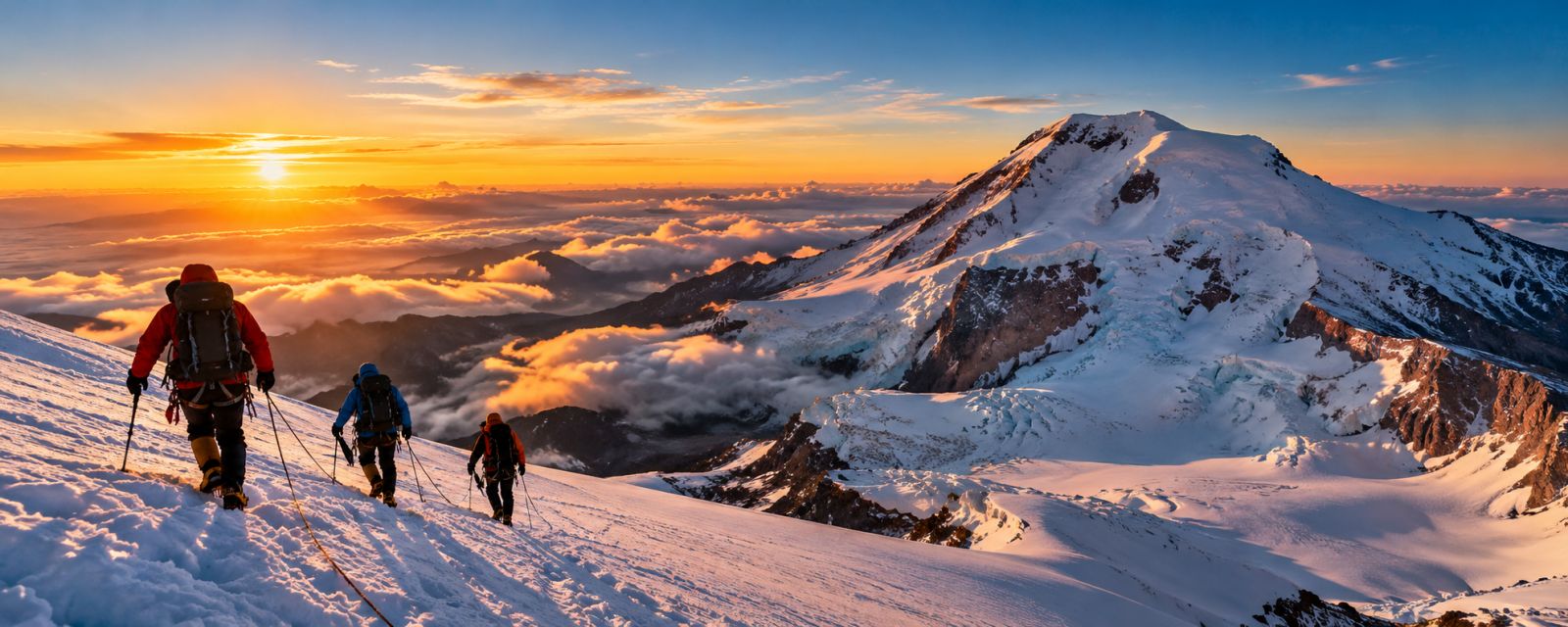
Why Acclimatization Matters Before Climbing Chimborazo
Why Acclimatization Matters Before Climbing Chimborazo
Climbing Chimborazo is one of the most extraordinary high-altitude mountaineering experiences in South America. Rising to 6,263 meters (20,548 feet) above sea level, Chimborazo is Ecuador's highest mountain and one of the most iconic climbing destinations in the Andes.
However, reaching the summit of this magnificent volcano requires more than physical strength, technical climbing skills, and determination. One of the most important factors influencing a successful and safer ascent is proper altitude acclimatization.
Whether you are an experienced mountaineer or preparing for your first 6,000-meter summit, understanding how your body adapts to high altitude is essential.
In this guide, Ecuadorian Alpine Institute explains why acclimatization matters before climbing Chimborazo, how altitude affects your body, and how to prepare for an unforgettable mountaineering adventure in Ecuador.
What Makes Chimborazo Such a Challenging Mountain?
Located in Ecuador's central Andes, Chimborazo is a massive, glacier-covered stratovolcano that attracts climbers from around the world.
Its summit reaches approximately 6,263 meters above sea level, making it the highest mountain in Ecuador.
Interestingly, because of Earth's equatorial bulge, Chimborazo's summit is the point on Earth's surface farthest from its center, even though Mount Everest is higher above sea level.
Climbing Chimborazo involves several demanding conditions:
- Extreme altitude and reduced oxygen availability.
- Cold temperatures and potentially strong winds.
- Glacier travel and technical mountaineering terrain.
- Snow and ice slopes requiring specialized equipment.
- Long summit attempts that often begin during the night.
- Significant physical and mental endurance.
Although technical climbing experience is important, even strong and experienced mountaineers can struggle if they have not properly adapted to the altitude.
This is why acclimatization should be a fundamental part of every Chimborazo climbing expedition.
What Is Altitude Acclimatization?
Altitude acclimatization is the process through which the human body gradually adapts to the reduced oxygen availability encountered at higher elevations.
As altitude increases, atmospheric pressure decreases. Although the percentage of oxygen in the air remains approximately the same, the lower pressure reduces the amount of oxygen available to the body with each breath.
This creates additional physiological challenges, especially during demanding physical activities such as glacier climbing and high-altitude mountaineering.
During acclimatization, the body gradually develops several adaptations, including:
- Increased breathing to improve oxygen intake.
- Changes in heart rate and circulation.
- Adjustments in fluid balance.
- Increased production of red blood cells over time.
- Improved tolerance to physical activity at altitude.
These adaptations develop at different rates and vary considerably between individuals.
Proper acclimatization helps reduce the risk of altitude illness, but it does not eliminate that risk or guarantee a successful summit.
Why Is Acclimatization Essential Before Climbing Chimborazo?
1. Reduces the Risk of Altitude Sickness
One of the greatest concerns when climbing Chimborazo is acute mountain sickness (AMS).
Altitude sickness can affect anyone who ascends too quickly, regardless of age, fitness level, or previous mountaineering experience.
Common symptoms include:
- Headaches.
- Nausea or loss of appetite.
- Dizziness.
- Unusual fatigue.
- Difficulty sleeping.
More serious altitude-related illnesses include high-altitude pulmonary edema (HAPE) and high-altitude cerebral edema (HACE), both of which can become life-threatening.
Gradual acclimatization reduces the likelihood of developing altitude illness.
Climbers experiencing worsening symptoms should stop ascending and seek appropriate medical assessment. Severe symptoms require immediate descent and emergency medical care.
2. Improves Physical Performance at High Altitude
Climbing Chimborazo requires sustained physical effort in an environment where oxygen availability is significantly lower than at sea level.
Without adequate acclimatization, even simple activities can become exhausting.
As the body adapts to altitude, climbers may experience improved tolerance to exertion and greater comfort during high-altitude activities.
This can make a meaningful difference during the demanding final ascent toward Chimborazo's summit.
However, acclimatization does not restore sea-level performance, and climbers must continue to manage their pace and energy carefully.
3. Supports Better Decision-Making During the Climb
Mountaineering at extreme altitude demands concentration, coordination, and sound judgment.
Fatigue, poor sleep, and altitude-related illness can interfere with a climber's ability to make safe decisions.
A well-planned acclimatization program allows climbers to observe how their bodies respond to altitude before attempting more demanding objectives.
This preparation helps climbers and guides make better-informed decisions about whether to continue, rest, modify the itinerary, or descend.
4. Helps Climbers Prepare for the Physical Demands of the Summit
Chimborazo summit attempts can involve many hours of continuous movement across snow and glaciated terrain.
The combination of altitude, cold weather, and sustained exertion makes the climb particularly demanding.
Acclimatization, combined with appropriate physical conditioning and mountaineering preparation, helps climbers approach these challenges more effectively.
It is important to understand that acclimatization and physical fitness are different.
Being physically fit does not make a climber immune to altitude sickness.
Even highly trained athletes need sufficient time to adapt to high elevations.
How Long Should You Acclimatize Before Climbing Chimborazo?
There is no single acclimatization schedule that works for every mountaineer.
The amount of preparation required depends on several factors, including:
- Your previous experience at high altitude.
- Your current level of acclimatization.
- The altitude where you normally live.
- Your response to previous high-altitude climbs.
- Your overall health and physical condition.
- The altitude profile of your planned expedition.
For climbers arriving from sea level, a gradual acclimatization itinerary over several days is particularly important.
Many Ecuador mountaineering itineraries include approximately 7–10 days or more of progressive altitude exposure before attempting Chimborazo, depending on the climber's experience, starting altitude, and individual response.
This is an itinerary-planning example, not a universally sufficient acclimatization period.
General altitude-medicine guidance recommends limiting increases in sleeping elevation to approximately 500 meters per day once above 3,000 meters, with additional acclimatization days as needed.
These recommendations must be adapted to individual circumstances and the expedition's actual altitude profile.
A professional mountain guide can help organize a progressive climbing itinerary, while medical professionals can advise on individual altitude-related health risks.
Best Mountains in Ecuador for Acclimatization Before Chimborazo
One of the greatest advantages of mountaineering in Ecuador is the opportunity to acclimatize on several spectacular Andean mountains before attempting Chimborazo.
Ecuador offers an exceptional combination of accessible high-altitude hiking destinations, volcanic landscapes, and glacier-covered summits.
Pasochoa Volcano – 4,200 m
Pasochoa is an excellent introduction to high-altitude hiking in Ecuador.
Located near Quito, this extinct volcano offers beautiful Andean landscapes and hiking routes that can help climbers begin experiencing higher elevations.
For visitors arriving from sea level, Pasochoa should be attempted only after appropriate initial altitude adjustment.
Rucu Pichincha – 4,696 m
Rucu Pichincha is one of the most popular acclimatization hikes near Quito.
Its proximity to the capital makes it a convenient destination for mountaineers preparing for more demanding climbs.
The hike provides an opportunity to experience thinner air, evaluate physical performance, and enjoy impressive views of the Ecuadorian Andes.
Iliniza Norte – 5,126 m
Iliniza Norte is a popular acclimatization objective for mountaineers preparing for higher Andean summits.
The mountain offers challenging high-altitude terrain and requires appropriate experience, equipment, and weather assessment.
Reaching elevations above 5,000 meters can provide useful altitude exposure as part of a carefully planned acclimatization program.
Cotopaxi Volcano – 5,897 m
Cotopaxi is one of Ecuador's most famous volcanoes and a major mountaineering destination.
Its glacier-covered slopes offer opportunities to develop and practice essential climbing skills, including crampon use, ice axe techniques, and roped glacier travel.
For appropriately prepared climbers, a Cotopaxi ascent may form part of a progressive mountaineering itinerary before Chimborazo.
However, climbing Cotopaxi is not a mandatory prerequisite for Chimborazo, and an ascent to nearly 5,900 meters should never be used as a substitute for gradual acclimatization.
The ideal acclimatization route depends on the climber, not simply on reaching a series of increasingly high summits.
Recommended Acclimatization Strategy for Chimborazo
A structured preparation program can help climbers gradually adapt to Ecuador's high-altitude environment.
An illustrative progression may include:
Stage 1: Arrival and Initial Adjustment in Quito
Spend time adjusting to Quito's elevation of approximately 2,850 meters. Begin with light activities and avoid strenuous exertion immediately after arrival.
Stage 2: Progressive High-Altitude Hiking
After initial adjustment, explore suitable acclimatization routes such as Pasochoa or Rucu Pichincha, depending on individual readiness.
Stage 3: Higher Mountain Objectives
Once adequately acclimatized, consider more demanding objectives such as Iliniza Norte, with appropriate guidance and technical preparation.
Stage 4: Glacier Training and Advanced Preparation
Practice essential glacier-travel skills and, when appropriate, complete a higher-altitude climbing objective.
Stage 5: Rest, Recovery, and Chimborazo Summit Attempt
Allow sufficient recovery time before the final ascent. Your guide should evaluate weather conditions, route conditions, physical readiness, and signs of altitude illness.
This progression is illustrative rather than a fixed schedule. It should include appropriate sleeping-altitude increases, rest days, and adjustments based on symptoms.
Essential Tips for Acclimatizing Before Climbing Chimborazo
A successful high-altitude expedition begins with thoughtful preparation.
Here are several important recommendations for climbers planning a Chimborazo ascent.
Ascend Gradually
Avoid rapid increases in sleeping altitude. Give your body sufficient time to adjust before moving higher.
Stay Adequately Hydrated
Drink enough fluids to maintain normal hydration, but avoid excessive water consumption.
Hydration supports general health and physical performance, although drinking extra water does not prevent altitude sickness.
Eat Regularly
Maintain sufficient calorie intake during your expedition.
High-altitude activities require significant energy, and a balanced diet can help support demanding climbing days.
Prioritize Rest and Recovery
Adequate sleep and recovery are important throughout the acclimatization process.
Avoid unnecessary exhaustion before attempting a major summit.
Recognize Altitude Sickness Symptoms
Never ignore persistent headaches, nausea, unusual fatigue, or other concerning symptoms.
Do not ascend to a higher sleeping altitude while experiencing symptoms of altitude sickness.
Seek Medical Advice Before Traveling
If you have a medical condition, previous altitude illness, or concerns about high-altitude exposure, consult a qualified healthcare professional.
A clinician experienced in altitude medicine can also advise whether preventive medication is appropriate.
Follow Professional Mountain Guidance
Experienced local mountain guides provide valuable knowledge about climbing routes, weather conditions, glacier hazards, and expedition logistics.
However, professional guidance does not replace medical evaluation or guarantee safety.
Can Beginners Climb Chimborazo?
Chimborazo is a demanding high-altitude mountaineering objective, and it should not be approached as a conventional hiking experience.
Although some climbers attempt Chimborazo without extensive previous mountaineering experience, they still need appropriate physical preparation, acclimatization, technical training, and professional assessment.
Essential skills may include:
- Walking efficiently with crampons.
- Using an ice axe.
- Traveling safely on glaciers.
- Understanding basic rope-team procedures.
- Recognizing mountain hazards.
- Following safety instructions in difficult conditions.
For climbers new to mountaineering, a progressive training program involving easier mountain objectives is strongly recommended before attempting Chimborazo.
Why Choose Ecuador for High-Altitude Acclimatization?
Ecuador is one of South America's most attractive destinations for mountaineering and high-altitude adventure.
The country offers an exceptional concentration of Andean peaks, including Cayambe, Cotopaxi, Iliniza Norte, and Chimborazo.
Many of these mountains are accessible from Quito, allowing climbers to organize progressive itineraries without extensive travel between destinations.
Other advantages include:
- Diverse mountain environments and volcanic landscapes.
- High-altitude hiking and glacier-climbing opportunities.
- Professional mountain guiding services.
- Cultural experiences in Andean communities.
- Opportunities to combine acclimatization with unforgettable outdoor adventures.
For international mountaineers, Ecuador offers a remarkable setting for preparing for high-altitude climbing objectives.
Plan Your Chimborazo Climbing Adventure with Ecuadorian Alpine Institute
At Ecuadorian Alpine Institute, we believe that preparation is one of the most important parts of a rewarding mountaineering experience.
Our Ecuador climbing expeditions are designed to help travelers explore the spectacular Andes while emphasizing progressive altitude exposure, appropriate mountain preparation, and informed decision-making.
Whether your goal is to climb Chimborazo, explore Cotopaxi, or experience your first high-altitude adventure in Ecuador, choosing a suitable itinerary is an important first step.
Our team can help you explore mountaineering programs that combine acclimatization hikes, mountain training, and challenging summit objectives.
Every expedition remains subject to individual readiness, weather, mountain conditions, and safety considerations.
Ready to Climb Chimborazo?
Discover the extraordinary beauty of Ecuador's highest mountain and prepare for your next mountaineering challenge.
Contact Ecuadorian Alpine Institute to learn more about our Chimborazo climbing expeditions, acclimatization programs, and guided mountain adventures in Ecuador.
Explore our climbing tours and start planning your Andean expedition today.
---
Frequently Asked Questions About Chimborazo Acclimatization
How many days do you need to acclimatize before climbing Chimborazo?
Many mountaineering itineraries allow approximately 7–10 days or more for progressive altitude exposure before Chimborazo. However, the necessary duration varies according to previous acclimatization, starting altitude, individual response, and the expedition's sleeping-altitude profile.
Can you climb Chimborazo without acclimatization?
Attempting Chimborazo without adequate acclimatization is strongly discouraged because of the increased risk of altitude sickness and serious high-altitude complications.
Is Chimborazo harder than Cotopaxi?
Chimborazo reaches a higher elevation than Cotopaxi and generally involves greater altitude-related demands. However, overall climbing difficulty depends on route conditions, weather, glacier hazards, and individual experience.
What is the altitude of Chimborazo?
Chimborazo reaches approximately 6,263 meters (20,548 feet) above sea level, making it Ecuador's highest mountain.
What are the best acclimatization mountains before Chimborazo?
Pasochoa, Rucu Pichincha, and Iliniza Norte are popular options for progressive altitude exposure. Cotopaxi may also be included for suitably experienced and acclimatized climbers.
Does physical fitness prevent altitude sickness?
No. Excellent physical fitness does not prevent altitude sickness. Even highly trained athletes require appropriate acclimatization when traveling to high elevations.
Do I need a professional guide to climb Chimborazo?
Climbers should verify current regulations and access requirements with the relevant Ecuadorian authorities. Given the mountain's altitude, glacier terrain, and objective hazards, professional mountain guidance is strongly recommended.
Climbing Chimborazo is one of the most extraordinary high-altitude mountaineering experiences in South America. Rising to 6,263 meters (20,548 feet) above sea level, Chimborazo is Ecuador's highest mountain and one of the most iconic climbing destinations in the Andes.
However, reaching the summit of this magnificent volcano requires more than physical strength, technical climbing skills, and determination. One of the most important factors influencing a successful and safer ascent is proper altitude acclimatization.
Whether you are an experienced mountaineer or preparing for your first 6,000-meter summit, understanding how your body adapts to high altitude is essential.
In this guide, Ecuadorian Alpine Institute explains why acclimatization matters before climbing Chimborazo, how altitude affects your body, and how to prepare for an unforgettable mountaineering adventure in Ecuador.
What Makes Chimborazo Such a Challenging Mountain?
Located in Ecuador's central Andes, Chimborazo is a massive, glacier-covered stratovolcano that attracts climbers from around the world.
Its summit reaches approximately 6,263 meters above sea level, making it the highest mountain in Ecuador.
Interestingly, because of Earth's equatorial bulge, Chimborazo's summit is the point on Earth's surface farthest from its center, even though Mount Everest is higher above sea level.
Climbing Chimborazo involves several demanding conditions:
- Extreme altitude and reduced oxygen availability.
- Cold temperatures and potentially strong winds.
- Glacier travel and technical mountaineering terrain.
- Snow and ice slopes requiring specialized equipment.
- Long summit attempts that often begin during the night.
- Significant physical and mental endurance.
Although technical climbing experience is important, even strong and experienced mountaineers can struggle if they have not properly adapted to the altitude.
This is why acclimatization should be a fundamental part of every Chimborazo climbing expedition.
What Is Altitude Acclimatization?
Altitude acclimatization is the process through which the human body gradually adapts to the reduced oxygen availability encountered at higher elevations.
As altitude increases, atmospheric pressure decreases. Although the percentage of oxygen in the air remains approximately the same, the lower pressure reduces the amount of oxygen available to the body with each breath.
This creates additional physiological challenges, especially during demanding physical activities such as glacier climbing and high-altitude mountaineering.
During acclimatization, the body gradually develops several adaptations, including:
- Increased breathing to improve oxygen intake.
- Changes in heart rate and circulation.
- Adjustments in fluid balance.
- Increased production of red blood cells over time.
- Improved tolerance to physical activity at altitude.
These adaptations develop at different rates and vary considerably between individuals.
Proper acclimatization helps reduce the risk of altitude illness, but it does not eliminate that risk or guarantee a successful summit.
Why Is Acclimatization Essential Before Climbing Chimborazo?
1. Reduces the Risk of Altitude Sickness
One of the greatest concerns when climbing Chimborazo is acute mountain sickness (AMS).
Altitude sickness can affect anyone who ascends too quickly, regardless of age, fitness level, or previous mountaineering experience.
Common symptoms include:
- Headaches.
- Nausea or loss of appetite.
- Dizziness.
- Unusual fatigue.
- Difficulty sleeping.
More serious altitude-related illnesses include high-altitude pulmonary edema (HAPE) and high-altitude cerebral edema (HACE), both of which can become life-threatening.
Gradual acclimatization reduces the likelihood of developing altitude illness.
Climbers experiencing worsening symptoms should stop ascending and seek appropriate medical assessment. Severe symptoms require immediate descent and emergency medical care.
2. Improves Physical Performance at High Altitude
Climbing Chimborazo requires sustained physical effort in an environment where oxygen availability is significantly lower than at sea level.
Without adequate acclimatization, even simple activities can become exhausting.
As the body adapts to altitude, climbers may experience improved tolerance to exertion and greater comfort during high-altitude activities.
This can make a meaningful difference during the demanding final ascent toward Chimborazo's summit.
However, acclimatization does not restore sea-level performance, and climbers must continue to manage their pace and energy carefully.
3. Supports Better Decision-Making During the Climb
Mountaineering at extreme altitude demands concentration, coordination, and sound judgment.
Fatigue, poor sleep, and altitude-related illness can interfere with a climber's ability to make safe decisions.
A well-planned acclimatization program allows climbers to observe how their bodies respond to altitude before attempting more demanding objectives.
This preparation helps climbers and guides make better-informed decisions about whether to continue, rest, modify the itinerary, or descend.
4. Helps Climbers Prepare for the Physical Demands of the Summit
Chimborazo summit attempts can involve many hours of continuous movement across snow and glaciated terrain.
The combination of altitude, cold weather, and sustained exertion makes the climb particularly demanding.
Acclimatization, combined with appropriate physical conditioning and mountaineering preparation, helps climbers approach these challenges more effectively.
It is important to understand that acclimatization and physical fitness are different.
Being physically fit does not make a climber immune to altitude sickness.
Even highly trained athletes need sufficient time to adapt to high elevations.
How Long Should You Acclimatize Before Climbing Chimborazo?
There is no single acclimatization schedule that works for every mountaineer.
The amount of preparation required depends on several factors, including:
- Your previous experience at high altitude.
- Your current level of acclimatization.
- The altitude where you normally live.
- Your response to previous high-altitude climbs.
- Your overall health and physical condition.
- The altitude profile of your planned expedition.
For climbers arriving from sea level, a gradual acclimatization itinerary over several days is particularly important.
Many Ecuador mountaineering itineraries include approximately 7–10 days or more of progressive altitude exposure before attempting Chimborazo, depending on the climber's experience, starting altitude, and individual response.
This is an itinerary-planning example, not a universally sufficient acclimatization period.
General altitude-medicine guidance recommends limiting increases in sleeping elevation to approximately 500 meters per day once above 3,000 meters, with additional acclimatization days as needed.
These recommendations must be adapted to individual circumstances and the expedition's actual altitude profile.
A professional mountain guide can help organize a progressive climbing itinerary, while medical professionals can advise on individual altitude-related health risks.
Best Mountains in Ecuador for Acclimatization Before Chimborazo
One of the greatest advantages of mountaineering in Ecuador is the opportunity to acclimatize on several spectacular Andean mountains before attempting Chimborazo.
Ecuador offers an exceptional combination of accessible high-altitude hiking destinations, volcanic landscapes, and glacier-covered summits.
Pasochoa Volcano – 4,200 m
Pasochoa is an excellent introduction to high-altitude hiking in Ecuador.
Located near Quito, this extinct volcano offers beautiful Andean landscapes and hiking routes that can help climbers begin experiencing higher elevations.
For visitors arriving from sea level, Pasochoa should be attempted only after appropriate initial altitude adjustment.
Rucu Pichincha – 4,696 m
Rucu Pichincha is one of the most popular acclimatization hikes near Quito.
Its proximity to the capital makes it a convenient destination for mountaineers preparing for more demanding climbs.
The hike provides an opportunity to experience thinner air, evaluate physical performance, and enjoy impressive views of the Ecuadorian Andes.
Iliniza Norte – 5,126 m
Iliniza Norte is a popular acclimatization objective for mountaineers preparing for higher Andean summits.
The mountain offers challenging high-altitude terrain and requires appropriate experience, equipment, and weather assessment.
Reaching elevations above 5,000 meters can provide useful altitude exposure as part of a carefully planned acclimatization program.
Cotopaxi Volcano – 5,897 m
Cotopaxi is one of Ecuador's most famous volcanoes and a major mountaineering destination.
Its glacier-covered slopes offer opportunities to develop and practice essential climbing skills, including crampon use, ice axe techniques, and roped glacier travel.
For appropriately prepared climbers, a Cotopaxi ascent may form part of a progressive mountaineering itinerary before Chimborazo.
However, climbing Cotopaxi is not a mandatory prerequisite for Chimborazo, and an ascent to nearly 5,900 meters should never be used as a substitute for gradual acclimatization.
The ideal acclimatization route depends on the climber, not simply on reaching a series of increasingly high summits.
Recommended Acclimatization Strategy for Chimborazo
A structured preparation program can help climbers gradually adapt to Ecuador's high-altitude environment.
An illustrative progression may include:
Stage 1: Arrival and Initial Adjustment in Quito
Spend time adjusting to Quito's elevation of approximately 2,850 meters. Begin with light activities and avoid strenuous exertion immediately after arrival.
Stage 2: Progressive High-Altitude Hiking
After initial adjustment, explore suitable acclimatization routes such as Pasochoa or Rucu Pichincha, depending on individual readiness.
Stage 3: Higher Mountain Objectives
Once adequately acclimatized, consider more demanding objectives such as Iliniza Norte, with appropriate guidance and technical preparation.
Stage 4: Glacier Training and Advanced Preparation
Practice essential glacier-travel skills and, when appropriate, complete a higher-altitude climbing objective.
Stage 5: Rest, Recovery, and Chimborazo Summit Attempt
Allow sufficient recovery time before the final ascent. Your guide should evaluate weather conditions, route conditions, physical readiness, and signs of altitude illness.
This progression is illustrative rather than a fixed schedule. It should include appropriate sleeping-altitude increases, rest days, and adjustments based on symptoms.
Essential Tips for Acclimatizing Before Climbing Chimborazo
A successful high-altitude expedition begins with thoughtful preparation.
Here are several important recommendations for climbers planning a Chimborazo ascent.
Ascend Gradually
Avoid rapid increases in sleeping altitude. Give your body sufficient time to adjust before moving higher.
Stay Adequately Hydrated
Drink enough fluids to maintain normal hydration, but avoid excessive water consumption.
Hydration supports general health and physical performance, although drinking extra water does not prevent altitude sickness.
Eat Regularly
Maintain sufficient calorie intake during your expedition.
High-altitude activities require significant energy, and a balanced diet can help support demanding climbing days.
Prioritize Rest and Recovery
Adequate sleep and recovery are important throughout the acclimatization process.
Avoid unnecessary exhaustion before attempting a major summit.
Recognize Altitude Sickness Symptoms
Never ignore persistent headaches, nausea, unusual fatigue, or other concerning symptoms.
Do not ascend to a higher sleeping altitude while experiencing symptoms of altitude sickness.
Seek Medical Advice Before Traveling
If you have a medical condition, previous altitude illness, or concerns about high-altitude exposure, consult a qualified healthcare professional.
A clinician experienced in altitude medicine can also advise whether preventive medication is appropriate.
Follow Professional Mountain Guidance
Experienced local mountain guides provide valuable knowledge about climbing routes, weather conditions, glacier hazards, and expedition logistics.
However, professional guidance does not replace medical evaluation or guarantee safety.
Can Beginners Climb Chimborazo?
Chimborazo is a demanding high-altitude mountaineering objective, and it should not be approached as a conventional hiking experience.
Although some climbers attempt Chimborazo without extensive previous mountaineering experience, they still need appropriate physical preparation, acclimatization, technical training, and professional assessment.
Essential skills may include:
- Walking efficiently with crampons.
- Using an ice axe.
- Traveling safely on glaciers.
- Understanding basic rope-team procedures.
- Recognizing mountain hazards.
- Following safety instructions in difficult conditions.
For climbers new to mountaineering, a progressive training program involving easier mountain objectives is strongly recommended before attempting Chimborazo.
Why Choose Ecuador for High-Altitude Acclimatization?
Ecuador is one of South America's most attractive destinations for mountaineering and high-altitude adventure.
The country offers an exceptional concentration of Andean peaks, including Cayambe, Cotopaxi, Iliniza Norte, and Chimborazo.
Many of these mountains are accessible from Quito, allowing climbers to organize progressive itineraries without extensive travel between destinations.
Other advantages include:
- Diverse mountain environments and volcanic landscapes.
- High-altitude hiking and glacier-climbing opportunities.
- Professional mountain guiding services.
- Cultural experiences in Andean communities.
- Opportunities to combine acclimatization with unforgettable outdoor adventures.
For international mountaineers, Ecuador offers a remarkable setting for preparing for high-altitude climbing objectives.
Plan Your Chimborazo Climbing Adventure with Ecuadorian Alpine Institute
At Ecuadorian Alpine Institute, we believe that preparation is one of the most important parts of a rewarding mountaineering experience.
Our Ecuador climbing expeditions are designed to help travelers explore the spectacular Andes while emphasizing progressive altitude exposure, appropriate mountain preparation, and informed decision-making.
Whether your goal is to climb Chimborazo, explore Cotopaxi, or experience your first high-altitude adventure in Ecuador, choosing a suitable itinerary is an important first step.
Our team can help you explore mountaineering programs that combine acclimatization hikes, mountain training, and challenging summit objectives.
Every expedition remains subject to individual readiness, weather, mountain conditions, and safety considerations.
Ready to Climb Chimborazo?
Discover the extraordinary beauty of Ecuador's highest mountain and prepare for your next mountaineering challenge.
Contact Ecuadorian Alpine Institute to learn more about our Chimborazo climbing expeditions, acclimatization programs, and guided mountain adventures in Ecuador.
Explore our climbing tours and start planning your Andean expedition today.
---
Frequently Asked Questions About Chimborazo Acclimatization
How many days do you need to acclimatize before climbing Chimborazo?
Many mountaineering itineraries allow approximately 7–10 days or more for progressive altitude exposure before Chimborazo. However, the necessary duration varies according to previous acclimatization, starting altitude, individual response, and the expedition's sleeping-altitude profile.
Can you climb Chimborazo without acclimatization?
Attempting Chimborazo without adequate acclimatization is strongly discouraged because of the increased risk of altitude sickness and serious high-altitude complications.
Is Chimborazo harder than Cotopaxi?
Chimborazo reaches a higher elevation than Cotopaxi and generally involves greater altitude-related demands. However, overall climbing difficulty depends on route conditions, weather, glacier hazards, and individual experience.
What is the altitude of Chimborazo?
Chimborazo reaches approximately 6,263 meters (20,548 feet) above sea level, making it Ecuador's highest mountain.
What are the best acclimatization mountains before Chimborazo?
Pasochoa, Rucu Pichincha, and Iliniza Norte are popular options for progressive altitude exposure. Cotopaxi may also be included for suitably experienced and acclimatized climbers.
Does physical fitness prevent altitude sickness?
No. Excellent physical fitness does not prevent altitude sickness. Even highly trained athletes require appropriate acclimatization when traveling to high elevations.
Do I need a professional guide to climb Chimborazo?
Climbers should verify current regulations and access requirements with the relevant Ecuadorian authorities. Given the mountain's altitude, glacier terrain, and objective hazards, professional mountain guidance is strongly recommended.