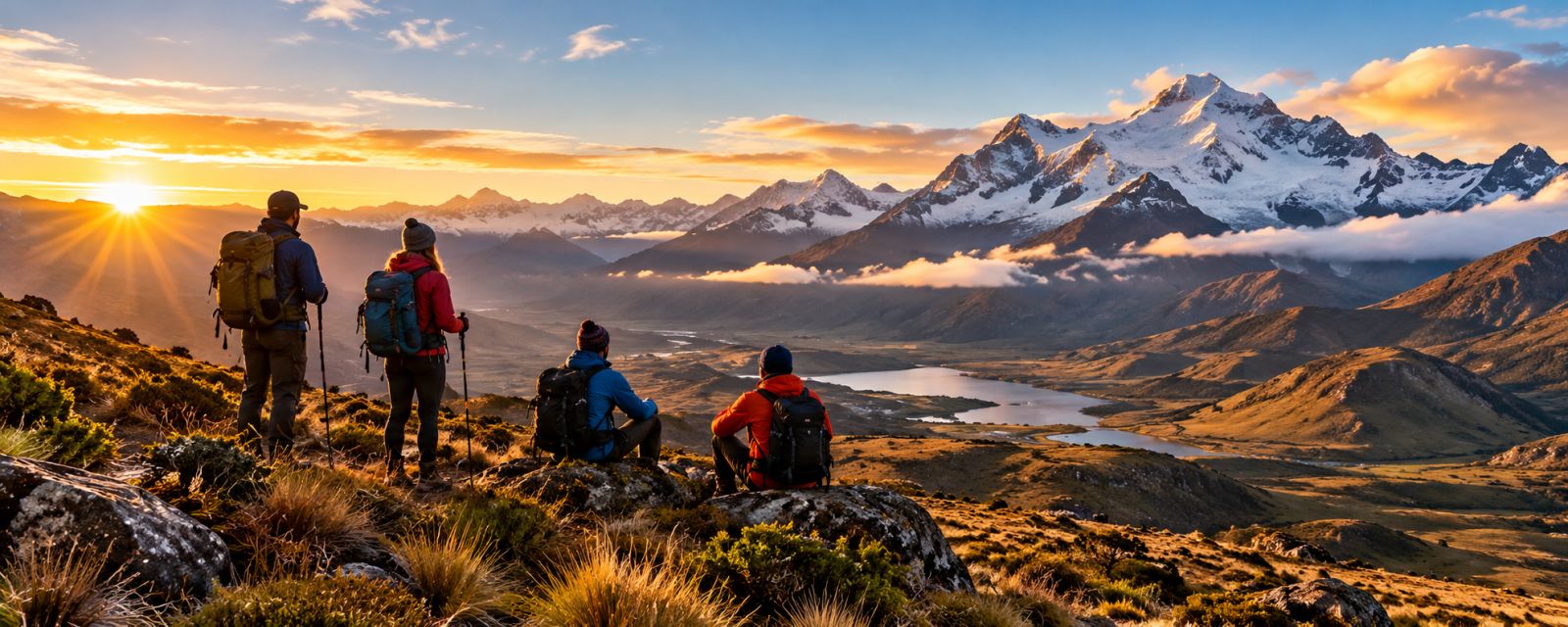
Why Adventure Travel Should Never Be About Rushing
Why Adventure Travel Should Never Be About Rushing
Adventure travel is not about visiting as many destinations as possible in the shortest amount of time. It is about discovering extraordinary landscapes, connecting with nature, experiencing different cultures, and creating meaningful memories along the way.
In a world where travelers often try to fit multiple destinations, activities, and experiences into increasingly short itineraries, the true meaning of adventure can sometimes be overlooked.
From climbing volcanoes in Ecuador to trekking through Peru's spectacular Cordillera Blanca, some of the most rewarding travel experiences require patience, preparation, and time.
A mountain expedition is not simply a race to reach the summit. A trekking journey is not only about completing a certain number of kilometers. And a cycling adventure should not be measured exclusively by how many destinations are visited.
At Ecuadorian Alpine Institute, we believe that meaningful adventure travel begins with understanding the journey rather than rushing toward the destination.
Taking the time to prepare, acclimatize, explore, and appreciate the surrounding environment can transform an ordinary trip into an unforgettable experience.
In this guide, we explain why adventure travel should never be about rushing, how slower and more thoughtful itineraries can improve mountain experiences, and why responsible adventure tourism is important for travelers exploring Ecuador, Peru, and the Andes of South America.
1. What Does Slow Adventure Travel Really Mean?
Slow adventure travel is an approach to tourism that prioritizes meaningful experiences, thoughtful exploration, and deeper connections with destinations.
Rather than trying to visit as many places as possible, slow adventure travelers focus on experiencing each location more fully.
This philosophy can be applied to many outdoor activities, including:
- High-altitude trekking.
- Mountaineering expeditions.
- Mountain biking adventures.
- Hiking and nature exploration.
- Cultural trekking experiences.
- Multi-day mountain journeys.
- Guided adventure tours.
Slow adventure travel does not necessarily mean walking slowly or avoiding physically demanding activities.
A challenging mountain expedition can still embrace the principles of slow travel.
The difference lies in how the experience is planned and approached.
Slow adventure travel means allowing enough time for preparation, exploration, recovery, and meaningful engagement with the environment.
For travelers exploring the Andes, this approach can be particularly valuable because mountain environments present unique physical, geographical, and cultural considerations.
2. Adventure Travel Is About the Journey, Not Just the Destination
Many travelers begin planning an adventure with a specific objective in mind.
They may dream of reaching the summit of Cotopaxi, standing on Chimborazo, exploring the Cordillera Blanca, or cycling through Ecuador's volcanic landscapes.
These destinations are extraordinary.
However, focusing exclusively on the final objective can cause travelers to overlook the experiences that make the journey memorable.
The Value of the Experience Along the Way
A mountain adventure may include:
- Watching sunrise over the Andes.
- Discovering remote alpine valleys.
- Walking through unique high-altitude ecosystems.
- Learning about local communities.
- Observing wildlife.
- Exploring traditional mountain villages.
- Appreciating spectacular geological landscapes.
- Sharing experiences with fellow travelers.
These moments are not simply activities between major destinations.
They are essential parts of the adventure itself.
For example, a trekking expedition through Peru's Cordillera Blanca offers much more than the opportunity to reach a mountain pass.
The experience may include turquoise glacial lakes, spectacular views of snow-covered peaks, remote campsites, and encounters with Andean landscapes that cannot be fully appreciated when every day is excessively rushed.
The most memorable adventure is not always the one that covers the greatest distance, but the one that allows travelers to appreciate the journey.
3. Why Rushing Can Be Dangerous During High-Altitude Adventures
One of the most important reasons to avoid rushed adventure itineraries is altitude acclimatization.
High-altitude destinations such as Cotopaxi, Chimborazo, Cayambe, and the Cordillera Blanca expose travelers to environments where atmospheric pressure is significantly lower than at sea level.
As elevation increases, less oxygen becomes available to the body.
Travelers who ascend too quickly may develop altitude-related illnesses.
Understanding Altitude Sickness
Acute mountain sickness can cause symptoms such as:
- Headaches.
- Nausea.
- Dizziness.
- Loss of appetite.
- Unusual fatigue.
- Difficulty sleeping.
More serious altitude illnesses, including high-altitude pulmonary edema and high-altitude cerebral edema, can become life-threatening.
Physical fitness does not eliminate the risk of altitude sickness.
Even experienced athletes can experience altitude-related health problems when ascending too quickly.
Why Acclimatization Takes Time
Altitude acclimatization is a physiological process through which the body gradually adapts to reduced oxygen availability.
Appropriate acclimatization may involve:
- Gradual increases in sleeping altitude.
- Suitable introductory hikes.
- Progressive altitude exposure.
- Rest and recovery periods.
- Monitoring individual responses.
- Adjusting plans when symptoms occur.
For travelers arriving from sea level, a rushed itinerary that quickly reaches high sleeping elevations can increase altitude-related risks.
Above approximately 3,000 meters, commonly used altitude-medicine guidance recommends limiting increases in sleeping elevation to around 500 meters per day, with additional acclimatization days as appropriate.
However, altitude adaptation varies between individuals.
A longer itinerary does not automatically guarantee proper acclimatization. The sleeping-altitude profile and progression of the journey are what matter.
Travelers experiencing altitude sickness should not continue ascending to higher sleeping elevations. Severe or worsening symptoms require prompt descent and medical attention.
4. Why Longer Mountain Expeditions Can Offer Better Preparation
When comparing adventure travel itineraries, travelers often focus on the total number of days.
For example, someone planning a mountaineering trip in Ecuador may compare a short expedition with a more extensive program lasting two weeks or longer.
A shorter trip may appear more convenient because it requires less vacation time.
However, the number of days available can influence the preparation and structure of the adventure.
Advantages of a Well-Designed Longer Itinerary
Depending on the route and activities, a longer expedition may provide:
- More opportunities for gradual acclimatization.
- Additional physical preparation.
- Time for glacier skills training.
- Suitable recovery periods.
- More flexibility for weather changes.
- Opportunities to explore additional destinations.
- A less compressed daily schedule.
For example, travelers preparing for a high-altitude summit attempt in Ecuador may benefit from a progression of suitable acclimatization hikes and mountain objectives before attempting more demanding climbs.
However, extending an itinerary without carefully planning its altitude profile and physical demands does not necessarily improve safety.
Shorter Trips Can Still Be Appropriate
Not every traveler requires a long expedition.
A shorter adventure may be suitable for someone who is already acclimatized, has relevant mountain experience, and selects an itinerary appropriate to their abilities.
The objective is not to make every trip longer.
The objective is to allow enough time for the activities, preparation, and conditions that the adventure requires.
5. Slower Trekking Allows Deeper Exploration of the Andes
The Andes extend across several South American countries and offer some of the world's most spectacular mountain landscapes.
From Ecuador's volcanic highlands to Peru's Cordillera Blanca, these environments reward travelers who dedicate time to exploring them.
Trekking in Ecuador
Ecuador offers remarkable hiking and trekking opportunities through:
- Volcanic landscapes.
- High-altitude páramo.
- Andean valleys.
- Mountain lakes.
- Protected natural areas.
- Traditional highland communities.
Depending on the itinerary, travelers may explore areas near Cotopaxi, Chimborazo, Cayambe, and other mountain destinations.
A thoughtful itinerary can allow time to appreciate the environmental and cultural characteristics of each location.
Trekking in Peru's Cordillera Blanca
The Cordillera Blanca is one of South America's most celebrated mountain regions.
Located near Huaraz in northern Peru, the range features spectacular glaciated peaks, turquoise lakes, and remote mountain valleys.
Extended trekking programs may offer opportunities to explore:
- High-altitude mountain passes.
- Remote alpine landscapes.
- Glacial lakes.
- Traditional Andean communities.
- Mountain campsites.
- Scenic valleys.
A well-planned multi-day trekking expedition can provide a more immersive experience than an itinerary focused exclusively on reaching selected highlights as quickly as possible.
6. Rest and Recovery Are Part of the Adventure
Adventure travel often involves sustained physical activity.
Mountain climbing, trekking, and cycling can place significant demands on the body.
When itineraries are excessively compressed, travelers may have fewer opportunities for recovery.
Why Recovery Matters
Appropriate recovery supports physical performance and helps travelers manage accumulated fatigue.
Depending on the activity, recovery may involve:
- Adequate sleep.
- Sufficient nutrition.
- Appropriate hydration.
- Rest periods between demanding activities.
- Adjustments to physical intensity.
- Monitoring fatigue and discomfort.
During a multi-day trek, recovery becomes particularly important because participants must continue walking on subsequent days.
However, rest days should not be viewed as wasted time.
They can be valuable opportunities to appreciate the surrounding landscape, explore local culture, or prepare for the next stage of the journey.
A thoughtfully planned adventure recognizes that recovery is part of the experience, not an interruption to it.
7. Mountain Weather Does Not Follow a Tourist Schedule
Weather is another important reason why adventure travel should not be rushed.
Mountain environments are dynamic and unpredictable.
Even during relatively favorable seasons, the Andes can experience sudden changes in weather.
Possible conditions include:
- Strong winds.
- Rain.
- Snowfall.
- Reduced visibility.
- Low temperatures.
- Thunderstorms.
- Rapid changes in cloud cover.
Why Weather Flexibility Matters
An itinerary with little flexibility may place pressure on travelers to complete planned activities despite unfavorable conditions.
However, mountain safety decisions should never be based solely on the desire to maintain a schedule.
Depending on the circumstances, changing the route, delaying an activity, or turning back may be the most appropriate decision.
Longer itineraries can provide opportunities to include contingency days.
Nevertheless, additional days do not guarantee favorable weather or successful summit attempts.
Respecting mountain conditions is more important than completing an itinerary exactly as originally planned.
8. Slow Adventure Travel Encourages Responsible Tourism
Responsible adventure tourism involves considering the environmental, cultural, and social impacts of travel.
A slower and more thoughtful approach can create opportunities to engage more meaningfully with destinations.
Respecting Natural Environments
Mountain ecosystems are often environmentally sensitive.
In Ecuador, the páramo plays an important role in biodiversity conservation and water regulation.
In Peru, high-altitude ecosystems and glacial environments are vulnerable to environmental pressures.
Responsible adventure travelers should:
- Stay on authorized trails.
- Avoid damaging vegetation.
- Carry out waste.
- Respect wildlife.
- Follow protected-area regulations.
- Use established campsites.
- Minimize unnecessary environmental impacts.
Supporting Local Communities
Thoughtful travel can also create opportunities to support local economies.
Depending on the destination, travelers may use local accommodation, guides, transportation providers, and other services.
Cultural activities should be organized respectfully and with consideration for community preferences.
Slow travel alone does not guarantee sustainability, but it can encourage travelers to make more deliberate choices.
9. Cultural Experiences Should Never Be Rushed
One of the most rewarding aspects of traveling through the Andes is discovering the cultural diversity of the region.
Ecuador and Peru are home to communities with rich traditions, languages, histories, and relationships with the mountain environment.
Depending on the itinerary, travelers may have opportunities to:
- Visit traditional Andean villages.
- Explore local markets.
- Learn about regional cuisine.
- Discover agricultural traditions.
- Understand the cultural significance of mountains.
- Engage with local guides and hosts.
These experiences require respect and genuine interest.
A rushed itinerary may leave little time for meaningful cultural interaction.
A thoughtfully planned journey can provide more opportunities to learn about the places and people encountered along the way.
10. Why Multi-Day Trekking Is More Than Walking for Several Days
Multi-day trekking is a particularly good example of the value of unhurried adventure travel.
Unlike a one-day hike, a multi-day trek involves sustained exploration over several consecutive days.
Travelers may experience different landscapes, changing weather conditions, overnight camping, and a greater sense of immersion in nature.
However, multi-day trekking also requires additional preparation.
Important considerations include:
- Physical endurance.
- Equipment selection.
- Route planning.
- Food and water.
- Overnight accommodation.
- Weather exposure.
- Emergency arrangements.
- Altitude acclimatization when relevant.
The objective should not simply be to complete the route as quickly as possible.
A rewarding multi-day trek balances physical challenge with appropriate preparation and opportunities to appreciate the journey.
11. Why Mountain Biking Adventures Also Benefit From Thoughtful Pacing
The philosophy of slow adventure travel also applies to cycling tours.
Ecuador's mountain biking routes may pass through dramatically different environments, from high-altitude volcanic landscapes to warmer Andean valleys.
Riders may encounter changes in:
- Elevation.
- Terrain.
- Temperature.
- Vegetation.
- Weather.
- Technical difficulty.
A thoughtfully planned cycling tour allows participants to adapt to these conditions.
For example, a mountain biking adventure near Cotopaxi may involve loose volcanic gravel, high-altitude exposure, and changing weather.
Appropriate pacing, equipment, and route selection are important for a rewarding experience.
Slower adventure travel does not mean avoiding exciting downhill sections or challenging cycling routes.
It means recognizing that the experience includes more than speed and distance.
12. How to Choose an Adventure Travel Itinerary That Does Not Feel Rushed
When planning a mountain adventure in Ecuador, Peru, or elsewhere in South America, travelers should evaluate more than the number of destinations included.
Questions to Ask Before Booking
Consider the following:
1. Does the itinerary provide appropriate acclimatization for the planned altitude?
2. Are the daily physical demands realistic for my experience?
3. Is sufficient time allocated for transportation and preparation?
4. Are rest and recovery periods included when needed?
5. Does the itinerary allow flexibility for weather changes?
6. Are the route and technical requirements clearly explained?
7. Are local environmental regulations respected?
8. Are emergency arrangements appropriate for the destination?
9. Will I have opportunities to appreciate the landscapes and local culture?
10. Does the overall pace match my travel goals?
These questions can help travelers identify itineraries that prioritize quality rather than simply maximizing the number of activities.
13. Why Ecuadorian Alpine Institute Values Thoughtful Mountain Adventures
At Ecuadorian Alpine Institute, we believe that mountain adventures should be meaningful experiences built around preparation, exploration, and respect for the natural environment.
The Andes offer extraordinary opportunities for mountaineering, trekking, cycling, and cultural discovery.
From Ecuador's iconic volcanoes to Peru's spectacular Cordillera Blanca, each destination presents its own geographical characteristics and physical challenges.
Understanding these differences is essential when selecting an adventure itinerary.
Our approach emphasizes the importance of appropriate preparation, altitude awareness, realistic expectations, and meaningful mountain experiences.
Whether you are considering a high-altitude climbing expedition, a multi-day trek, or a cycling adventure, choosing the right itinerary is an important part of the journey.
Our team can help travelers explore available programs and understand the preparation required for their chosen adventure.
14. Why Meaningful Adventures Are Better Than Rushed Experiences
Travel memories are not always defined by the number of destinations visited.
Some of the most memorable experiences happen during unexpected moments.
Watching the sunrise over a snow-covered mountain.
Sharing a meal after a long trekking day.
Discovering a quiet Andean valley.
Learning about a local community.
Resting beside a glacial lake.
These moments may not appear as major objectives on a travel itinerary, but they can become some of the most meaningful parts of the journey.
A thoughtful approach to adventure travel allows more opportunities to appreciate these experiences.
It also encourages travelers to recognize that turning back, adjusting plans, or taking additional time can be responsible decisions rather than failures.
Adventure is not about doing everything as quickly as possible. It is about experiencing the journey with purpose.
Final Thoughts: The Best Adventures Deserve Time
Adventure travel should never be about rushing because extraordinary experiences require more than simply reaching a destination.
They require preparation, patience, adaptability, and respect for the environment.
In high-altitude destinations, thoughtful pacing can be particularly important for acclimatization and physical readiness.
During multi-day trekking adventures, appropriate recovery and realistic itineraries contribute to a more rewarding experience.
In cycling tours, understanding terrain, elevation, and weather helps travelers approach the journey with greater confidence.
And throughout the Andes, allowing time for cultural discovery and nature exploration can create deeper connections with the destinations visited.
Whether you are climbing a volcano in Ecuador, trekking through Peru's Cordillera Blanca, or cycling across spectacular Andean landscapes, remember that the journey is an essential part of the adventure.
The best adventure is not necessarily the fastest one. It is the one that allows you to experience the mountains fully.
Ready to Experience the Andes Without Rushing?
Discover meaningful mountain adventures with Ecuadorian Alpine Institute.
Explore spectacular trekking routes, high-altitude mountaineering expeditions, and cycling experiences across Ecuador, Peru, and the Andes of South America.
Our team can help you explore available itineraries and understand the preparation required for your next adventure.
Contact Ecuadorian Alpine Institute today and start planning an unforgettable journey through the Andes.
---
Frequently Asked Questions About Slow Adventure Travel
What is slow adventure travel?
Slow adventure travel is an approach that prioritizes meaningful experiences, thoughtful itineraries, and deeper exploration rather than visiting as many destinations as possible in a limited time.
Why should mountain expeditions not be rushed?
Mountain expeditions require appropriate preparation, altitude acclimatization, weather awareness, and realistic physical demands. Rushed itineraries can limit the time available for these important considerations.
Is a longer trekking tour always better?
No. A longer itinerary may offer additional opportunities for exploration, acclimatization, and recovery, but its suitability depends on route design, physical demands, and individual travel goals.
Why is acclimatization important during adventure travel?
At high elevations, reduced oxygen availability can cause altitude-related illnesses. Gradual acclimatization helps the body adapt and can reduce the risk of acute mountain sickness.
Can beginners enjoy slow adventure travel?
Yes. Slow adventure travel can be suitable for beginners when activities are selected according to their fitness, experience, and preparation.
Is slow adventure travel the same as sustainable tourism?
Not exactly. Slow travel emphasizes pace and depth of experience, while sustainable tourism focuses on environmental, social, and economic impacts. The two approaches can complement each other.
What are good destinations for slow adventure travel in South America?
Ecuador's Andean highlands, Peru's Cordillera Blanca, and other mountain regions of South America offer opportunities for extended trekking, mountaineering, cycling, and cultural experiences.
How can I avoid booking a rushed adventure itinerary?
Review daily activities, altitude progression, transportation times, rest periods, route difficulty, and weather flexibility before booking. Choose an itinerary that matches your preparation and travel goals.
Adventure travel is not about visiting as many destinations as possible in the shortest amount of time. It is about discovering extraordinary landscapes, connecting with nature, experiencing different cultures, and creating meaningful memories along the way.
In a world where travelers often try to fit multiple destinations, activities, and experiences into increasingly short itineraries, the true meaning of adventure can sometimes be overlooked.
From climbing volcanoes in Ecuador to trekking through Peru's spectacular Cordillera Blanca, some of the most rewarding travel experiences require patience, preparation, and time.
A mountain expedition is not simply a race to reach the summit. A trekking journey is not only about completing a certain number of kilometers. And a cycling adventure should not be measured exclusively by how many destinations are visited.
At Ecuadorian Alpine Institute, we believe that meaningful adventure travel begins with understanding the journey rather than rushing toward the destination.
Taking the time to prepare, acclimatize, explore, and appreciate the surrounding environment can transform an ordinary trip into an unforgettable experience.
In this guide, we explain why adventure travel should never be about rushing, how slower and more thoughtful itineraries can improve mountain experiences, and why responsible adventure tourism is important for travelers exploring Ecuador, Peru, and the Andes of South America.
1. What Does Slow Adventure Travel Really Mean?
Slow adventure travel is an approach to tourism that prioritizes meaningful experiences, thoughtful exploration, and deeper connections with destinations.
Rather than trying to visit as many places as possible, slow adventure travelers focus on experiencing each location more fully.
This philosophy can be applied to many outdoor activities, including:
- High-altitude trekking.
- Mountaineering expeditions.
- Mountain biking adventures.
- Hiking and nature exploration.
- Cultural trekking experiences.
- Multi-day mountain journeys.
- Guided adventure tours.
Slow adventure travel does not necessarily mean walking slowly or avoiding physically demanding activities.
A challenging mountain expedition can still embrace the principles of slow travel.
The difference lies in how the experience is planned and approached.
Slow adventure travel means allowing enough time for preparation, exploration, recovery, and meaningful engagement with the environment.
For travelers exploring the Andes, this approach can be particularly valuable because mountain environments present unique physical, geographical, and cultural considerations.
2. Adventure Travel Is About the Journey, Not Just the Destination
Many travelers begin planning an adventure with a specific objective in mind.
They may dream of reaching the summit of Cotopaxi, standing on Chimborazo, exploring the Cordillera Blanca, or cycling through Ecuador's volcanic landscapes.
These destinations are extraordinary.
However, focusing exclusively on the final objective can cause travelers to overlook the experiences that make the journey memorable.
The Value of the Experience Along the Way
A mountain adventure may include:
- Watching sunrise over the Andes.
- Discovering remote alpine valleys.
- Walking through unique high-altitude ecosystems.
- Learning about local communities.
- Observing wildlife.
- Exploring traditional mountain villages.
- Appreciating spectacular geological landscapes.
- Sharing experiences with fellow travelers.
These moments are not simply activities between major destinations.
They are essential parts of the adventure itself.
For example, a trekking expedition through Peru's Cordillera Blanca offers much more than the opportunity to reach a mountain pass.
The experience may include turquoise glacial lakes, spectacular views of snow-covered peaks, remote campsites, and encounters with Andean landscapes that cannot be fully appreciated when every day is excessively rushed.
The most memorable adventure is not always the one that covers the greatest distance, but the one that allows travelers to appreciate the journey.
3. Why Rushing Can Be Dangerous During High-Altitude Adventures
One of the most important reasons to avoid rushed adventure itineraries is altitude acclimatization.
High-altitude destinations such as Cotopaxi, Chimborazo, Cayambe, and the Cordillera Blanca expose travelers to environments where atmospheric pressure is significantly lower than at sea level.
As elevation increases, less oxygen becomes available to the body.
Travelers who ascend too quickly may develop altitude-related illnesses.
Understanding Altitude Sickness
Acute mountain sickness can cause symptoms such as:
- Headaches.
- Nausea.
- Dizziness.
- Loss of appetite.
- Unusual fatigue.
- Difficulty sleeping.
More serious altitude illnesses, including high-altitude pulmonary edema and high-altitude cerebral edema, can become life-threatening.
Physical fitness does not eliminate the risk of altitude sickness.
Even experienced athletes can experience altitude-related health problems when ascending too quickly.
Why Acclimatization Takes Time
Altitude acclimatization is a physiological process through which the body gradually adapts to reduced oxygen availability.
Appropriate acclimatization may involve:
- Gradual increases in sleeping altitude.
- Suitable introductory hikes.
- Progressive altitude exposure.
- Rest and recovery periods.
- Monitoring individual responses.
- Adjusting plans when symptoms occur.
For travelers arriving from sea level, a rushed itinerary that quickly reaches high sleeping elevations can increase altitude-related risks.
Above approximately 3,000 meters, commonly used altitude-medicine guidance recommends limiting increases in sleeping elevation to around 500 meters per day, with additional acclimatization days as appropriate.
However, altitude adaptation varies between individuals.
A longer itinerary does not automatically guarantee proper acclimatization. The sleeping-altitude profile and progression of the journey are what matter.
Travelers experiencing altitude sickness should not continue ascending to higher sleeping elevations. Severe or worsening symptoms require prompt descent and medical attention.
4. Why Longer Mountain Expeditions Can Offer Better Preparation
When comparing adventure travel itineraries, travelers often focus on the total number of days.
For example, someone planning a mountaineering trip in Ecuador may compare a short expedition with a more extensive program lasting two weeks or longer.
A shorter trip may appear more convenient because it requires less vacation time.
However, the number of days available can influence the preparation and structure of the adventure.
Advantages of a Well-Designed Longer Itinerary
Depending on the route and activities, a longer expedition may provide:
- More opportunities for gradual acclimatization.
- Additional physical preparation.
- Time for glacier skills training.
- Suitable recovery periods.
- More flexibility for weather changes.
- Opportunities to explore additional destinations.
- A less compressed daily schedule.
For example, travelers preparing for a high-altitude summit attempt in Ecuador may benefit from a progression of suitable acclimatization hikes and mountain objectives before attempting more demanding climbs.
However, extending an itinerary without carefully planning its altitude profile and physical demands does not necessarily improve safety.
Shorter Trips Can Still Be Appropriate
Not every traveler requires a long expedition.
A shorter adventure may be suitable for someone who is already acclimatized, has relevant mountain experience, and selects an itinerary appropriate to their abilities.
The objective is not to make every trip longer.
The objective is to allow enough time for the activities, preparation, and conditions that the adventure requires.
5. Slower Trekking Allows Deeper Exploration of the Andes
The Andes extend across several South American countries and offer some of the world's most spectacular mountain landscapes.
From Ecuador's volcanic highlands to Peru's Cordillera Blanca, these environments reward travelers who dedicate time to exploring them.
Trekking in Ecuador
Ecuador offers remarkable hiking and trekking opportunities through:
- Volcanic landscapes.
- High-altitude páramo.
- Andean valleys.
- Mountain lakes.
- Protected natural areas.
- Traditional highland communities.
Depending on the itinerary, travelers may explore areas near Cotopaxi, Chimborazo, Cayambe, and other mountain destinations.
A thoughtful itinerary can allow time to appreciate the environmental and cultural characteristics of each location.
Trekking in Peru's Cordillera Blanca
The Cordillera Blanca is one of South America's most celebrated mountain regions.
Located near Huaraz in northern Peru, the range features spectacular glaciated peaks, turquoise lakes, and remote mountain valleys.
Extended trekking programs may offer opportunities to explore:
- High-altitude mountain passes.
- Remote alpine landscapes.
- Glacial lakes.
- Traditional Andean communities.
- Mountain campsites.
- Scenic valleys.
A well-planned multi-day trekking expedition can provide a more immersive experience than an itinerary focused exclusively on reaching selected highlights as quickly as possible.
6. Rest and Recovery Are Part of the Adventure
Adventure travel often involves sustained physical activity.
Mountain climbing, trekking, and cycling can place significant demands on the body.
When itineraries are excessively compressed, travelers may have fewer opportunities for recovery.
Why Recovery Matters
Appropriate recovery supports physical performance and helps travelers manage accumulated fatigue.
Depending on the activity, recovery may involve:
- Adequate sleep.
- Sufficient nutrition.
- Appropriate hydration.
- Rest periods between demanding activities.
- Adjustments to physical intensity.
- Monitoring fatigue and discomfort.
During a multi-day trek, recovery becomes particularly important because participants must continue walking on subsequent days.
However, rest days should not be viewed as wasted time.
They can be valuable opportunities to appreciate the surrounding landscape, explore local culture, or prepare for the next stage of the journey.
A thoughtfully planned adventure recognizes that recovery is part of the experience, not an interruption to it.
7. Mountain Weather Does Not Follow a Tourist Schedule
Weather is another important reason why adventure travel should not be rushed.
Mountain environments are dynamic and unpredictable.
Even during relatively favorable seasons, the Andes can experience sudden changes in weather.
Possible conditions include:
- Strong winds.
- Rain.
- Snowfall.
- Reduced visibility.
- Low temperatures.
- Thunderstorms.
- Rapid changes in cloud cover.
Why Weather Flexibility Matters
An itinerary with little flexibility may place pressure on travelers to complete planned activities despite unfavorable conditions.
However, mountain safety decisions should never be based solely on the desire to maintain a schedule.
Depending on the circumstances, changing the route, delaying an activity, or turning back may be the most appropriate decision.
Longer itineraries can provide opportunities to include contingency days.
Nevertheless, additional days do not guarantee favorable weather or successful summit attempts.
Respecting mountain conditions is more important than completing an itinerary exactly as originally planned.
8. Slow Adventure Travel Encourages Responsible Tourism
Responsible adventure tourism involves considering the environmental, cultural, and social impacts of travel.
A slower and more thoughtful approach can create opportunities to engage more meaningfully with destinations.
Respecting Natural Environments
Mountain ecosystems are often environmentally sensitive.
In Ecuador, the páramo plays an important role in biodiversity conservation and water regulation.
In Peru, high-altitude ecosystems and glacial environments are vulnerable to environmental pressures.
Responsible adventure travelers should:
- Stay on authorized trails.
- Avoid damaging vegetation.
- Carry out waste.
- Respect wildlife.
- Follow protected-area regulations.
- Use established campsites.
- Minimize unnecessary environmental impacts.
Supporting Local Communities
Thoughtful travel can also create opportunities to support local economies.
Depending on the destination, travelers may use local accommodation, guides, transportation providers, and other services.
Cultural activities should be organized respectfully and with consideration for community preferences.
Slow travel alone does not guarantee sustainability, but it can encourage travelers to make more deliberate choices.
9. Cultural Experiences Should Never Be Rushed
One of the most rewarding aspects of traveling through the Andes is discovering the cultural diversity of the region.
Ecuador and Peru are home to communities with rich traditions, languages, histories, and relationships with the mountain environment.
Depending on the itinerary, travelers may have opportunities to:
- Visit traditional Andean villages.
- Explore local markets.
- Learn about regional cuisine.
- Discover agricultural traditions.
- Understand the cultural significance of mountains.
- Engage with local guides and hosts.
These experiences require respect and genuine interest.
A rushed itinerary may leave little time for meaningful cultural interaction.
A thoughtfully planned journey can provide more opportunities to learn about the places and people encountered along the way.
10. Why Multi-Day Trekking Is More Than Walking for Several Days
Multi-day trekking is a particularly good example of the value of unhurried adventure travel.
Unlike a one-day hike, a multi-day trek involves sustained exploration over several consecutive days.
Travelers may experience different landscapes, changing weather conditions, overnight camping, and a greater sense of immersion in nature.
However, multi-day trekking also requires additional preparation.
Important considerations include:
- Physical endurance.
- Equipment selection.
- Route planning.
- Food and water.
- Overnight accommodation.
- Weather exposure.
- Emergency arrangements.
- Altitude acclimatization when relevant.
The objective should not simply be to complete the route as quickly as possible.
A rewarding multi-day trek balances physical challenge with appropriate preparation and opportunities to appreciate the journey.
11. Why Mountain Biking Adventures Also Benefit From Thoughtful Pacing
The philosophy of slow adventure travel also applies to cycling tours.
Ecuador's mountain biking routes may pass through dramatically different environments, from high-altitude volcanic landscapes to warmer Andean valleys.
Riders may encounter changes in:
- Elevation.
- Terrain.
- Temperature.
- Vegetation.
- Weather.
- Technical difficulty.
A thoughtfully planned cycling tour allows participants to adapt to these conditions.
For example, a mountain biking adventure near Cotopaxi may involve loose volcanic gravel, high-altitude exposure, and changing weather.
Appropriate pacing, equipment, and route selection are important for a rewarding experience.
Slower adventure travel does not mean avoiding exciting downhill sections or challenging cycling routes.
It means recognizing that the experience includes more than speed and distance.
12. How to Choose an Adventure Travel Itinerary That Does Not Feel Rushed
When planning a mountain adventure in Ecuador, Peru, or elsewhere in South America, travelers should evaluate more than the number of destinations included.
Questions to Ask Before Booking
Consider the following:
1. Does the itinerary provide appropriate acclimatization for the planned altitude?
2. Are the daily physical demands realistic for my experience?
3. Is sufficient time allocated for transportation and preparation?
4. Are rest and recovery periods included when needed?
5. Does the itinerary allow flexibility for weather changes?
6. Are the route and technical requirements clearly explained?
7. Are local environmental regulations respected?
8. Are emergency arrangements appropriate for the destination?
9. Will I have opportunities to appreciate the landscapes and local culture?
10. Does the overall pace match my travel goals?
These questions can help travelers identify itineraries that prioritize quality rather than simply maximizing the number of activities.
13. Why Ecuadorian Alpine Institute Values Thoughtful Mountain Adventures
At Ecuadorian Alpine Institute, we believe that mountain adventures should be meaningful experiences built around preparation, exploration, and respect for the natural environment.
The Andes offer extraordinary opportunities for mountaineering, trekking, cycling, and cultural discovery.
From Ecuador's iconic volcanoes to Peru's spectacular Cordillera Blanca, each destination presents its own geographical characteristics and physical challenges.
Understanding these differences is essential when selecting an adventure itinerary.
Our approach emphasizes the importance of appropriate preparation, altitude awareness, realistic expectations, and meaningful mountain experiences.
Whether you are considering a high-altitude climbing expedition, a multi-day trek, or a cycling adventure, choosing the right itinerary is an important part of the journey.
Our team can help travelers explore available programs and understand the preparation required for their chosen adventure.
14. Why Meaningful Adventures Are Better Than Rushed Experiences
Travel memories are not always defined by the number of destinations visited.
Some of the most memorable experiences happen during unexpected moments.
Watching the sunrise over a snow-covered mountain.
Sharing a meal after a long trekking day.
Discovering a quiet Andean valley.
Learning about a local community.
Resting beside a glacial lake.
These moments may not appear as major objectives on a travel itinerary, but they can become some of the most meaningful parts of the journey.
A thoughtful approach to adventure travel allows more opportunities to appreciate these experiences.
It also encourages travelers to recognize that turning back, adjusting plans, or taking additional time can be responsible decisions rather than failures.
Adventure is not about doing everything as quickly as possible. It is about experiencing the journey with purpose.
Final Thoughts: The Best Adventures Deserve Time
Adventure travel should never be about rushing because extraordinary experiences require more than simply reaching a destination.
They require preparation, patience, adaptability, and respect for the environment.
In high-altitude destinations, thoughtful pacing can be particularly important for acclimatization and physical readiness.
During multi-day trekking adventures, appropriate recovery and realistic itineraries contribute to a more rewarding experience.
In cycling tours, understanding terrain, elevation, and weather helps travelers approach the journey with greater confidence.
And throughout the Andes, allowing time for cultural discovery and nature exploration can create deeper connections with the destinations visited.
Whether you are climbing a volcano in Ecuador, trekking through Peru's Cordillera Blanca, or cycling across spectacular Andean landscapes, remember that the journey is an essential part of the adventure.
The best adventure is not necessarily the fastest one. It is the one that allows you to experience the mountains fully.
Ready to Experience the Andes Without Rushing?
Discover meaningful mountain adventures with Ecuadorian Alpine Institute.
Explore spectacular trekking routes, high-altitude mountaineering expeditions, and cycling experiences across Ecuador, Peru, and the Andes of South America.
Our team can help you explore available itineraries and understand the preparation required for your next adventure.
Contact Ecuadorian Alpine Institute today and start planning an unforgettable journey through the Andes.
---
Frequently Asked Questions About Slow Adventure Travel
What is slow adventure travel?
Slow adventure travel is an approach that prioritizes meaningful experiences, thoughtful itineraries, and deeper exploration rather than visiting as many destinations as possible in a limited time.
Why should mountain expeditions not be rushed?
Mountain expeditions require appropriate preparation, altitude acclimatization, weather awareness, and realistic physical demands. Rushed itineraries can limit the time available for these important considerations.
Is a longer trekking tour always better?
No. A longer itinerary may offer additional opportunities for exploration, acclimatization, and recovery, but its suitability depends on route design, physical demands, and individual travel goals.
Why is acclimatization important during adventure travel?
At high elevations, reduced oxygen availability can cause altitude-related illnesses. Gradual acclimatization helps the body adapt and can reduce the risk of acute mountain sickness.
Can beginners enjoy slow adventure travel?
Yes. Slow adventure travel can be suitable for beginners when activities are selected according to their fitness, experience, and preparation.
Is slow adventure travel the same as sustainable tourism?
Not exactly. Slow travel emphasizes pace and depth of experience, while sustainable tourism focuses on environmental, social, and economic impacts. The two approaches can complement each other.
What are good destinations for slow adventure travel in South America?
Ecuador's Andean highlands, Peru's Cordillera Blanca, and other mountain regions of South America offer opportunities for extended trekking, mountaineering, cycling, and cultural experiences.
How can I avoid booking a rushed adventure itinerary?
Review daily activities, altitude progression, transportation times, rest periods, route difficulty, and weather flexibility before booking. Choose an itinerary that matches your preparation and travel goals.